Locations

Hydroseeding in Serbia

Engineered revegetation for mine rehabilitation, waste-rock slopes and difficult mineral substrates.

SRBT delivery capability in Serbia

SRBT can mobilize project-specific surface engineering systems for applications in Serbia. Delivery begins with an assessment of substrate chemistry, compaction, slope geometry, drainage, water availability, climatic exposure and the intended rehabilitation outcome. These parameters determine the required material functions, application method and equipment configuration.

Projects may be implemented through qualified regional resources and SRBT's international partner and equipment-fleet network. This represents a delivery capability, not a claim of permanent local presence. Mobilization remains subject to technical feasibility, regulatory requirements, project scale and the availability of suitable access, water and application infrastructure.

Where surface problems arise in Serbia

Climate

Serbia has a predominantly temperate-continental climate with substantial regional variation. Northern lowlands experience different temperature, wind and precipitation conditions from the mountainous west, east and south. Rainfall generally increases with elevation, while parts of the northeast and major southern valleys receive lower annual totals. Establishment windows must therefore be assessed regionally rather than nationally.

Dominant soils

Soils include fertile chernozems in northern lowlands, alluvial soils along major rivers and forest or mountain soils in higher terrain. Mining areas add waste rock, overburden, tailings and compacted anthropogenic substrates. These materials may have limited organic content, unfavorable pH, elevated salinity or contaminants that restrict biological establishment.

Vegetation zones

Agricultural landscapes dominate much of the north and central lowlands, while deciduous forest, mixed woodland, grassland and mountain vegetation occur at higher elevations. Rehabilitation mixtures must reflect the intended post-mining land use, elevation and surrounding vegetation. Conventional amenity-grass specifications are rarely suitable for complex mine or rocky-slope applications.

Water availability

Water availability varies seasonally and regionally. Hydraulic application requires a defined water source, but establishment depends on moisture remaining available after application. Mine water or water from industrial systems cannot be assumed suitable without testing. Water quality, abstraction requirements, storage capacity and transport distance form part of project qualification.

Regulation

Mining projects are governed by Serbian mining and geological legislation together with environmental, water-management, waste and construction requirements. Rehabilitation obligations form part of the wider mining framework. Project-specific approvals may address mine closure, mining-waste management, environmental impact and water protection. Hydroseeding does not replace any required statutory plan or assessment.

Lead industries

Copper and other metal-ore mining, lignite extraction, energy production and mineral processing create significant rehabilitation requirements. Relevant surfaces include open-pit slopes, overburden dumps, tailings areas, access corridors and disturbed industrial land. Infrastructure and quarrying add exposed rock cuts and mineral fills where conventional topsoil-based establishment may not be feasible.

Topography and terrain

Serbia ranges from the Pannonian Plain in the north to hilly and mountainous terrain across central, eastern and southern regions. Steep mine slopes, rocky road cuts and remote dumps can restrict equipment access. Pumping distance, elevation difference, hose routing and safe equipment positioning must therefore be evaluated during delivery planning.

Structural risks

Mine dumps and tailings-related surfaces may be affected by settlement, uncontrolled drainage, erosion, contamination or slope instability. Rocky terrain can add rockfall and shallow soil loss. Hydroseeding can establish biological cover and reduce erosion on an adequately engineered surface, but it cannot stabilize an unsafe dump, contain contaminated material or certify geotechnical stability.

Hydroseeding in Serbia

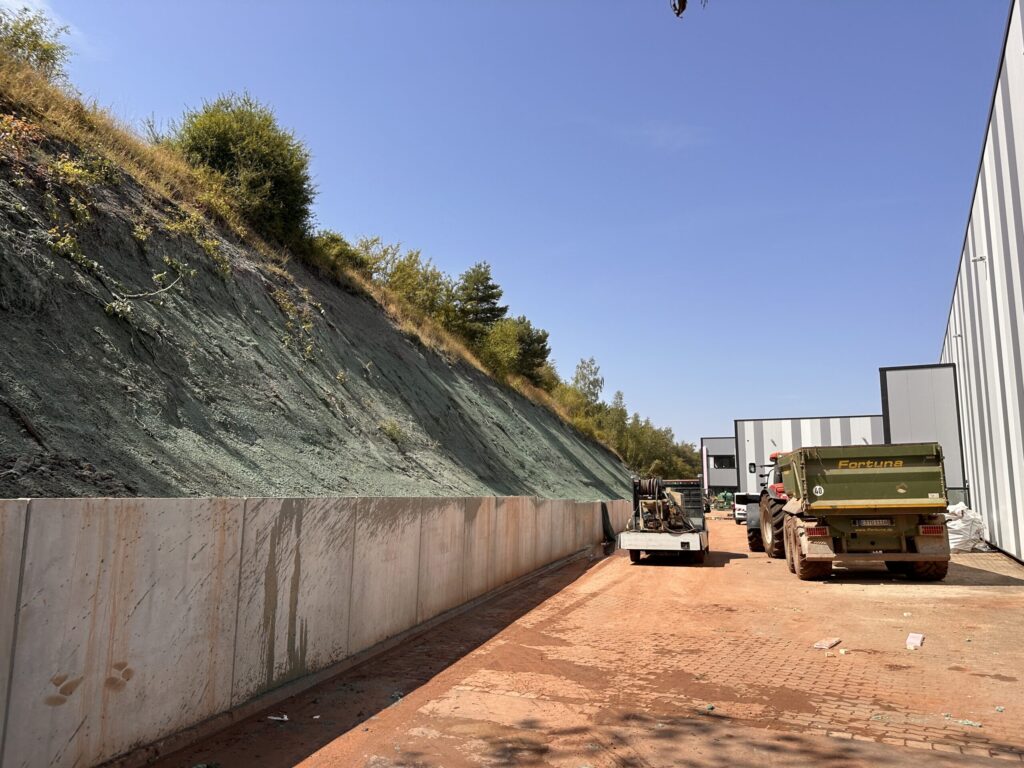
Hydroseeding in Serbia should form part of a defined rehabilitation sequence. Reclamation comes first where regrading, drainage, containment, compaction control or geotechnical stabilization is required. Biological reclamation can begin once the surface is stable and the substrate has been assessed for rooting depth, pH, salinity, contaminants, water retention and nutrient availability.

The engineered application may combine selected fibers, a biologically based binder, growth-medium components, moisture-management functions and vegetation suited to the intended land use. This allows surface protection and biological establishment to be coordinated instead of treated as separate, standardized inputs.

On waste-rock slopes and rocky terrain, hydraulic equipment can distribute material over areas that are difficult to access mechanically. It cannot, however, create a viable soil profile on unsupported bare rock or compensate for continuing movement within a dump. Additional substrate placement, structural measures or containment may be necessary before application.

Material selection must reflect the required erosion-control period, environmental context and applicable Serbian requirements. Expected persistence must be stated honestly, particularly where biodegradable components are selected. Proprietary formulations remain project-specific.

Terminology in Serbia

No Serbian translation of "hydroseeding" is presented here as an established commercial term. The recognized broader term рекултивација (rekultivacija) describes the rehabilitation or reclamation process, including technical and biological phases. Hydroseeding may support biological reclamation, but it is not synonymous with the entire rekultivacija process.

Relevant applications

Mine Rehabilitation

Engineered vegetation establishment on waste rock, tailings surfaces and other disturbed mining substrates.

Application
Read more →
Difficult Revegetation

Vegetation establishment on rocky, nutrient-poor, compacted or otherwise unfavorable substrates.

Application
Read more →
Guide to Mine Rehabilitation

An overview of substrate assessment, technical prerequisites and biological establishment on former mining surfaces.

Engineering Guide
Read more →
Any questions?

A project, a partnership or a research collaboration — get in touch by phone or email.