Reclamation practice in Slovakia distinguishes between technická rekultivácia and biologická rekultivácia. This distinction defines where hydroseeding can contribute.
Reclamation establishes the physical basis of the site. Depending on the approved design, it can include grading, slope stabilization, drainage, sealing layers, reconstruction of the soil profile and placement of suitable cover material. Contaminated, unstable or reactive substrates must be addressed during this phase. Hydroseeding cannot compensate for incomplete reclamation.
Biological reclamation follows once the prepared surface meets the required acceptance criteria. It can include soil conditioning, erosion protection, vegetation establishment and subsequent maintenance. Hydroseeding may combine adapted seed, fibers, a hydraulic growth medium, moisture-management components and a biologically based binder. Its functions are to retain fines and seed, reduce initial surface erosion and create conditions for root development.
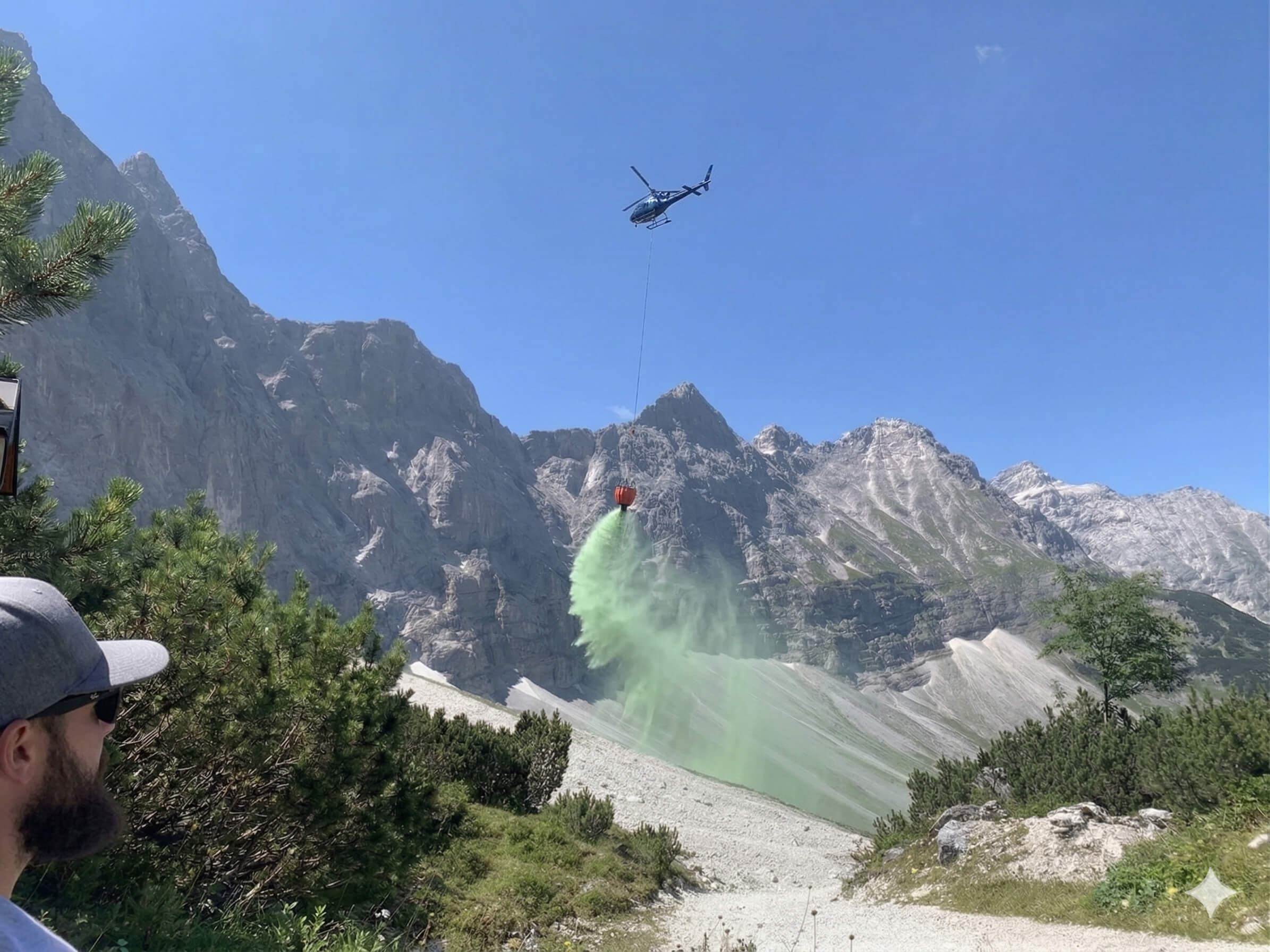
Elevated sites require additional attention to the short establishment window, freeze–thaw exposure, local vegetation communities and pumping geometry. High lifts and long hose distances influence equipment selection and the viscosity that can be delivered reliably.
Material systems must comply with Slovak and European environmental and chemical requirements. Biopolymer-based binders can provide an alternative where conventional synthetic polymers are unsuitable or restricted, but their functional lifetime must be stated realistically. Proprietary formulations remain project-specific.