Locations

Hydroseeding in Morocco

Engineered surface systems for water-limited revegetation, erosion control and climate adaptation.

SRBT delivery capability in Morocco

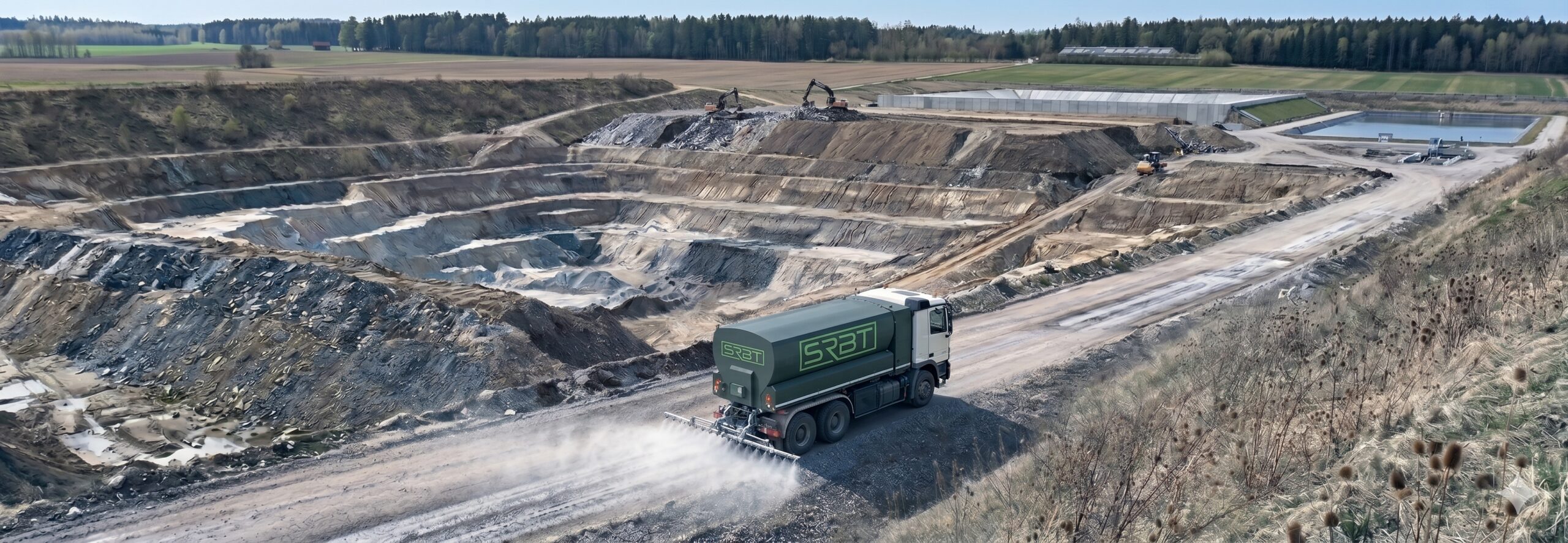
SRBT can mobilize project-specific hydroseeding, erosion-control and dust-binding systems for projects in Morocco. Delivery begins with an assessment of substrate chemistry, salinity, biological activity, available water, erosion mechanism and the intended long-term function of the surface.

Equipment, application capacity and technical support can be coordinated through an international partner and equipment-fleet network. The appropriate delivery model depends on project scale, technical feasibility, water logistics, site access, regulatory requirements and import conditions.

This describes international project capability, not a permanent local presence. Each inquiry is evaluated before a material system, application method or mobilization route is proposed.

Where surface problems arise in Morocco

Climate

Morocco extends from Mediterranean and Atlantic conditions to arid and Saharan environments. Historical national assessments report that more than 93% of the territory lies within arid to semi-arid climatic zones. This figure describes climatic exposure and varying susceptibility to desertification; it does not mean that 93% of Morocco has already become desert. High temperatures, prolonged dry periods and irregular rainfall create narrow and uncertain vegetation-establishment windows.

Dominant soils

Substrates include shallow mountain soils, calcareous and clay-rich soils, sandy coastal and desert material, alluvial agricultural soils and saline fine-particle surfaces. Organic matter and microbial activity can be limited in dry, disturbed substrates. Compaction, surface crusting and low infiltration may further restrict root development. Industrial fills, road cuttings and mined or processed material require separate chemical and geotechnical assessment.

Vegetation zones

Vegetation ranges from Mediterranean forest and shrubland to cedar and other mountain forests, argan landscapes, steppe, oasis systems and sparse desert vegetation. Each zone requires different establishment objectives. Revegetation should reflect local ecology, elevation, land use and available water rather than attempt to impose a uniform green cover on surfaces where it cannot be sustained.

Water availability

Water availability is a defining design constraint. Agricultural modernization under strategies such as Génération Green must be considered alongside catchment stress, groundwater pressure and competing municipal, agricultural and ecological demand. Hydroseeding uses water for application, but it does not create a continuing water supply. Source authorization, quality, salinity, transport, storage and the realistic post-application moisture regime must be established before system design.

Regulation

Forestry, biodiversity and desertification-control responsibilities now sit principally with the Agence Nationale des Eaux et Forêts, following the institutional transition from the former HCEFLCD. Relevant national frameworks include the Forêts du Maroc 2020–2030 strategy and the National Action Program to Combat Desertification, first adopted in 2001. Individual projects may also require environmental, water, land-use, construction or agricultural approvals.

Lead industries and land-management sectors

Relevant contexts include agriculture, forestry, tourism developments, mining, quarrying and large land-development projects. Transport and construction activities can create exposed cuttings, embankments and temporary surfaces, while agriculture and tourism add strict water-budget constraints. These sectors require different outcomes: vegetation establishment, erosion reduction, temporary surface protection and dust control should not be treated as interchangeable applications.

Topography and terrain

The Rif and Atlas ranges, Atlantic and Mediterranean coasts, interior plateaus, arid basins and Saharan margins create sharply different surface conditions. Mountain catchments may experience intense water erosion, while coastal, southern and eastern regions can be exposed to wind erosion and sand movement. Long pumping distances, high elevations, limited access and water transport must be included in equipment and mobilization planning.

Structural risks

Historical HCEFLCD assessments indicate that more than ten million hectares are affected by water erosion, while wind erosion is particularly relevant in coastal, southern and eastern areas. Sand encroachment, reservoir sedimentation, loss of productive soil and declining vegetation cover are interconnected risks. These national figures describe the scale of exposure; individual project design still requires site-specific measurements rather than assumptions based solely on regional classification.

Hydroseeding in Morocco

Hydroseeding in Morocco must be designed around water limitation, salinity, substrate activity and the actual probability of vegetation establishment. Site assessment should establish pH, electrical conductivity, compaction, infiltration, organic content, rooting depth, wind exposure and the availability of suitable water.

Reduced microbial activity in arid or biologically inactive substrates can significantly limit the breakdown of conventional wood-fiber mulches. Applying more fiber does not by itself create a functional soil. The engineered system may therefore combine a suitable growth medium, moisture-management functions, biologically based surface binding and vegetation selected for the project's climate and water regime.

On saline fine-particle soils, the initial function may include controlled surface crusting or stabilization to reduce wind erosion while protecting infiltration where required. Dust-binding and revegetation must be specified separately: a system optimized for immediate surface cohesion may not provide the conditions needed for long-term plant establishment.

Hydroseeding cannot compensate for unresolved salinity, contaminated material, unstable slopes or an unrealistic water budget. Technical preparation, drainage and any required remediation must be addressed first. Proprietary formulations remain project-specific.

Terminology

No Arabic- or French-language expression is presented as a confirmed Morocco-specific commercial term for hydroseeding. The international term hydroseeding is retained. Functional French terms such as lutte contre l'érosion, lutte contre la désertification and stabilisation des sols may describe the wider project objective but not a particular application system.

Relevant applications

Climate Adaptation

Engineering surface and vegetation systems for drought, heat, irregular rainfall and restricted water availability.

Application
Read more →
Dust Control

Reducing wind-driven and operational dust through project-specific surface binding and application planning.

Application
Read more →
Water retention in hydraulic growth media

How substrate properties, fibers and moisture-management functions influence the establishment window under water-limited conditions.

Engineering Insight
Read more →
Any questions?

A project, a partnership or a research collaboration — get in touch by phone or email.