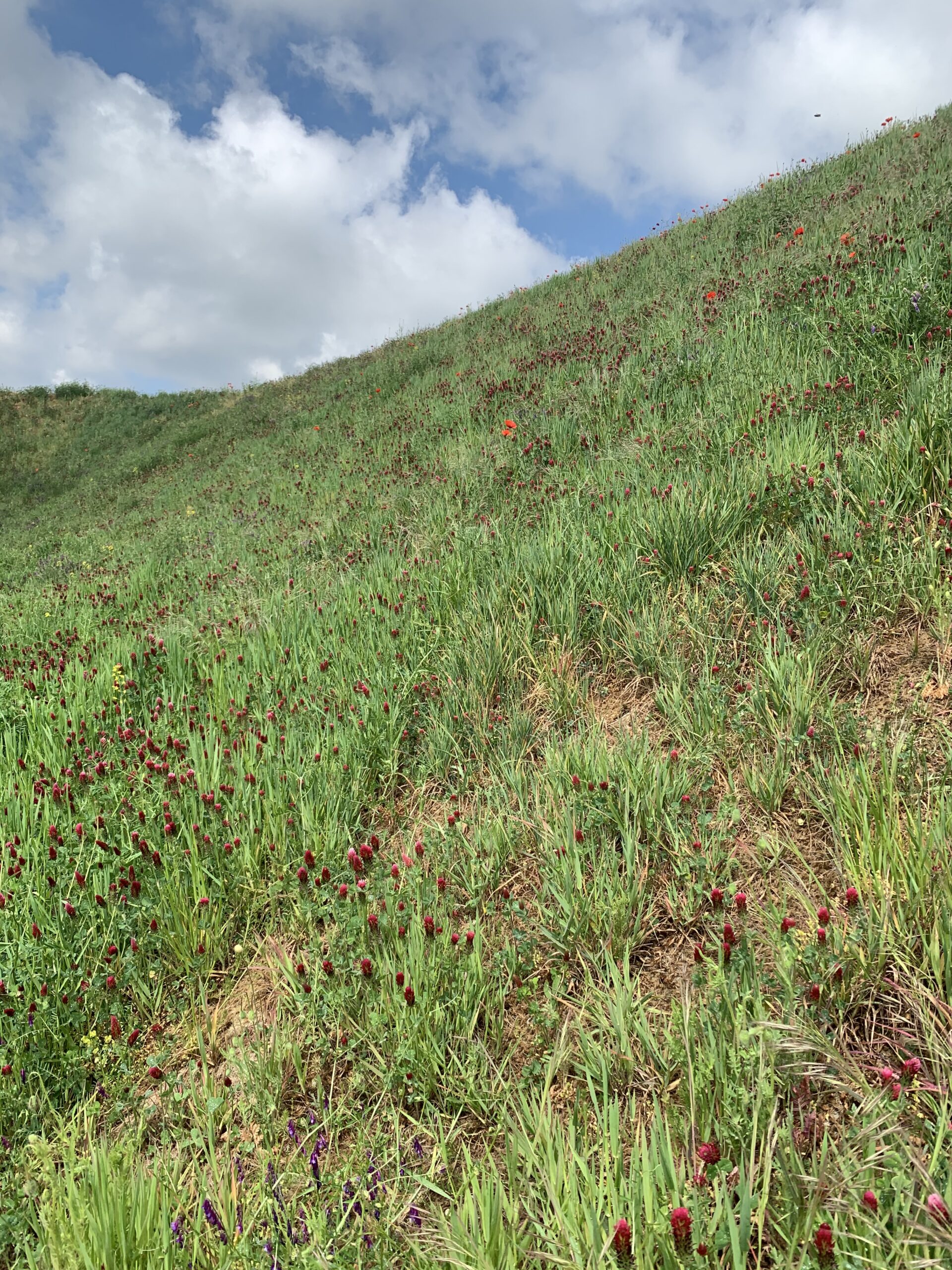
Hydroseeding in Hungary should be specified as a functional system, not as the application of seed suspended in water. Site analysis should consider soil texture, organic-matter content, pH, salinity, compaction, slope, runoff behavior, wind exposure, water quality and the realistic establishment period.
A cellulose-fiber mulch can provide seed distribution and short-term physical cover. Cellulose fiber alone, however, does not inherently provide a separate surface-binding mechanism or an engineered reservoir for moisture and nutrients. On drought-prone or nutrient-poor substrates, a cellulose-only system may dry rapidly and provide insufficient protection against wind or intense rainfall. This does not mean that cellulose is unsuitable: it can remain a useful system component when combined with appropriate binders, growth media, moisture-management components and site-specific nutrient support.
The engineered response may therefore combine selected fibers, a biologically based binder system, water-retention functions, nutrient support and vegetation suited to the intended land use. Application rates and material persistence are matched to the erosion window and expected establishment time. Where biodegradable components are selected, their expected service duration must be assessed honestly rather than treated as permanent.
Material selection also considers applicable Hungarian and EU environmental and chemical requirements. Proprietary formulations remain project-specific.