Services
Services
Fields of application
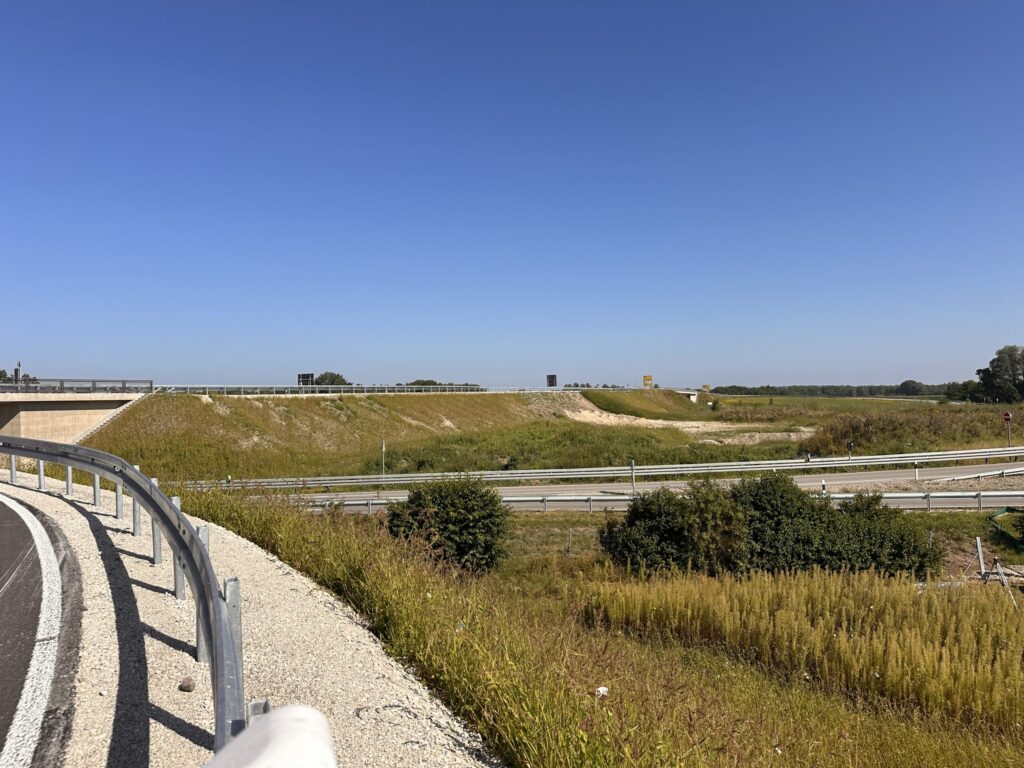
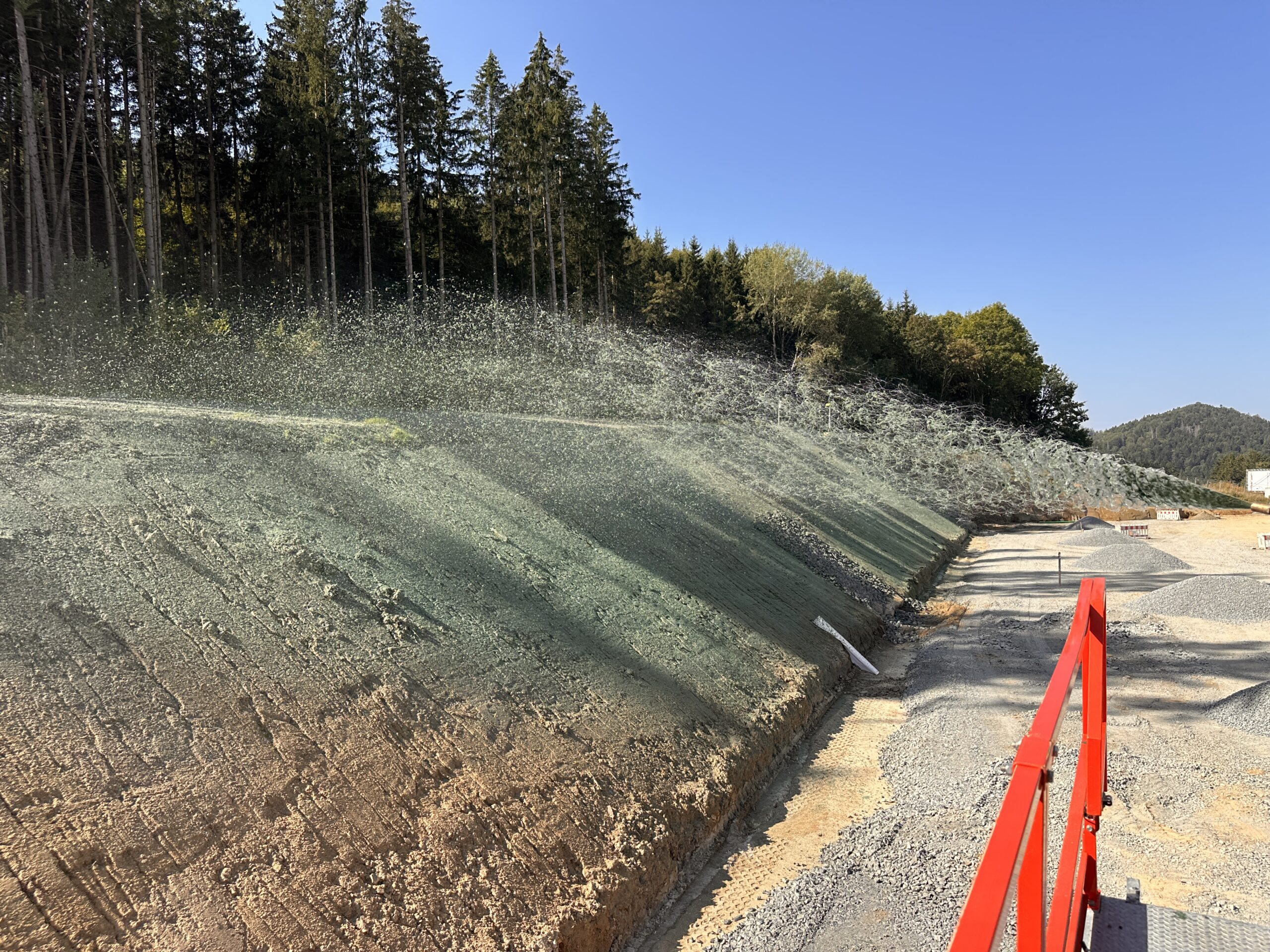
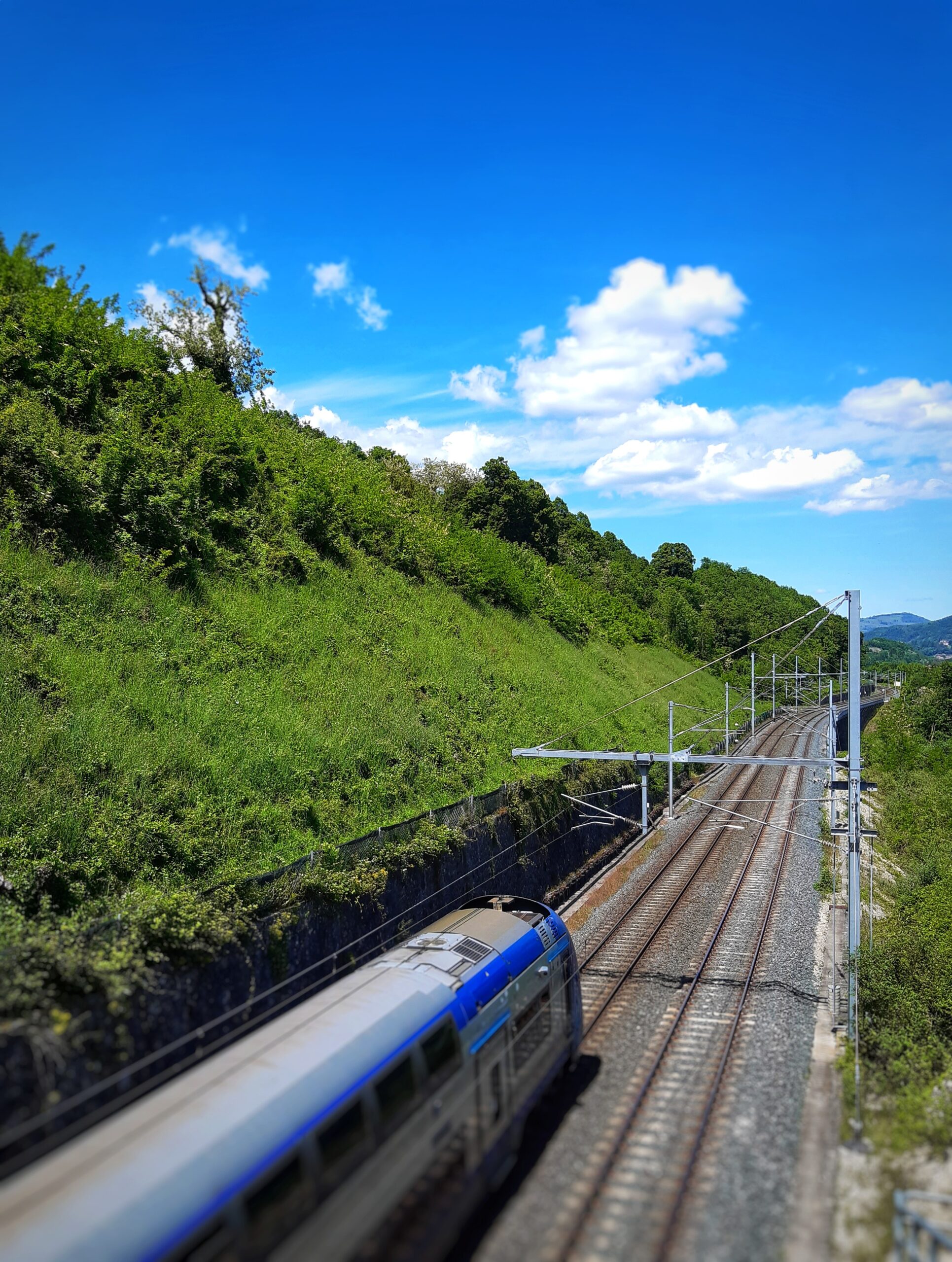
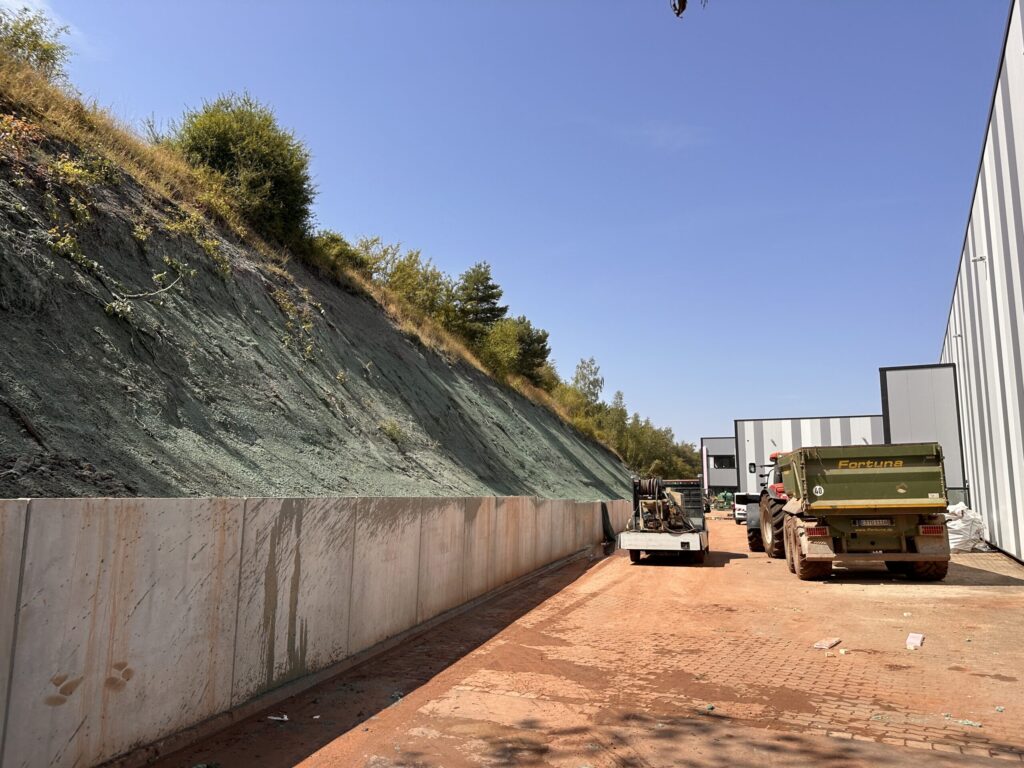
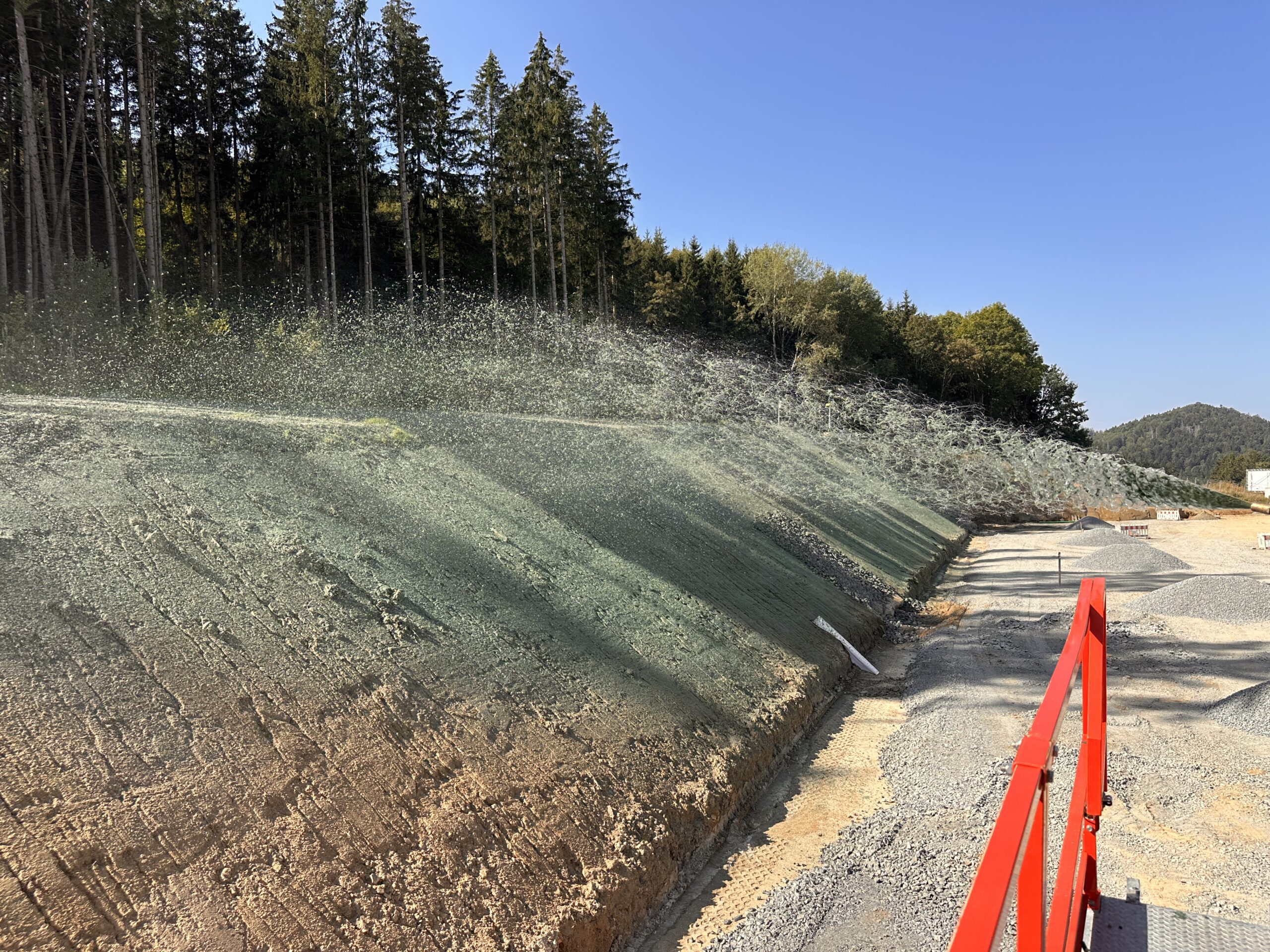
Hydroseeding, hydraulic seeding and hydraulically applied revegetation for road slopes, railway embankments, noise barriers and airport grounds — from straightforward slope seeding to the Erosion Control Matrix for extreme gradients up to 70°. SRBT reviews every bill of quantities for plausibility and recommends adjustments before work starts.
Substrate, load class, gradient, drainage situation and the constraints of the site determine the formulation. No two slope types are alike.
High mechanical loads from traffic vibration, spray water and mowing. Fiber-reinforced hydroseeding systems with biopolymer binders — erosion-stabilizing, tolerant of mowing, stable over the long term.
Vibration loads and restricted machine access call for long-term stable systems with high cohesive strength. Where necessary, application is carried out from the crest without driving on the embankment itself.
Steeply inclined to near-vertical surfaces. For gradients up to 70° SRBT uses the Erosion Control Matrix — a mineral-reinforced hydromulch system applied hydraulically, a high-performance alternative to slope matting.
Water-adjacent areas with fluctuating water levels — exclusively fully biodegradable formulations. No polybutadiene-based binders. Seed selected for alternating wet conditions.
Lean, compacted substrates with no natural soil development. Hydraulically applied growth medium builds a biologically active soil structure as the basis for lasting vegetation.
FOD prevention (foreign object debris) is an operational requirement. Seed mixtures are selected for low growth height and low attractiveness to bird species.
Extreme drought, heavy metal loads, urban heat stress. Species selection follows the site conditions, and formulations carry increased water storage capacity.
Limited substrate volume, high wind exposure, no irrigation. Formulations with maximum water storage capacity and seed mixtures for dry sites.
Freshly excavated soil, high rainfall intensity, no vegetation cover. Hydraulic protective mulch as an immediate measure from day one.
Systems in use
Not every slope calls for the same system. SRBT configures the formulation on the basis of gradient, substrate, objective and accessibility.
A hydraulically applied mixture of mulch material, biopolymer binder, seed and additives. Full-surface contact, immediate erosion protection, biodegradable.
Read more →A mineral-reinforced hydromulch system applied hydraulically — the high-performance alternative to slope matting on extreme gradients.
Read more →For slopes without sufficient soil development. A hydraulically applied working layer takes over the functions of topsoil.
Read more →Our approach
SRBT supports infrastructure projects from the technical specification through to vegetation acceptance — planning and execution from a single source.
SRBT reviews every bill of quantities for plausibility — slope type, substrate, gradient and drainage determine the choice of system.
Mulch material, biopolymer class, seed mixture and system variant are configured for the specific project.
Own machinery, trained crews and laboratory-backed quality control, with full project documentation.
Tell us the slope type and gradient — we will recommend a suitable system and review your bill of quantities for plausibility.