


SRBT

Revegetation, reclamation & soil stabilization — for any site

Services

Our specialist areas at a glance.

SRBT delivers revegetation, erosion control, stabilization and reclamation projects across Europe — from single contracts to large areas, on raw soils as much as on steep slopes and inaccessible sites. Our own machinery, in-house simulation software and formulations developed per project are the basis of every job.

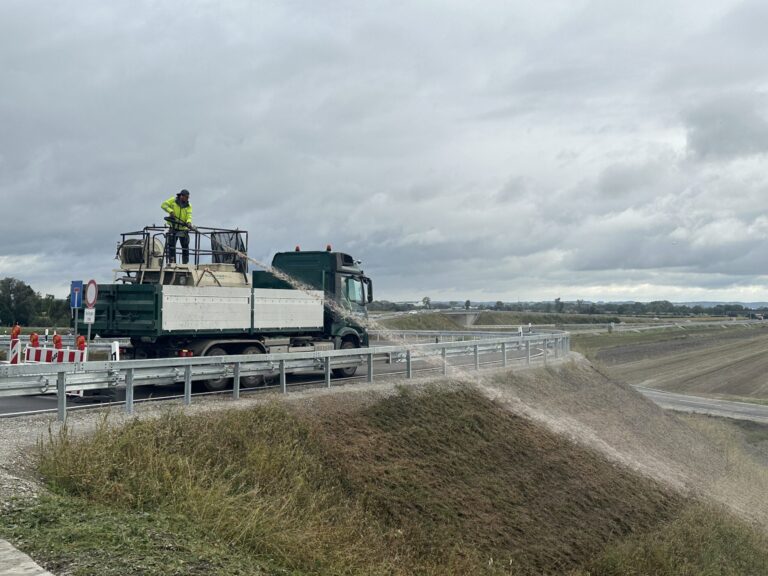
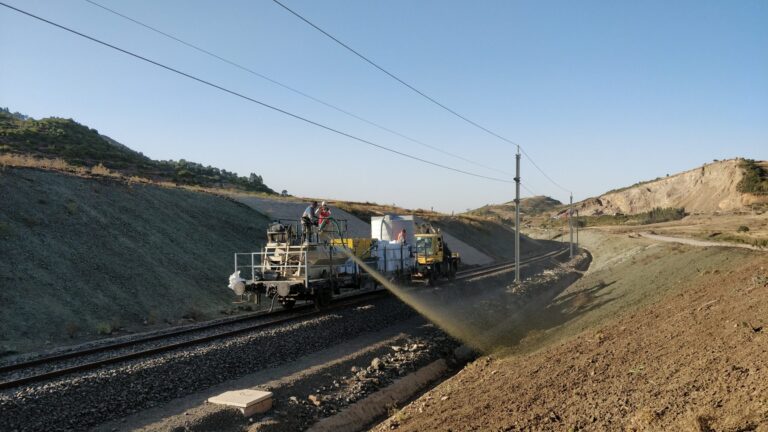
Hydraulically applied revegetation on an infrastructure embankment
Infrastructure & civil engineering

Road slopes, railway embankments, noise barriers, airport grounds — fiber-reinforced systems for lasting vegetation establishment under traffic and erosion loads.

Read more →
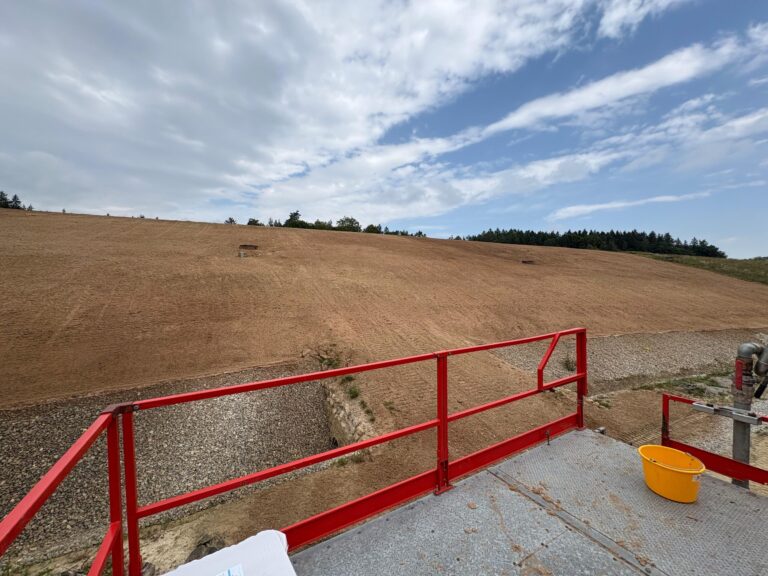
Large capped embankment after hydraulic application of growth medium
Reclamation and restoration

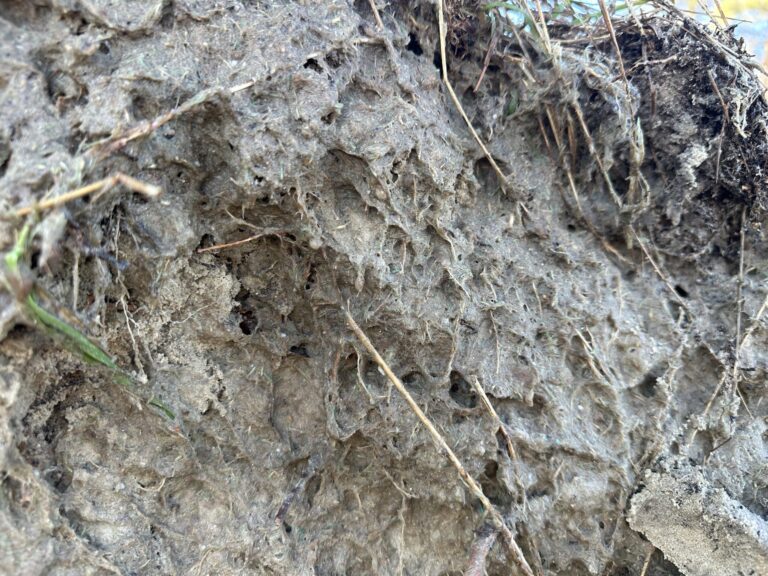
Post-mining land, landfills, bogs, floodplains — deliberately building functioning soil structures and ecological soil functions on raw ground. Not just green cover, but pedogenesis.

Read more →
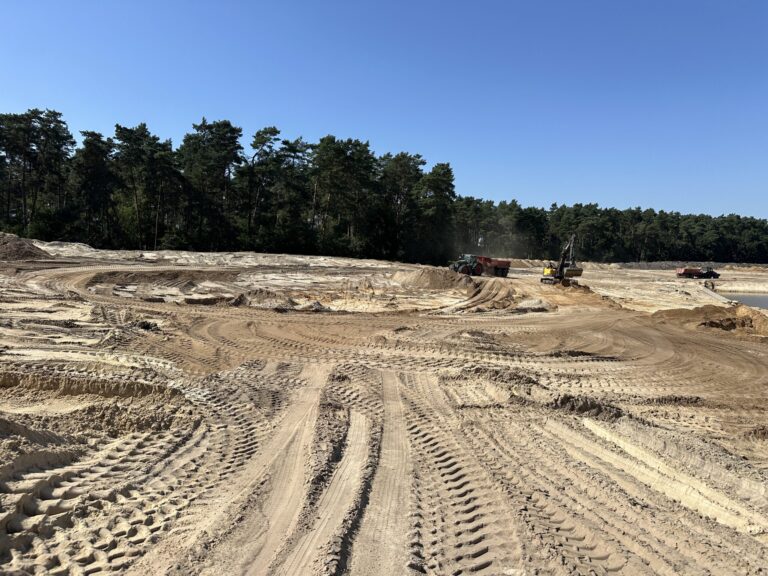
Excavator and haul trucks working in a sand quarry with heavy dust generation
Dust control and soil stabilization

Unpaved areas, spoil heaps, gravel plants, forest roads — hydraulically applied polymer suspensions as a lasting alternative to water spraying.

Read more →
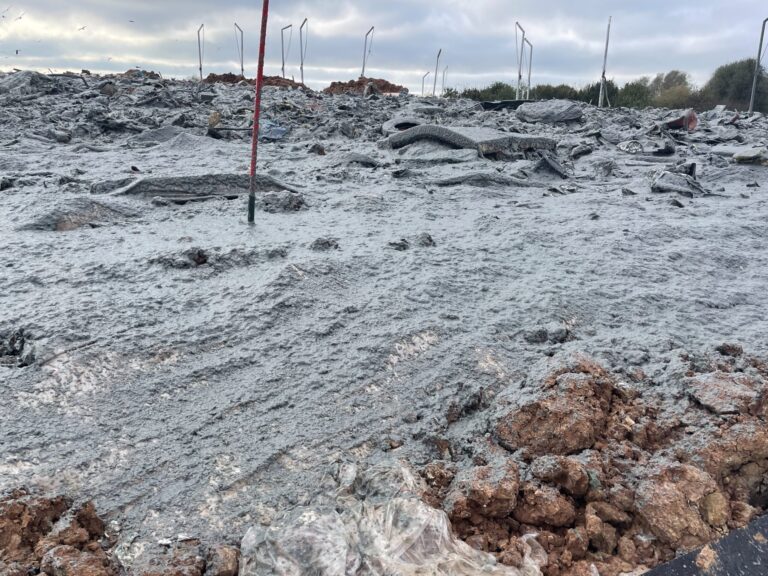
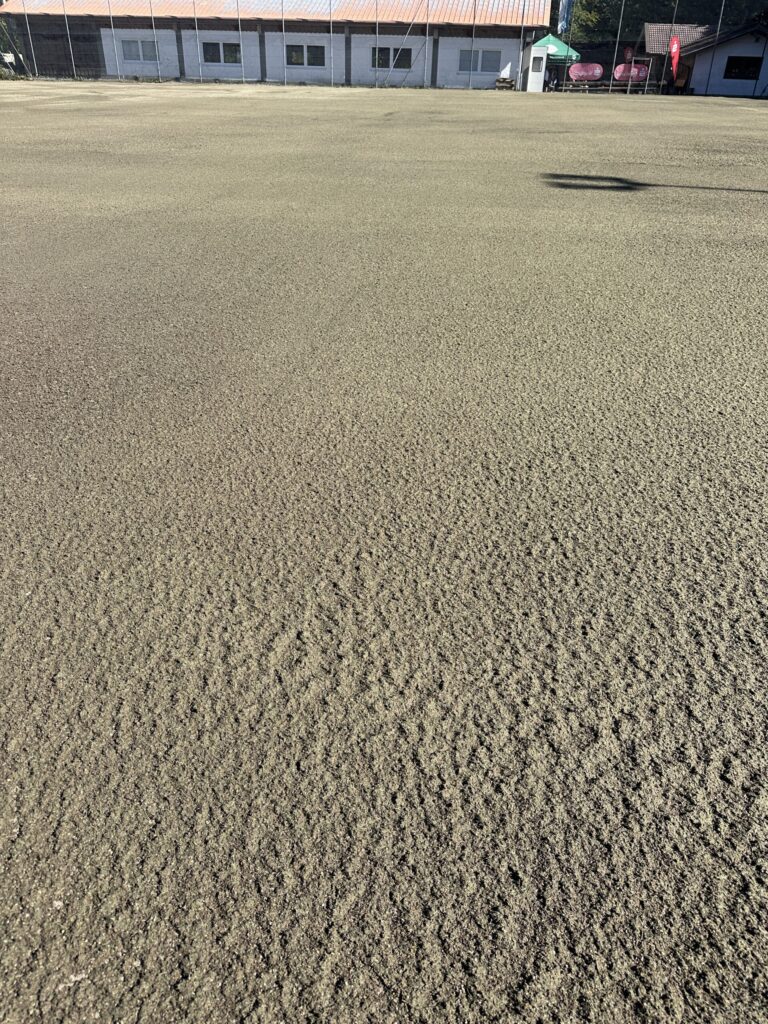
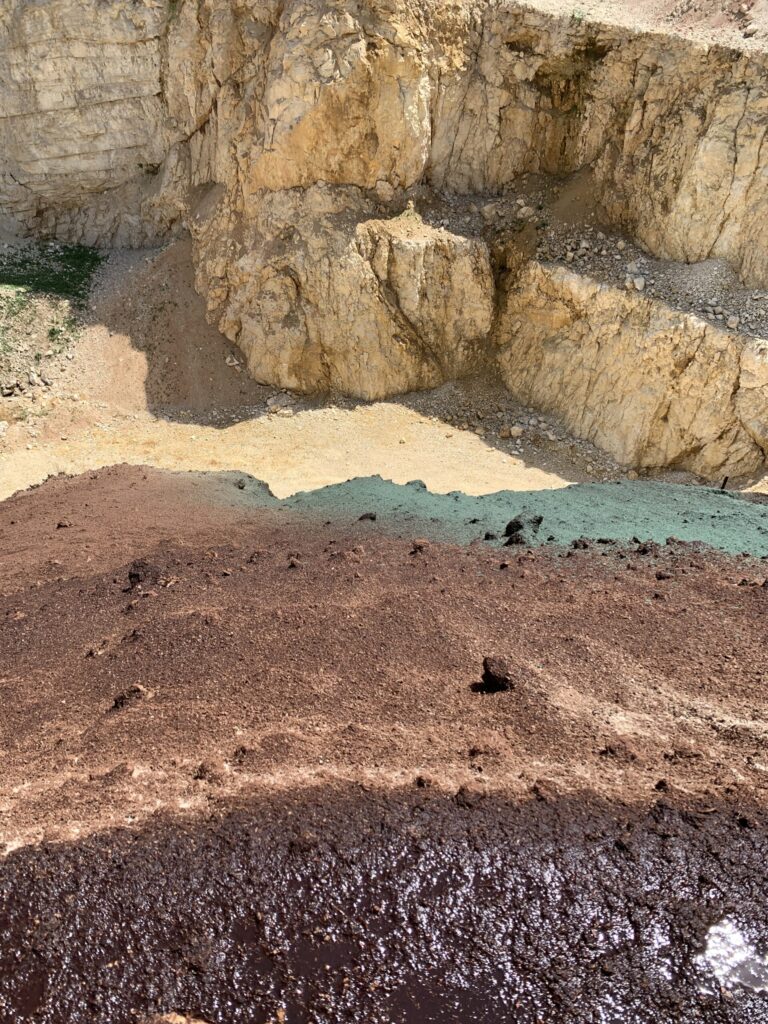
Sprayed dust-binding layer covering an active landfill surface
Mining, landfill & industry

Revegetation and reclamation carried out alongside active operations — without waiting for closure. Every formulation fully biodegradable.

Read more →
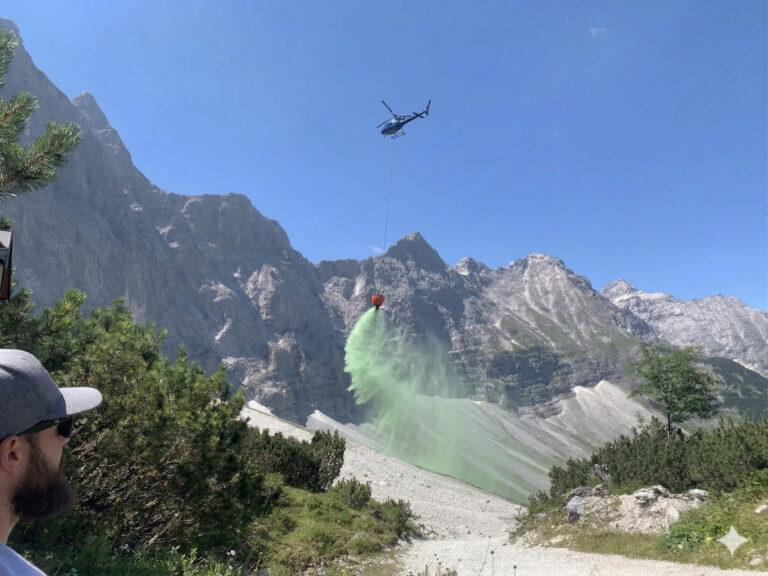
Helicopter releasing hydroseeding slurry over an alpine scree slope
Aerial &
alpine revegetation

High altitudes, steep slopes, lift corridors, avalanche defenses — weight-optimized formulations for maximum area per flight hour in helicopter work.

Read more →
Newly established golf green surrounded by sand bunkers
Hydroseeding for
golf courses

New construction, renovation and repair of sports turf — hydromulch application for even, rapid vegetation establishment. Surfaces are typically playable again after 6–8 weeks.

Read more →

Planning support

Simulation-based decision-making.

SRBT uses in-house simulation software that models system behaviour from site-specific parameters — before the work starts. The soil temperature curve in the germination layer, the germination forecast, the water saved against dry seeding and the recipe costing are calculated, not estimated.

Contractors, clients, engineering consultancies and public procurement bodies get a solid basis for planning decisions and technically precise tender text — with realistic performance figures, parameters that can be followed and documented forecasting assumptions.

SRBT Hydroseeding Platform · Motorway embankment, north face · road authority Simulation current PROJECT AREA 12,400 m² SITE / REGION Southern Germany APPLICATION WINDOW April – May SYSTEM CLASS C — critical slope 1:2 and steeper Raw soil RECIPE FIBER MATERIAL Wood fiber EC-N Wood fiber 100% · EU 2018/848 certified Fiber 150.0 g/m² Soil tackifier (guar) 8.0 g/m² org./mineral fertilizer 47.0 g/m² Quotation costing Mixture information Vegetation forecast SOIL TEMP. 9 °C RAINFALL 68 mm FROST RISK low DROUGHT STRESS none GERM. DELAY none CLIMATE ZONE Cfb Oceanic VEGETATION FORECAST · GROUND COVER · SYSTEM CLASS C Southern Germany · April · climate-corrected 100% 75% 50% 25% 0% 85–96 % T14 T28 T42 T70 T100 C/N BALANCE OF THE MIX Fiber carbon content 48.0% C/N before fertilization 96 : 1 Fertilizer requirement 470 kg/ha C/N after: 22.4 : 1 Optimal — no risk of nitrogen immobilization TECHNICAL MIXTURE PARAMETERS Fiber application rate 150 g/m² · 1,860 kg Soil tackifier (guar) 8.0 g/m² m² per tank load 1,500 m² Total tank loads 9 tanks · 1 AT Machine Finn T120 · 225 kg/T Establishment maintenance Slope stabilization EU 2018/848 · organic compliant No persistent residue

TES-Simulation

Postcode → climate data → vegetation forecast, reduced germination time and water saved against dry seeding.

SRBT formulation & layer logic · Biopolymer systems · three-class model biodegradable Water-adjacent areas EU 2018/848 Field-validated Raw material classes Layer logic & build-up Performance window Ecological assessment LAYER BUILD-UP · CROSS-SECTION Slope 1:1.5 · alpine raw soil Atmosphere · rainfall · UV Layer 3 Sealing film · biopolymer + cellulose ether Erosion control Breakdown: 4–8 wk UV / rain protection Layer 2 Carrier + biopolymer matrix · fibers + mineral Polysaccharide binder · clay mineral reinforcement Shear strength Breakdown: 8–16 wk Erosion control Adhesion Layer 1 Bonding agent · biopolymer, electrostatic Substrate bonding Adsorption onto clay minerals Substrate interface Raw soil · pH 5.5–7.5 · mineral substrate Undisturbed ground OPERATING PRINCIPLE PER LAYER LY. BINDER CLASS OPERATING PRINCIPLE RESIDUE 3 Cellulose ether Film formation / thickening none 2 Polysaccharide + mineral Gel formation + skeleton none 1 Polysaccharide, anionic Electrostatic adsorption none DEGRADATION · PERFORMANCE WINDOW Ly. 3 Ly. 2 Ly. 1 0 8 wk 32 wk Degradation rate depends on substrate, temperature and moisture Figures are based on project experience THREE RAW MATERIAL CLASSES Class 01 · biopolymers Binding · film formation · adhesion Xanthan · guar · CMC · chitosan Humic acid · biochar biodegradable Class 02 · mineral Skeleton formation · ion exchange Bentonite · metakaolin · zeolite Kaolin (albedo) · clinoptilolite inert Class 03 · fibers & additives Tensile strength · crack tolerance Wood fiber · cellulose · BFM Board fiber · rheology additives slower The combination produces the system behaviour — no class alone is enough FORMULATION MATRIX · APPLICATION CONTEXTS FORMULATION TYPE CLASSES APPLICATION LY. PERFORMANCE WINDOW Erosion control, standard 01 + 03 Slope ≤1:2 1–2 4–12 weeks Erosion control, reinforced 01 + 02 + 03 Slope >1:2 · alpine 2–3 8–24 weeks SR-FGM fiber, sealed ✓ 01+02+03 · two-stage Steep face · no vegetation 3 12–32 weeks Dust control 01 (low viscosity) Industry · landfill 1 2–8 weeks Pedogenesis / soil build-up 01+02+03+Humin Raw soil · reclamation 2–4 24–104 weeks Hydroseeding, standard 01+03+seed Slope · reclamation 1 until vegetation is established All formulations: fully biodegradable and documented The number of layers and the combination of binder classes are project parameters. IPEC: mind the mixing sequence and the pH of the mixing water. pH < 5.5: adsorption strength falls — the formulation has to be adjusted or the pH corrected. SYSTEM SELECTION · CRITICAL CONTEXTS Behaviour in water Fully biodegradable · documented No cationic polymer Approved for Natura 2000 sites EU 2018/848 Ecotoxicology Degradation products assessed Microbiome compatibility tested Chitosan: sensitive in Natura 2000 soils Project-specific assessment Degradation Enzymatic hydrolysis / oxidation Depends on temperature and moisture Anaerobic: slower pH < 5.5: loss of binder IPEC · mixing sequence Anionic + cationic → insoluble complexes possible mind pH + ionic strength Application parameters

Formulation & layer logic

Three raw material classes combined for the site — layer build-up, performance window and binder classes are project parameters, not a product choice.

SRBT Sediment loss model · Alpine slope protection · location 7b · forestry authority ASTM D6459 ASTM D7101 Model validated Model validated SITE PARAMETERS SLOPE GRADIENT 1:1.2 · 40° extremely critical SOIL TYPE Alpine skeletal soil · Kf 8.5×10⁻⁴ m/s SLOPE LENGTH 68 m HEAVY RAINFALL (ASTM D6459) Stage I–III · 51 / 102 / 152 mm/h 3 × 20 min sequential EROSION CONTROL FORMULATION STAGE 1 — IMMEDIATE PROTECTION SR-FGM fiber · 300 g/m² Biopolymer tackifier 12 g/m² · wet STAGE 2 — SEALING SR-FGM fiber · 180 g/m² Thickening polymer 6 g/m² No revegetation · surface protection only TOTAL FIBER APPLIED 480 g/m² · two-stage SEDIMENT RAW SOIL 1,340 kg per 60 min event SEDIMENT STAGE 1 87 kg SR-FGM · 300 g/m² SEDIMENT STAGE 1+2 18 kg after sealing TOTAL REDUCTION −98.7% vs. raw soil RUNOFF −74 % Runoff reduction CONF. LEVEL 95 % n = 9 test runs SEDIMENT LOSS BY RAINFALL INTENSITY · ASTM D6459 500 375 250 0 51 mm/h 178 12 3 102 mm/h 398 32 8 152 mm/h 764 43 7 Raw soil SR-FGM stage 1 (300 g/m²) Stage 1+2 sealed A = R × K × LS × C₂ × P → 7.9 t/(ha·a) Raw soil reference: 608 t/(ha·a) · reduction −98.7 % · RUSLE result RUSLE EROSION MODEL · PARAMETER OVERVIEW PARAMETER SYM VALUE UNIT SOURCE Rainfall erosivity factor R 118 MJ·mm/(ha·h·a) ZAMG climate normal Slope length and steepness factor LS 9.41 dimensionless GIS-based Cover factor stage 1+2 sealed C₂ 0.013 – ASTM D6459-19 ASTM D6459 ASTM D7101 Model validated No persistent residue

Sediment loss model

RUSLE-based erosion modelling to ASTM D6459/D7101 — evidence of the protective effect before the work, documented to standard.

Technology & Methods

Methods and materials at a glance.

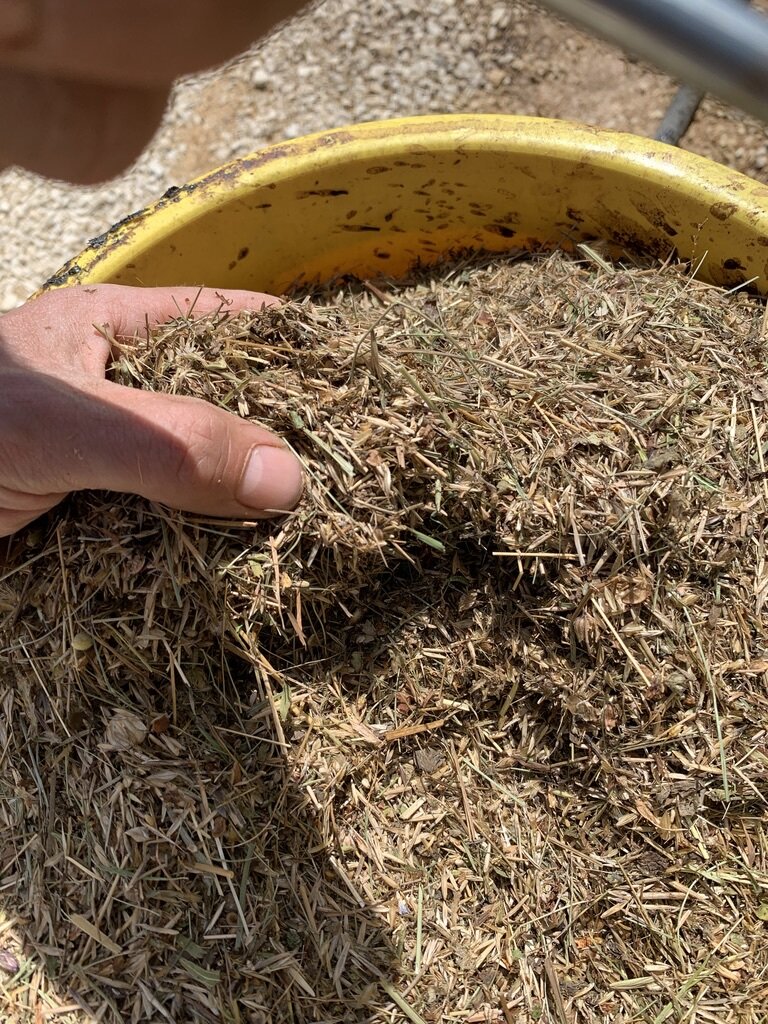
Hydraulic application is the delivery technique. What decides the outcome is the formulation — biopolymer class, carrier medium, mulch material and additives are configured per project.

Hydroseeding & hydraulic seeding

Hydroseeding is the umbrella term for spray-applied, hydraulically pumped revegetation and erosion-control systems. The term itself does not define the mixture's composition — that is determined by the formulation.

Read more →
Aerial seeding & alpine revegetation

Weight-optimized formulations for helicopter work — the same application principle with less fiber, so each flight hour covers more ground.

Read more →
Erosion control systems

Hydraulically applied protective mulch forms a cohesive layer flush across the whole area — no voids, no entrapment risk for reptiles or ground-nesting birds, biodegradable.

Read more →
Biopolymer systems

"Bio" describes the origin — not whether it is harmless. Polysaccharides, lignins and humic acids are assessed and used according to context. Synthetic polymers such as PAM are assessed separately — they are not biopolymers.

Read more →
Hydraulically applied topsoil

Pedogenesis as a controllable engineering task — hydraulically applied soil-building layers on extreme sites with no natural topsoil.

Read more →
Dust control & stabilization

From temporary construction site protection to permanent dust control under heavy haul traffic in mines — formulations designed for predictable degradation behaviour.

Read more →

Network

SRBT is a founding member of GASBE — the Global Alliance of Soil Bioengineering Experts — an international professional network of contractors specializing in revegetation, soil stabilization and vegetation technology. A maximum of one member per region. Material producers are deliberately excluded.
→

Insights

Technical articles from project practice.

All articles →

Partner program

Become a regional partner —
for companies with operational capacity.

SRBT selects partners against defined criteria — companies with their own machinery, their own crews and active project business in their territory. The selection is deliberately restrictive: one partner per territory, clearly defined geographically, with territorial exclusivity.

Germany · Austria · Europe-wide

More about the partner program →
Discuss a project.

A site analysis, a system concept or a partner enquiry — get in touch by phone or email.