Locations

Lithuania

Hydroseeding and engineered surface systems for Lithuania's Baltic coast, sandy substrates and infrastructure environments.

SRBT delivery capability in Lithuania

SRBT can mobilize hydroseeding and environmental surface engineering projects in Lithuania through an international engineering, equipment and delivery network. Each project begins with an assessment of substrate conditions, wind and water exposure, terrain, ecological constraints and the available vegetation-establishment window.

Depending on the assignment, SRBT can coordinate material-system design, application equipment, specialist personnel and regional implementation resources. This capability is relevant to coastal sand stabilization, erosion control, infrastructure surfaces and revegetation on disturbed mineral ground. Delivery remains subject to technical feasibility, regulatory approval, logistics and an appropriate seasonal application window.

Where surface problems arise in Lithuania

Climate

Lithuania has a cool Baltic climate with stronger maritime influence near the coast and more continental conditions inland. Winter frost, frozen ground and a seasonally limited vegetation period constrain application and establishment. Coastal storms, spring snowmelt, summer dry periods and increasingly intense rainfall create different surface stresses. Hydraulic applications must leave enough time for germination and root development before low temperatures interrupt establishment.

Dominant soils

Lithuania's surface geology is largely shaped by glacial and post-glacial processes. Morainic material occurs widely, while the coast and other glaciofluvial areas contain sands and gravels. Fine sediments, peat soils and different agricultural soils occur elsewhere. Coastal sands have low cohesion and limited water retention, whereas compacted moraine or engineered fills may restrict infiltration and root development. These substrates cannot be addressed with one standard material system.

Vegetation zones

Lithuania lies within the transition between boreal and temperate vegetation zones. Forests include coniferous, mixed and broadleaf communities, while coastal environments support pioneer dune vegetation, wooded dunes, coastal grasslands and wetlands. The appropriate vegetation objective depends on whether the site is an engineered surface, a disturbed area requiring restoration or a protected natural habitat.

Water availability

Lithuania has substantial groundwater and surface-water resources, but hydraulic application still requires an approved and logistically accessible source. Sandy surfaces may dry quickly during rainless periods, even when regional water availability is generally adequate. Conversely, rainfall and snowmelt can transport sediment and applied materials toward rivers, lagoons or the Baltic Sea. Water sourcing and downstream protection must therefore be assessed together.

Regulation

The Lithuanian Environmental Protection Agency provides environmental information and administers a range of permits and regulatory services. Environmental supervision, protected-area requirements and municipal planning provisions may involve additional competent authorities. The State Service for Protected Areas and individual park administrations are particularly relevant where protected habitats are affected. Projects near the coast, the Curonian Lagoon or protected dunes require site-specific review before any material or vegetation system is proposed.

Lead industries

Relevant project environments include the Port of Klaipėda, roads, railways, utilities, construction and agriculture. These activities can create exposed embankments, cut slopes, storage areas and temporarily disturbed soils. Agricultural and infrastructure surfaces may also generate sediment transport where runoff concentrates. The required function—temporary protection, permanent revegetation or targeted sand stabilization—must be defined before selecting the application system.

Topography and terrain

Lithuania is predominantly low-lying, but local conditions include sandy coastlines, dune ridges, moraine uplands, river valleys, agricultural slopes, wetlands and engineered embankments. Significant erosion does not require mountainous terrain. Wind can mobilize unprotected sand, while concentrated runoff can erode moderate slopes where surface structure or vegetation has been removed.

Structural risks

Relevant risks include coastal erosion, wind-driven sand movement, storm exposure, rapid drying of sandy substrates and runoff from disturbed soils. The Curonian Spit illustrates why dune movement must not automatically be classified as a problem. It is a UNESCO-listed cultural landscape, national park and highly sensitive system in which open, wooded and mobile dunes have distinct conservation functions. Any intervention there would require explicit authorization and specialist conservation planning.

Hydroseeding in Lithuania

Hydroseeding in Lithuania must be adapted to wind exposure, sandy substrates and the available seasonal establishment window. Conventional seeding alone may fail on mobile sand because wind can displace seed and surrounding grains before roots develop. Low water retention can interrupt germination during dry periods, while storms can remove material that has not yet bonded to the surface.

Where intervention is justified, the system may combine locally appropriate seed, fibers, moisture-management components and a biologically based binder. The first function is to retain seed, reduce superficial sand movement and improve conditions for establishment. Vegetation can subsequently assume the longer-term protective function as the temporary binder degrades.

Coastal projects require a clear distinction between protecting infrastructure and altering a naturally dynamic dune. Sand-transport direction, salt exposure, native pioneer vegetation, protected habitats and the function of the foredune must be assessed before treatment boundaries are defined. Within the Curonian Spit or another protected habitat, hydroseeding must never be treated as a standard intervention. Conservation objectives and explicit approval take precedence over the application method.

Materials must comply with Lithuanian and European environmental and chemical requirements. Nature-based binders can provide an alternative where conventional synthetic polymers are unsuitable or restricted. Their effective service life must be stated realistically because biodegradable materials cannot provide indefinite stabilization.

Water logistics, access, wind conditions and the remaining growing period form part of the delivery design. Proprietary formulations remain project-specific.
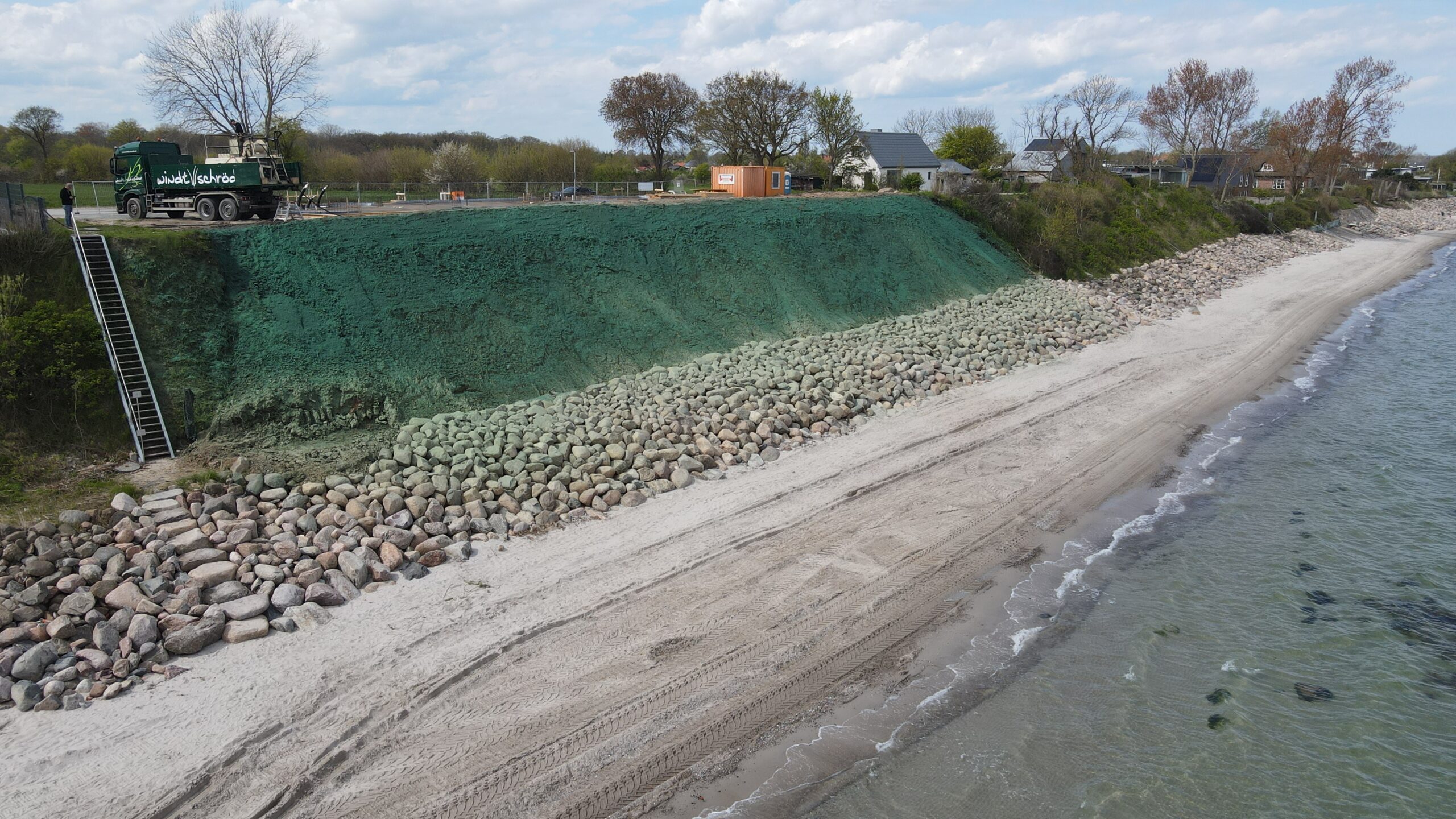
Hidrosėja in Lithuania

In Lithuania, hidrosėja is an established commercial term for hydraulic seeding. Related terminology includes erozijos kontrolė for erosion control and augalijos atkūrimas for vegetation restoration. Hidrosėja describes the application method; complete dune stabilization or ecological restoration may require additional conservation, hydraulic or structural measures.

Relevant applications

Dune Stabilization

Temporary sand binding and vegetation establishment for mobile dunes and other wind-exposed sandy surfaces where intervention is technically justified and environmentally permissible.

Application
Read more →
Nature-based binders vs. synthetic polymers

A functional comparison of binder systems, regulatory considerations and the relationship between biodegradability and effective service life.

Engineering Insight
Read more →
Any questions?

A project, a partnership or a research collaboration — get in touch by phone or email.