Locations

Estonia

Hydroseeding and engineered surface systems for Estonia's Baltic coast, sandy soils and infrastructure environments.

SRBT delivery capability in Estonia

SRBT can mobilize hydroseeding and environmental surface engineering projects in Estonia through an international engineering, equipment and delivery network. Each project begins with an assessment of the substrate, exposure, terrain, ecological constraints and available vegetation-establishment window.

Depending on the assignment, SRBT can coordinate material-system design, application equipment, specialist personnel and regional implementation resources. This capability is relevant to coastal sand stabilization, erosion protection, infrastructure surfaces and difficult vegetation establishment. Delivery remains subject to technical feasibility, environmental approvals, logistics and the availability of an appropriate seasonal window.

Where surface problems arise in Estonia

Climate

Estonia has a cool Baltic climate influenced by both maritime and continental conditions. Winters can leave ground frozen or snow-covered, while the effective vegetation-establishment period is comparatively short. Coastal exposure, spring snowmelt, summer dry periods and autumn rainfall create different stresses. Application timing must allow sufficient development before cold conditions interrupt germination and root formation.

Dominant soils

Estonia's surface geology reflects its glacial history. Morainic material is widespread, while sands, gravels, fine sediments, peat and shallow soils over limestone occur regionally. Freely draining sands are particularly relevant along parts of the Baltic coast, around Lake Peipus and on infrastructure earthworks. Their limited cohesion and water retention can make vegetation establishment difficult without temporary surface protection.

Vegetation zones

Estonia lies within the hemiboreal transition between boreal and temperate vegetation zones. Forests include coniferous and mixed communities, while the coast supports dunes, coastal meadows, wetlands and specialized pioneer vegetation. These habitats cannot be treated as interchangeable landscaping surfaces. Seed selection and stabilization measures must reflect the local vegetation community and the intended role of natural succession.

Water availability

Estonia has an extensive network of groundwater, wetlands, rivers, lakes and coastal waters. Nevertheless, water availability for hydraulic application depends on the location, permitted source, access and seasonal conditions. Sandy surfaces may dry rapidly even where regional water resources are substantial. Near the coast or inland waters, runoff, suspended sediment and potential material transport into sensitive receiving environments must be controlled.

Regulation

Coastal and dune projects may be affected by Estonia's Nature Conservation Act, Water Act, protected-area requirements and shore or bank protection zones. The Estonian Environmental Board coordinates permits, nature-conservation matters and environmental supervision within its responsibilities. Before intervention, the project must determine whether the site contains protected habitats, species, Natura 2000 areas or statutory coastal restrictions. Technical stabilization must not be assumed to justify altering a naturally dynamic or protected dune system.

Lead industries

Relevant project environments include roads, railways, ports, utility infrastructure, construction and energy sites. Eastern Estonia also has a long-established oil-shale and energy sector, with associated mineral surfaces and disturbed land. These environments may require temporary erosion protection, revegetation or coordinated surface management. The system objective must be defined before materials are selected.

Topography and terrain

Estonia is generally low-lying, but local surface conditions include coastal cliffs, sandy shorelines, dune systems, moraine landscapes, wetlands, quarry and industrial ground, road embankments and excavated slopes. Even moderate gradients can experience erosion where water concentrates or vegetation cover is absent. Wind exposure may be more important than slope angle on open coastal sands.

Structural risks

The principal surface risks include coastal erosion, wind-driven sand movement, wave and storm exposure, runoff on disturbed soils and rapid moisture loss from sandy substrates. Dune migration is a natural process in some settings, not automatically a defect to be stopped. Intervention is appropriate only where movement threatens infrastructure, safety or an agreed conservation objective and where stabilization is environmentally permissible.

Hydroseeding in Estonia

Hydroseeding in Estonia must account for coastal exposure, sandy substrates and the limited seasonal establishment window. On mobile sand, conventional seeding alone may fail because wind displaces both seed and the surrounding grains before roots can develop. Low water retention can further interrupt germination during dry periods.

Where stabilization is justified, the engineered system may combine locally appropriate seed, fibers, moisture-management components and a biologically based binder. The initial function is to reduce surface movement and retain seed and fine particles. Vegetation can then provide longer-term protection as the temporary binding system degrades.

Coastal applications require particular restraint. Natural dune movement, native pioneer vegetation, salt exposure, protected habitats and sediment transport must be evaluated before a treatment area is defined. The objective is not to create a rigid or permanently sealed surface. It is to provide enough temporary cohesion for vegetation establishment or targeted infrastructure protection without unnecessarily disrupting natural coastal processes.

Material selection must comply with applicable Estonian and European environmental and chemical requirements. Nature-based binders can offer an alternative where conventional synthetic polymers are unsuitable or restricted, but their functional lifetime must be assessed realistically. Biodegradable systems will generally require vegetation or another long-term mechanism to take over their protective function.

Water logistics, application access, wind conditions and the remaining growing period form part of the delivery design. Proprietary formulations remain project-specific.
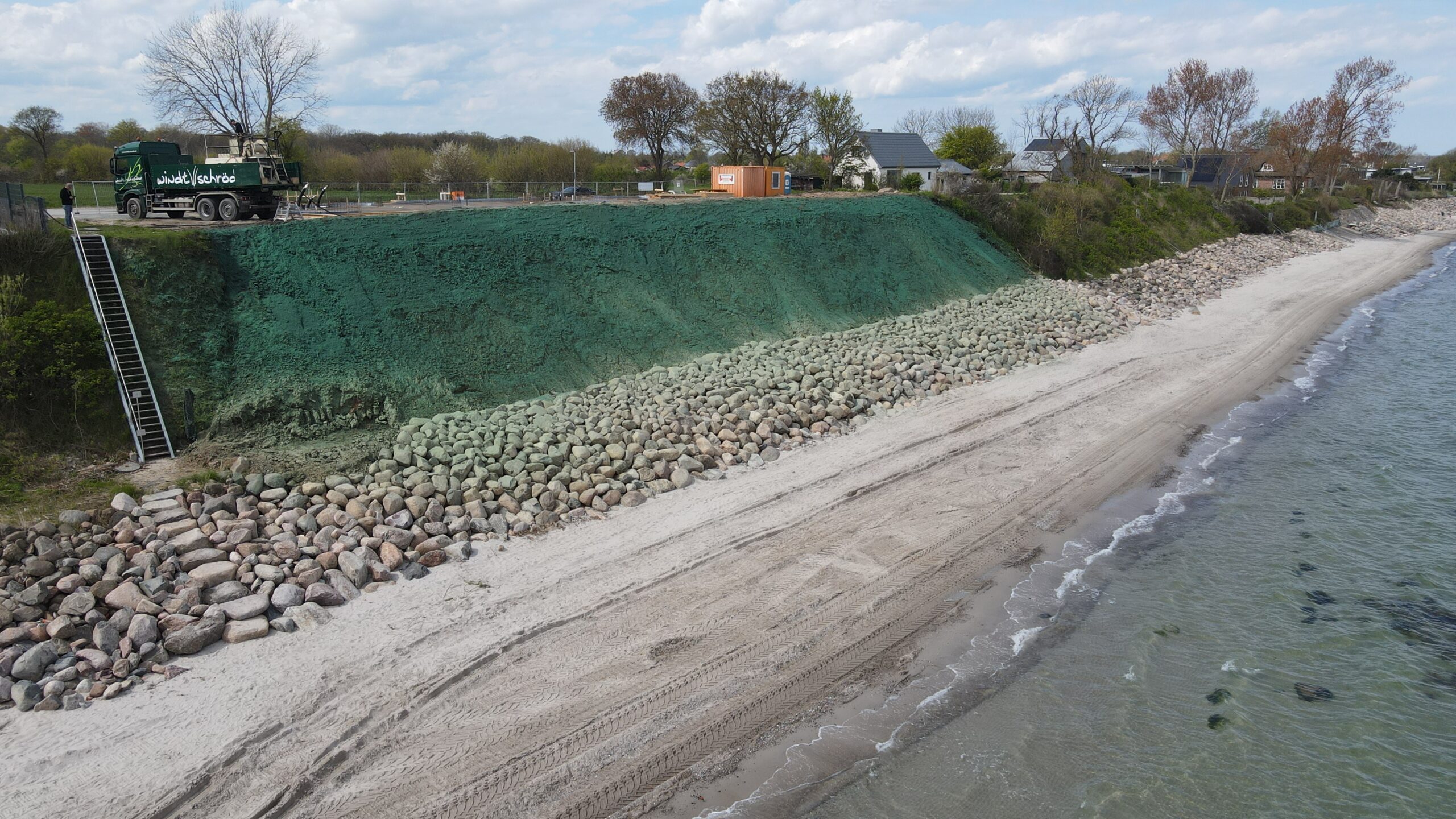
Hüdrokülv in Estonia

In Estonia, hüdrokülv is a widely established commercial term for hydraulic seeding. Related project terminology includes erosioonikaitse or erosioonitõrje for erosion protection and taimestiku rajamine for vegetation establishment. Hüdrokülv describes the application method; complete dune or erosion management may require additional ecological, hydraulic or structural measures.

Relevant applications

Dune Stabilization

Temporary sand binding and vegetation establishment for mobile dunes and other wind-exposed sandy surfaces.

Application
Read more →
Nature-based binders vs. synthetic polymers

A functional comparison of binder systems, environmental constraints and the relationship between biodegradability and effective service life.

Engineering Insight
Read more →
Any questions?

A project, a partnership or a research collaboration — get in touch by phone or email.