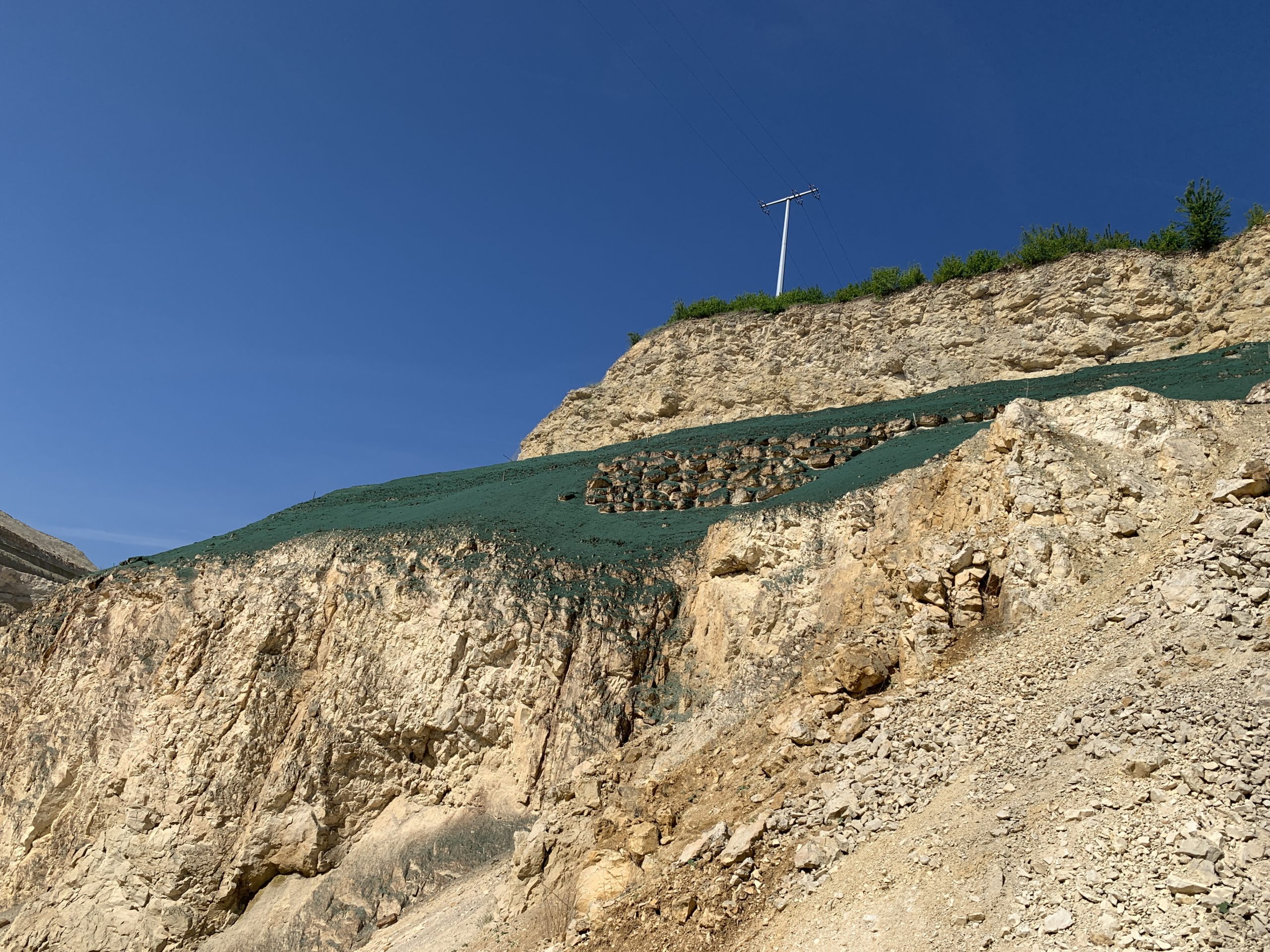
Hydroseeding in Romania should be designed around the function of the completed surface rather than a standard seed-and-mulch specification. Site analysis should include substrate structure, compaction, pH, salinity, organic content, contamination status, slope angle, drainage, erosion exposure and the expected establishment window.
On mine sites, technical rehabilitation must precede biological rehabilitation. This can include slope regrading, drainage, containment, geotechnical stabilization or remediation of contaminated material. Hydroseeding then supports the biological phase by applying the selected vegetation, growth medium, moisture-management components and surface-binding system. It does not neutralize contaminated waste, prevent acid drainage or certify the stability of a tailings facility.
Railway embankments require a different application strategy. The system must accommodate long linear surfaces, restricted access, existing drainage and limited working windows. Hydraulic application can distribute material across cuttings and fills without continuous trafficking over the treated surface. Where access from the slope itself is unsafe or undesirable, hose-based application may allow equipment to remain on a suitable service area.
The engineered material system may combine selected fibers, a biologically based binder, water-retention functions, nutrient support and vegetation adapted to the site. Expected persistence must match the erosion window and establishment period. Applicable Romanian and EU environmental requirements remain part of project qualification, and proprietary formulations remain project-specific.