Applications

Industrial Surface Management

Coordinated dust, erosion, drainage and cover systems for active industrial sites.

Application

When dust, erosion and drainage compete for the same surface

Industrial sites rarely present a single surface problem. Haul roads, stockpiles, graded fills, contaminated ground, drainage corridors and inactive areas may exist next to one another while being exposed to different loads and environmental conditions.

A treatment that controls dust may alter infiltration or runoff. A cover that protects an inactive area may not tolerate traffic. Drainage measures can concentrate water onto surfaces that remain vulnerable to erosion. When these functions are addressed independently, one intervention may reduce the effectiveness of another or move the problem elsewhere on the site.

Continuous operations add further constraints. Treatment areas must remain accessible, production interruptions must be limited and temporary measures must fit changing site layouts.

Industrial surface management therefore requires a coordinated system rather than a collection of isolated products. The objective is to define the required function of each surface, understand the interactions between treatment zones and establish a practical sequence for implementation, monitoring and adjustment.
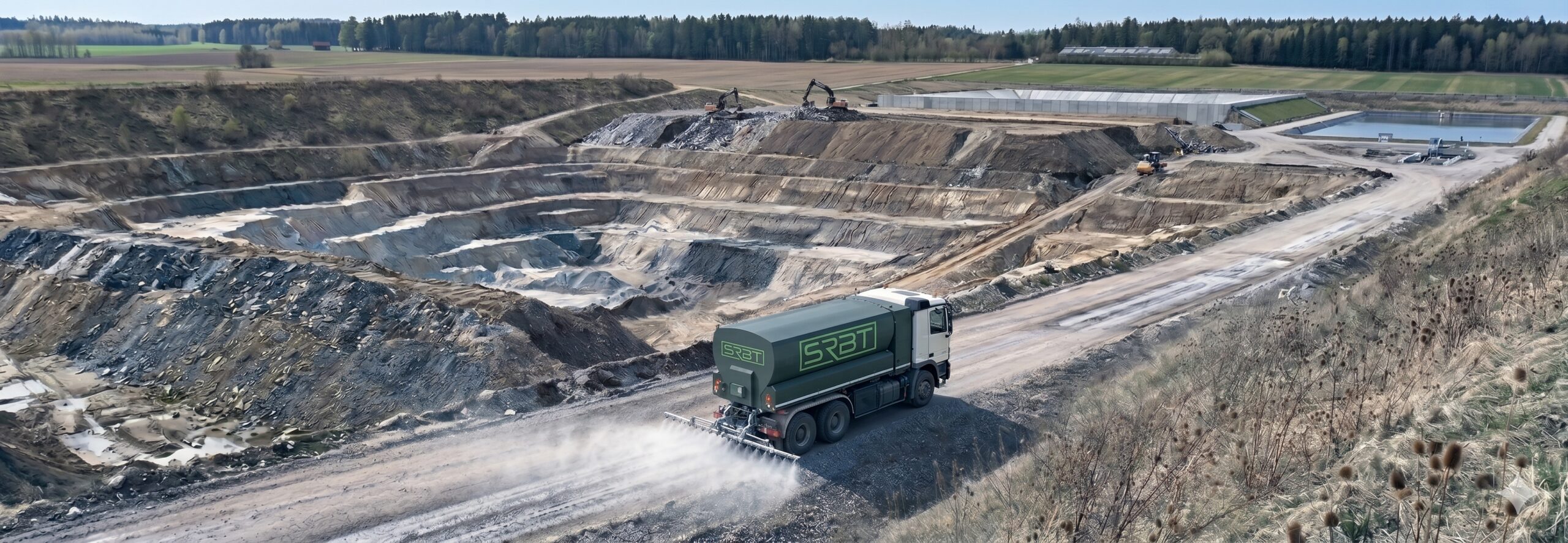
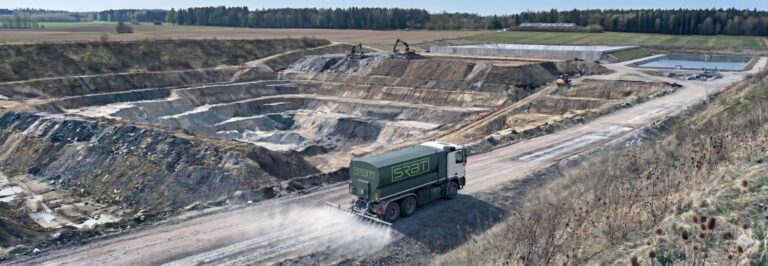
SRBT tanker spraying dust suppressant along a quarry haul road

Fields of application

Why standard methods fall short

Mixed surfaces

Industrial sites combine mineral stockpiles, haul roads, compacted yards, exposed soil, waste material and rehabilitated areas. Each surface responds differently to traffic, rainfall and treatment, making one standardized method unsuitable across the entire site.

Continuous ops

Production, transport and material handling may continue while surface measures are installed. Limited access windows, changing traffic routes and ongoing disturbance make conventional rehabilitation sequences difficult to implement without detailed operational coordination.

Regulatory limits

Dust emissions, runoff, wastewater discharge and contaminated material may be subject to different permits, thresholds and monitoring requirements. A technically effective treatment is unsuitable if it creates a conflict with the site's environmental or operational obligations.

Dust complaints

Visible dust can affect workers, equipment, neighboring properties and community relations. Complaints may indicate recurring emissions that require source analysis rather than repeated short-term suppression without addressing surface condition, traffic or drainage.

The engineered site-wide system

SRBT develops industrial surface-management systems by dividing the site into functional treatment zones. Each zone is assessed according to material type, contamination status, traffic, drainage, exposure, required service life and future use.

The resulting plan may combine dust binding, erosion protection, temporary or permanent cover, drainage coordination and progressive revegetation. Contaminated surfaces may require a compatible cover or encapsulation system to limit particle release, water contact or material movement. Such measures must be designed around the identified contaminants, applicable permits and the site's remediation strategy; surface treatment does not replace contaminant assessment or statutory containment requirements.

Dust-control materials are also evaluated against their environmental pathway. Vinyl-acetate-based and other synthetic polymer binders cannot be treated as one regulatory class. Each formulation must be assessed for its physical form, use and environmental behavior.

Calcium chloride and magnesium chloride can provide effective dust suppression under suitable conditions, but their potential movement through runoff or drainage requires particular attention near surface water, groundwater and sensitive habitats. Their use must be checked against local approvals, site drainage and receiving-water requirements.

Biopolymer-based and other biodegradable alternatives may reduce persistence, but environmental degradability can also shorten the effective service period. Performance claims must therefore reflect realistic durability, traffic and weather exposure; repeat application may be required. Proprietary formulations remain project-specific.

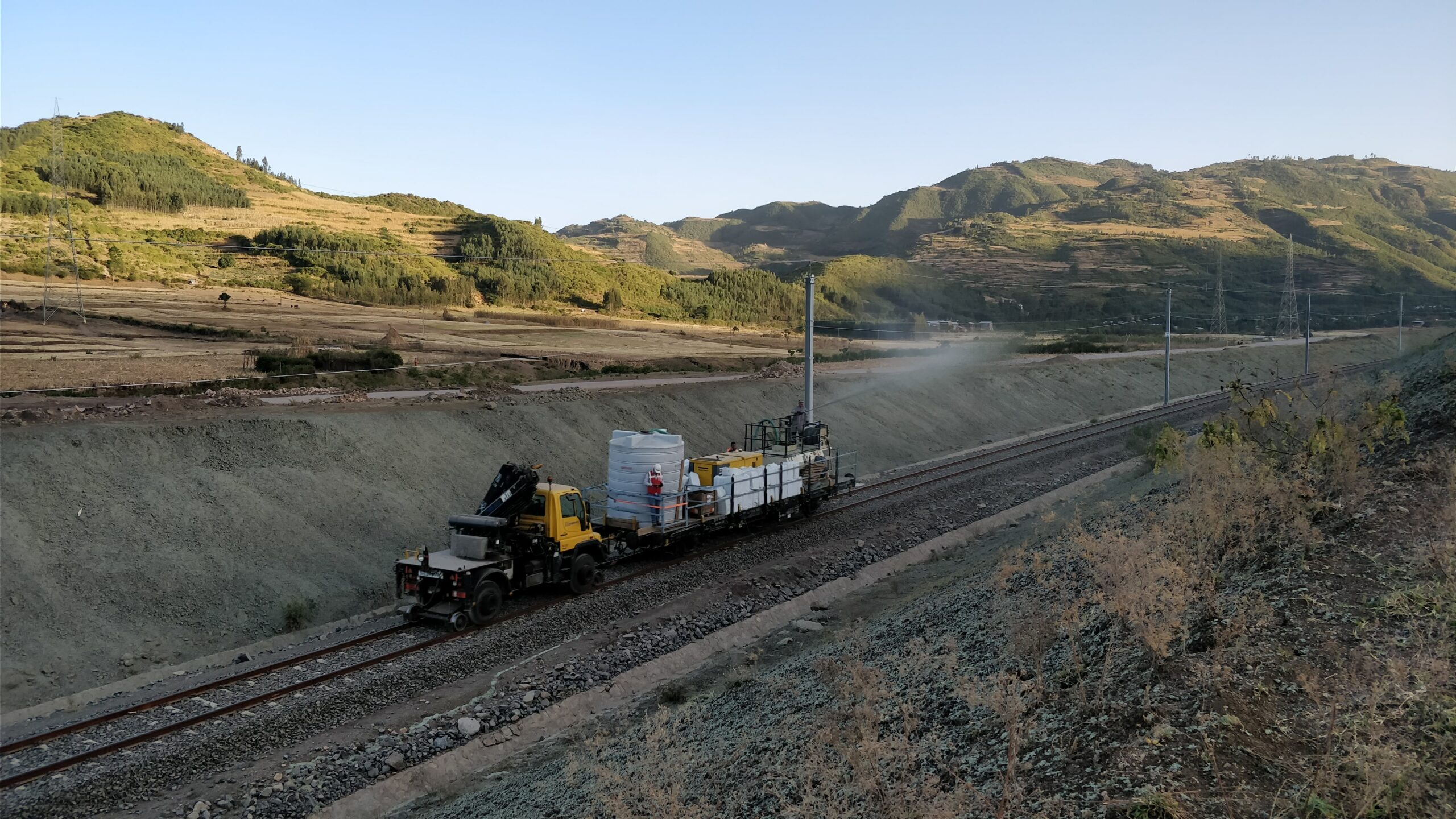
Rail-mounted spraying unit revegetating an embankment along a railway line

Our approach

01
Site analysis

Map surfaces, contaminants, traffic, drainage, permits and operational constraints.

02
Material system

Coordinate dust, erosion, cover and water-management functions across treatment zones.

03
Application

Sequence access, preparation, treatment, monitoring and adjustment around continuing operations.

Related case study

SRBT tanker spraying dust suppressant along a quarry haul road
A Guide to Dust Control

Binder systems, rates and reapplication cycles.

Engineering Guide
Read more →
Any questions?

A project, a partnership or a research collaboration — get in touch by phone or email.