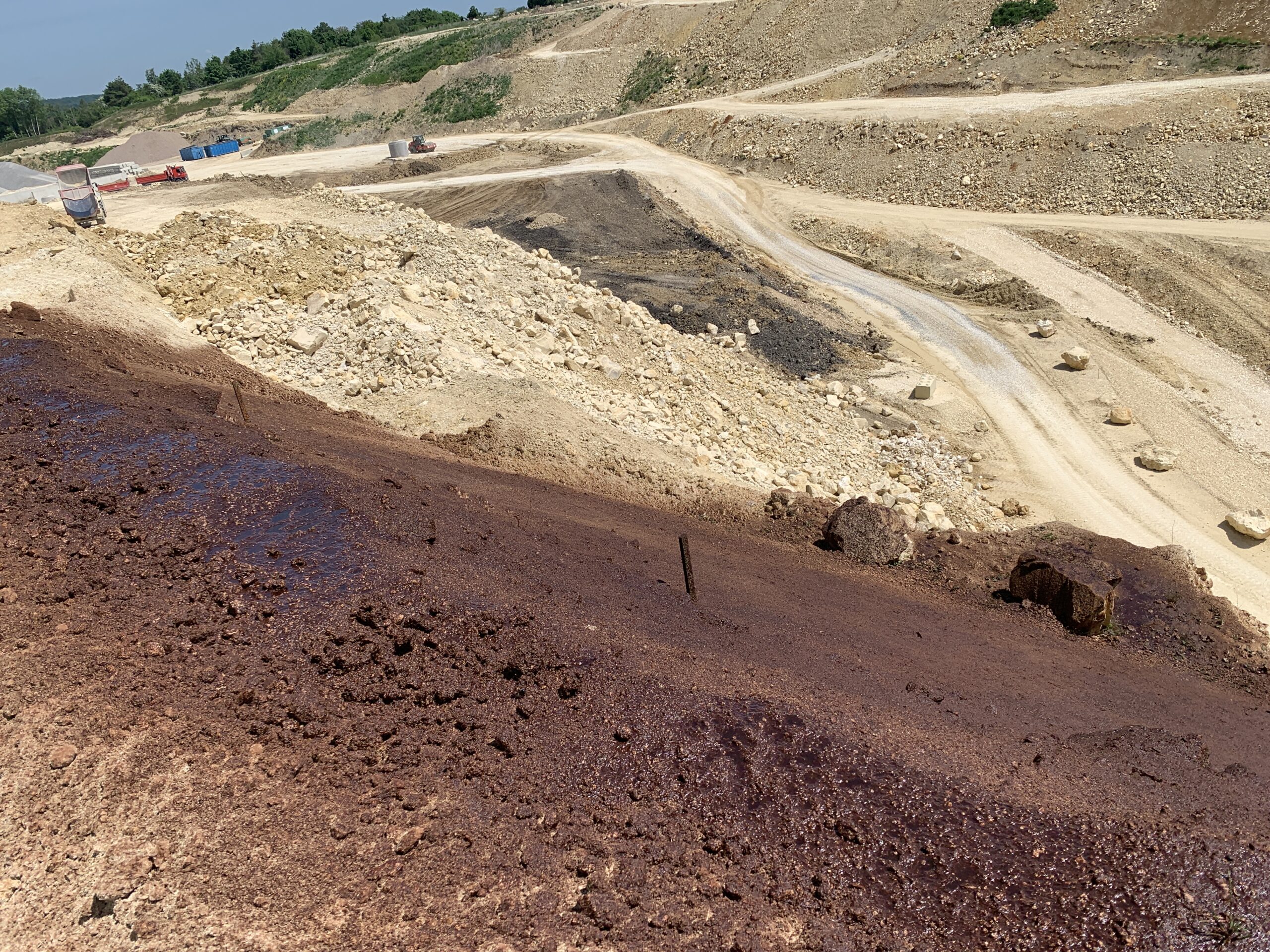
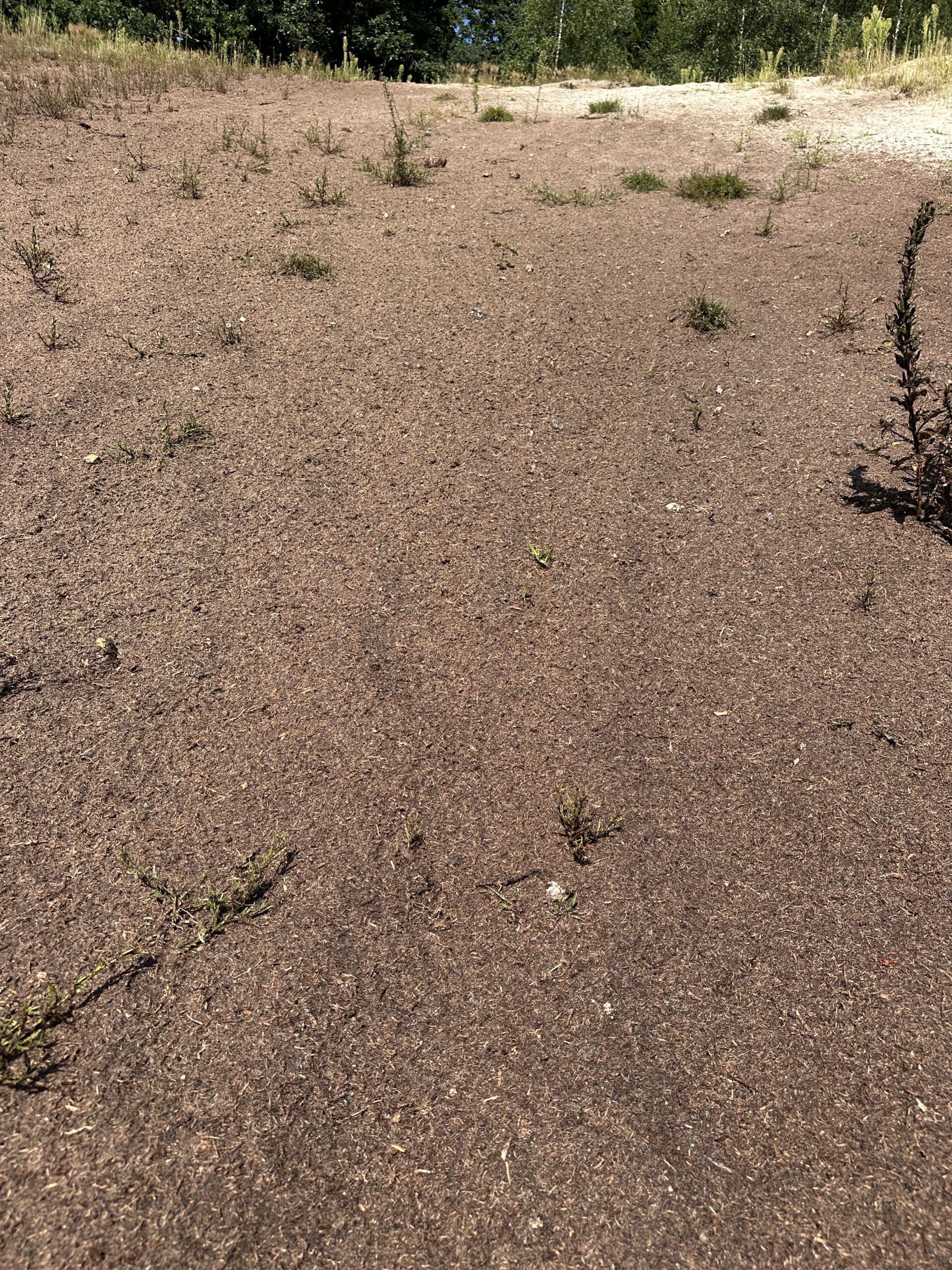
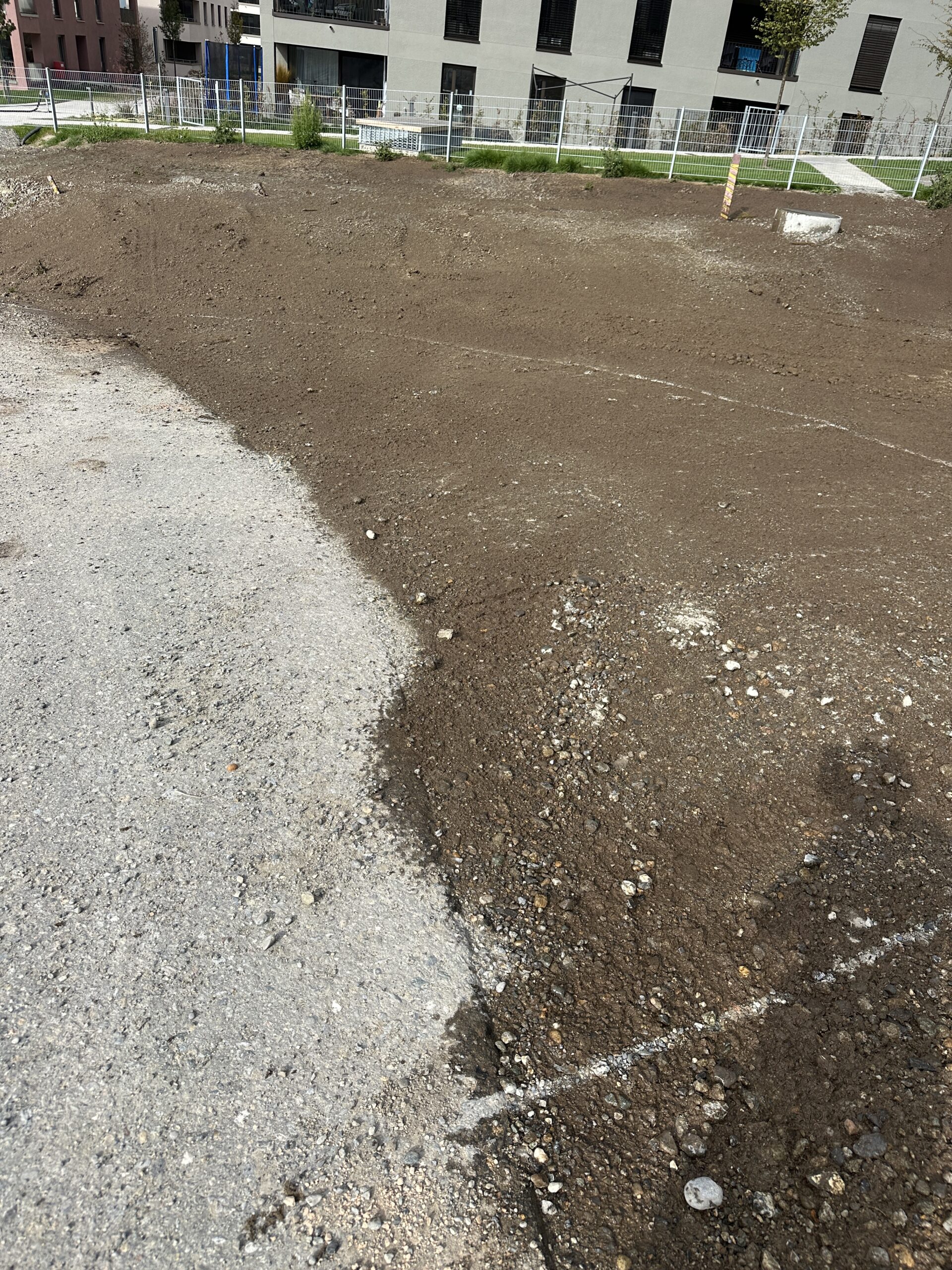
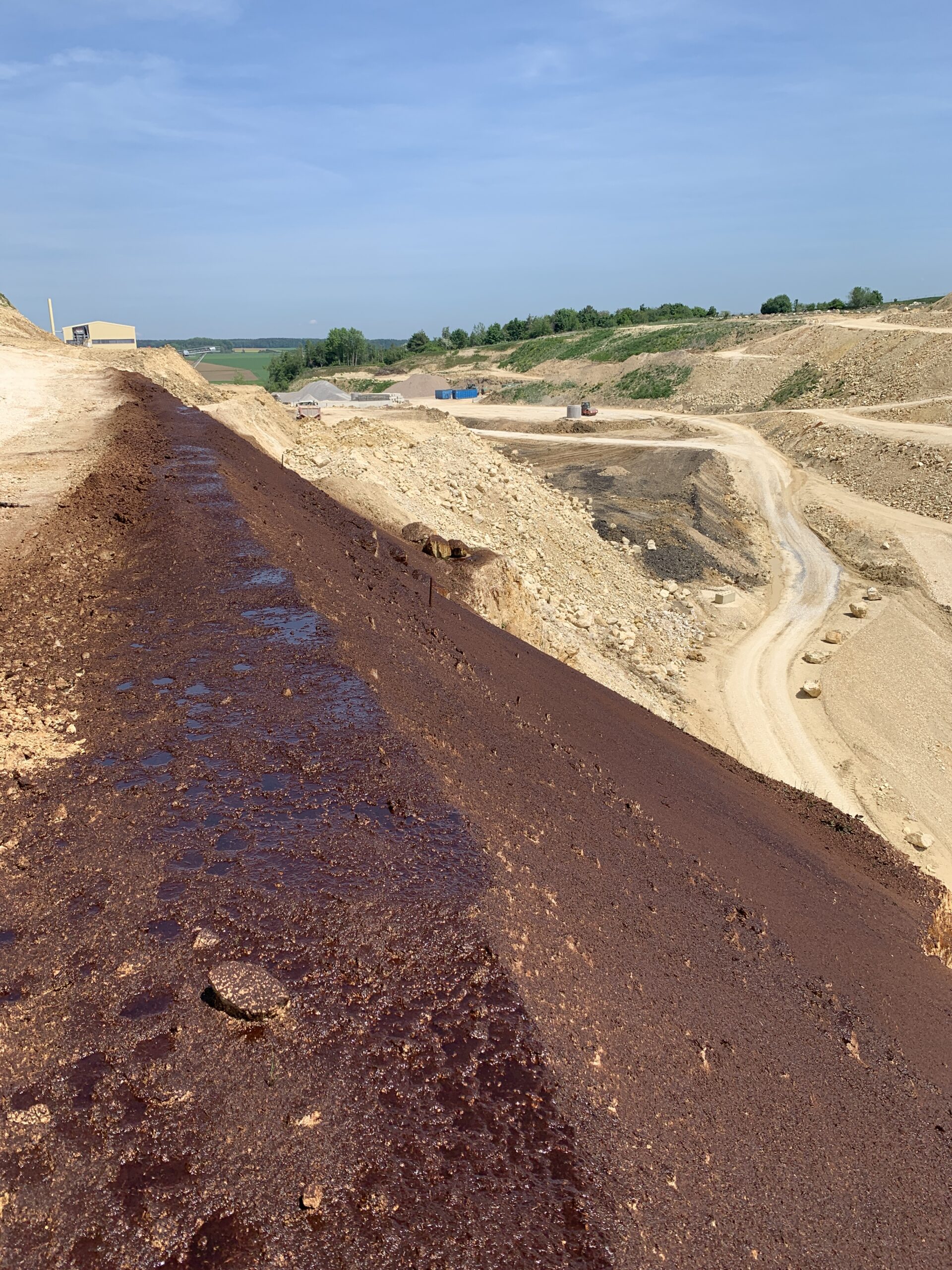
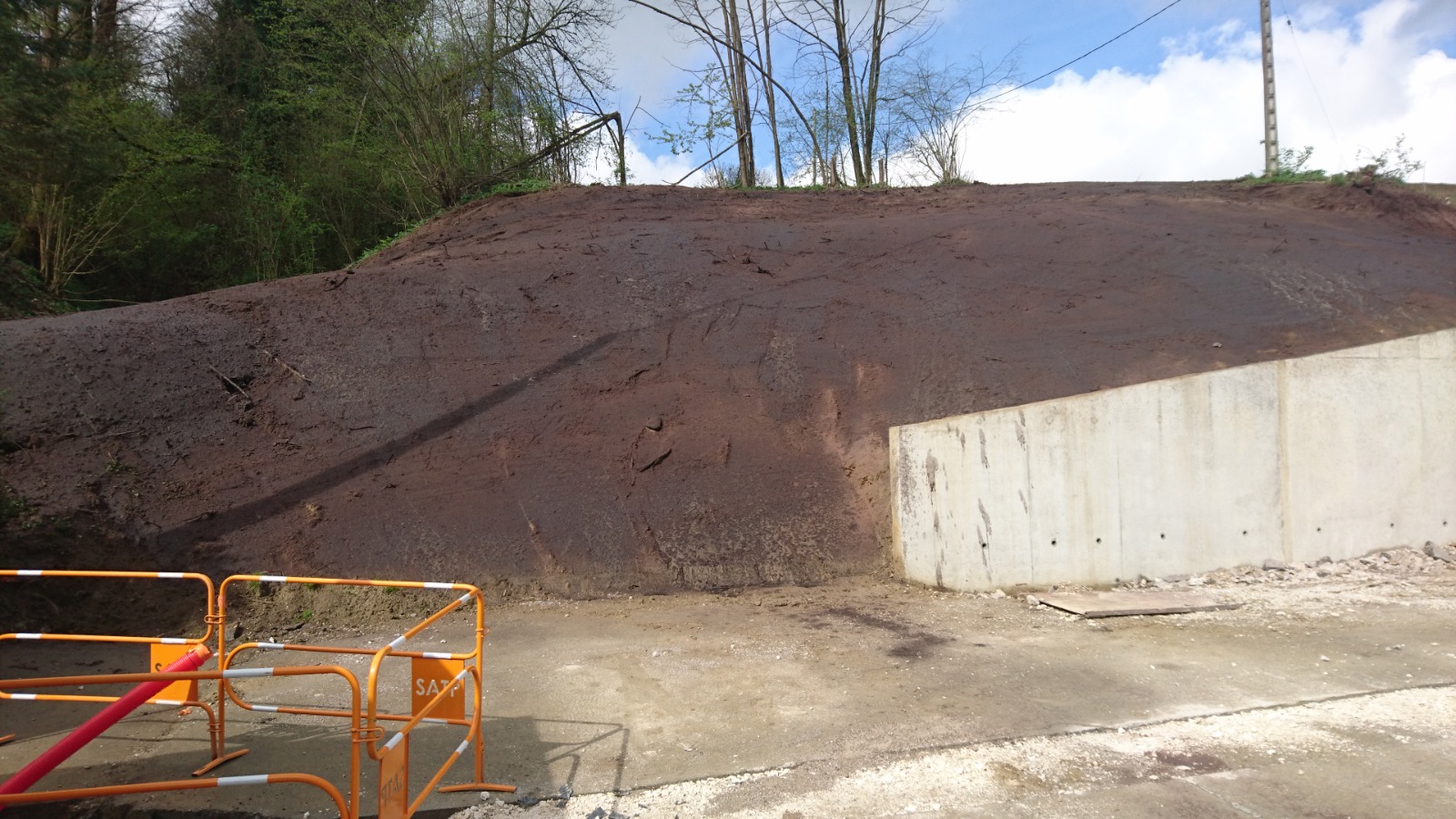
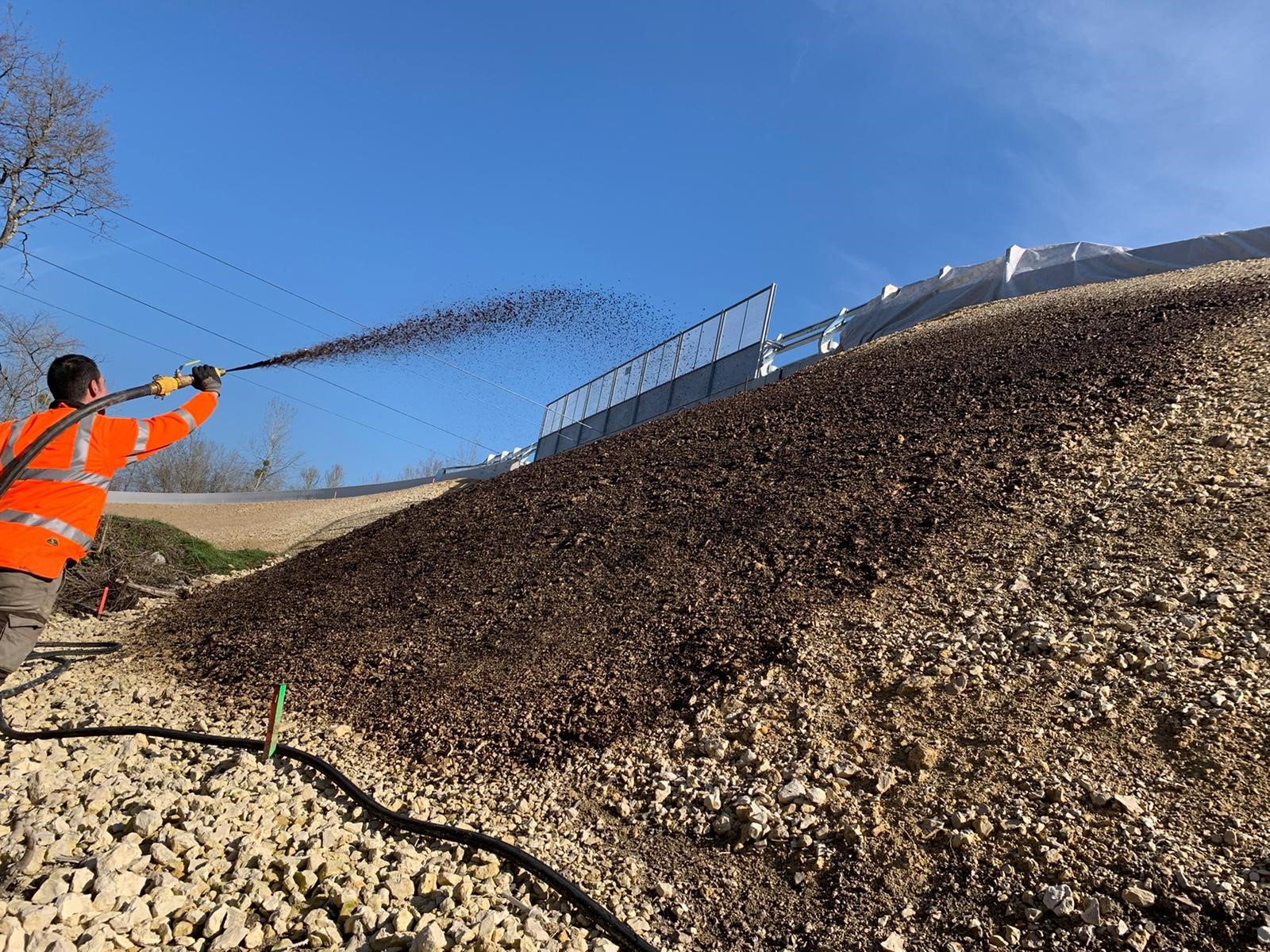
Pedogenesis on extreme sites: natural soil formation on raw substrates takes decades to centuries. The key soil-forming processes — accumulation of organic matter, build-up of a nutrient regime, establishment of a microbiome, development of a pore structure — can be initiated in accelerated form through deliberate material composition and hydraulic application. The precondition is that every necessary component goes in at the same time: organic carrier substance, nutrient sources, biological starters (mycorrhiza, bacterial inoculant) and structure-forming elements.
Pore structure: the fiber structure of the hydraulically applied layer creates a porous fabric with defined macro- and micropores. Macropores allow gas exchange and water infiltration; micropores hold plant-available water against gravity. This two-pore system is the physical basis for germination and early root development.
Mycorrhizal inoculum: biochar as a carrier substrate for mycorrhizal fungi raises the establishment rate of the inoculum considerably compared with mixing it directly into the seedbed. The symbiotic root connections multiply the effective root surface area and open up nutrient reserves the plant root could not reach on its own — critical on nutrient-poor raw soils.
Contaminated sites (phytostabilization): on contaminated substrates the growth medium pursues a different objective than on clean raw soils: not phytoextraction (uptake of contaminants into the plant) but phytostabilization — immobilizing the contaminants in the soil through root activity, organic complexation and reduced water movement. The formulation is adapted to that objective.