Equipment

Hydroseeders / Hydroseeding Machines

Professional mixing and application systems for hydraulic seeding, hydromulching and engineered surface treatments.

Equipment

Hydroseeders and hydroseeding machines

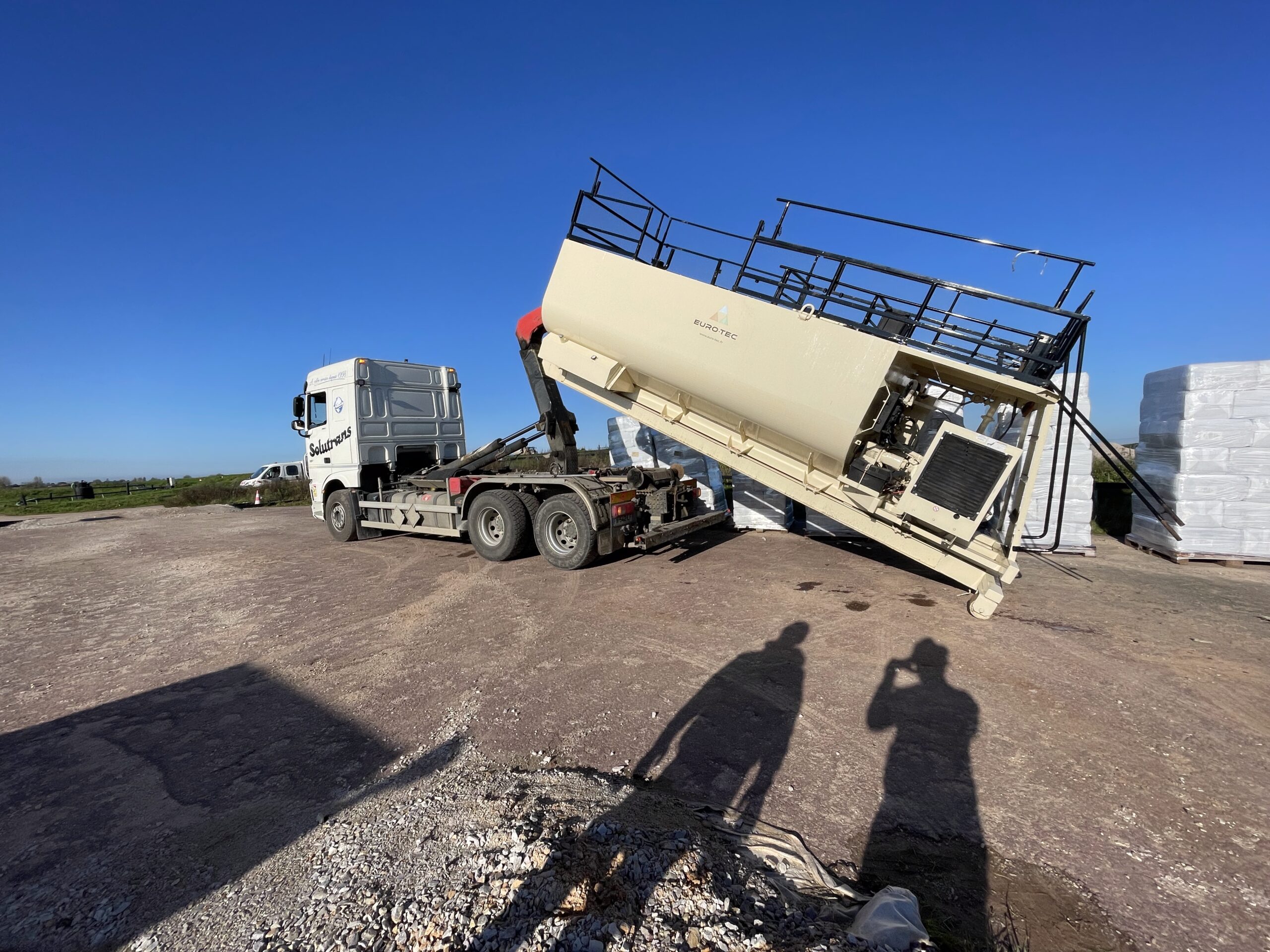
A hydroseeder—also described as a hydroseeding machine—combines material mixing, slurry circulation and hydraulic application in one mobile system. Its purpose is to prepare and distribute seed, fibers, fertilizer, soil amendments, binders or hydraulic growth media across a defined treatment area.

Machine selection begins with the intended material system. Fiber type and length, solids content, hydration behavior, viscosity and required application rate influence the tank, agitation method, pump and discharge configuration.

Mechanical-agitation systems use paddles or similar components inside the tank to blend and suspend materials. They are generally suitable where dense, fiber-rich mixtures require controlled mechanical mixing. Jet-agitation systems use recirculated liquid to mix the tank contents and may be appropriate for less viscous slurries and high-output applications. Actual capability depends on the complete system, not the agitation label alone.
Pump architecture creates a further distinction. Gear pumps are positive-displacement systems that can provide controlled flow and pressure with viscous material. Centrifugal pumps can deliver high circulation and application flow, but their output varies with pressure, hose length, elevation and slurry characteristics. Neither design is universally superior.

A suitable hydroseeding machine must therefore be evaluated as an integrated system: tank geometry, agitation, pump, piping, valves, hose diameter, nozzles, application distance, cleaning requirements and operator capability must all match the intended work.

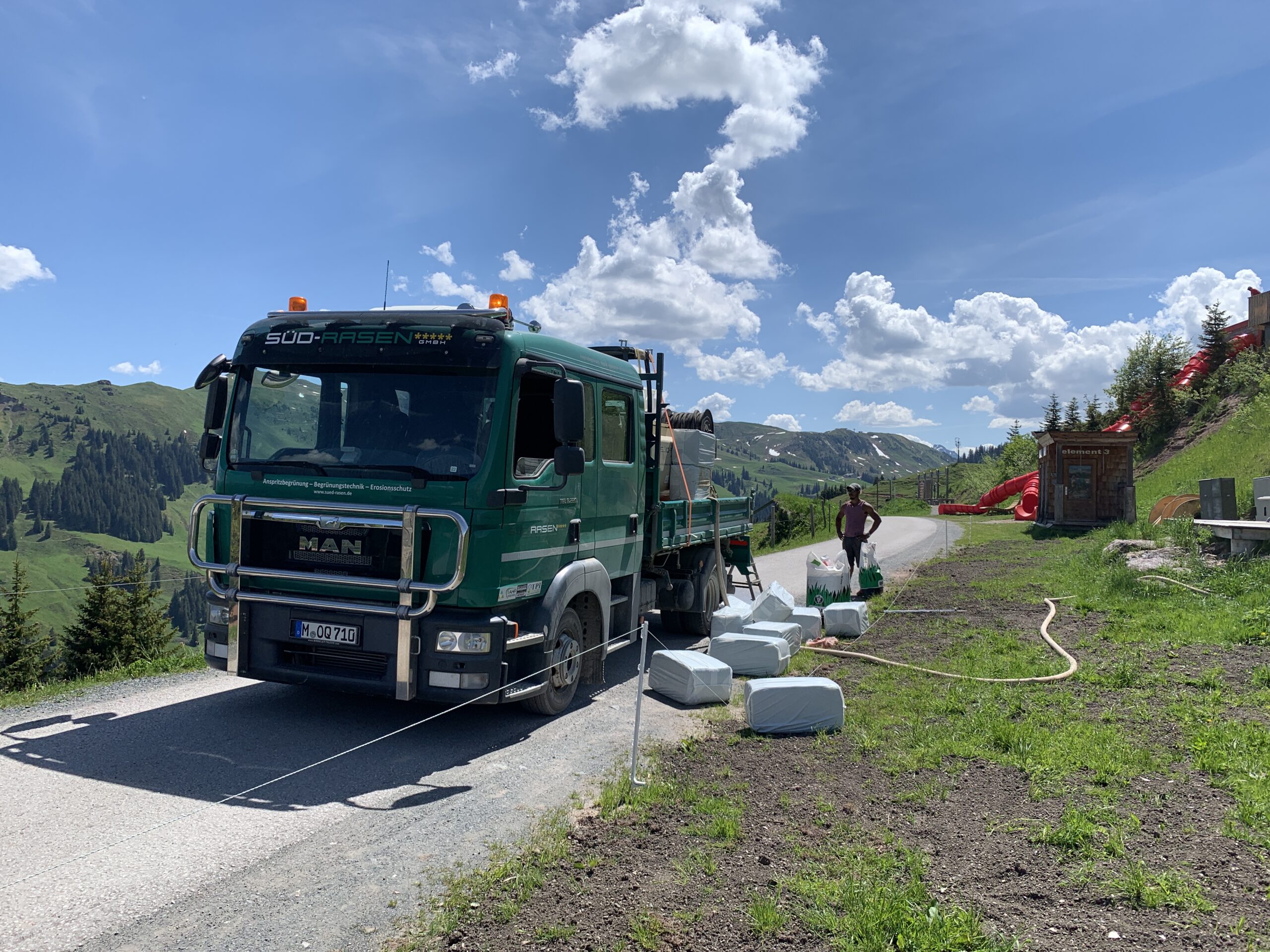
Service vehicle and mulch bales at a high-altitude revegetation site

Fields of application

Application context

Slopes & embankments

Slope work requires sufficient pumping pressure, hose reach and slurry stability to achieve consistent coverage across variable gradients without excessive machine movement or uncontrolled runoff from the treated surface.

Large open areas

Broad treatment areas place greater emphasis on tank capacity, mixing-cycle time, refill logistics and application output. Efficient circulation and predictable coverage are essential where productivity influences the overall delivery program.

Mine & industrial sites

Mine and industrial projects may involve abrasive substrates, long pumping distances, difficult access and specialized material systems. Equipment must integrate with site logistics, safety requirements and continuing operations.

Roadsides

Roadside applications require controlled distribution along narrow, linear treatment zones. Machine dimensions, traffic management, hose handling and the ability to work from restricted access points become key selection factors.

Qualification path—not a checkout

Selecting a hydroseeder is not a checkout decision. A machine that performs well with a light seed-and-fertilizer slurry may not be suitable for fiber-rich hydromulching media, long-distance pumping or specialist surface-binding applications.

SRBT begins with the intended operating model: target applications, material systems, project scale, terrain, water logistics, available crews and local market requirements. These inputs define the appropriate mixing method, pump architecture, tank capacity, discharge system and operator-training needs.

Where relevant, access to machinery, technical support and delivery resources can be coordinated through an international partner and equipment-fleet network. The objective is to establish a functioning application capability—not simply to place equipment in a market.

Contractor qualification may therefore include equipment assessment, process training, material handling, application control and initial project support.

Explore the contractor qualification pathway
Any questions?

A project, a partnership or a research collaboration — get in touch by phone or email.