Services
Services
SRBT delivers hydroseeding, aerial seeding, erosion control and land reclamation across Europe — on slopes, landfills, extraction sites, golf courses and in high-altitude terrain that cannot be reached from the ground. Own machinery, project-specific formulations and simulation-based planning ahead of every application.
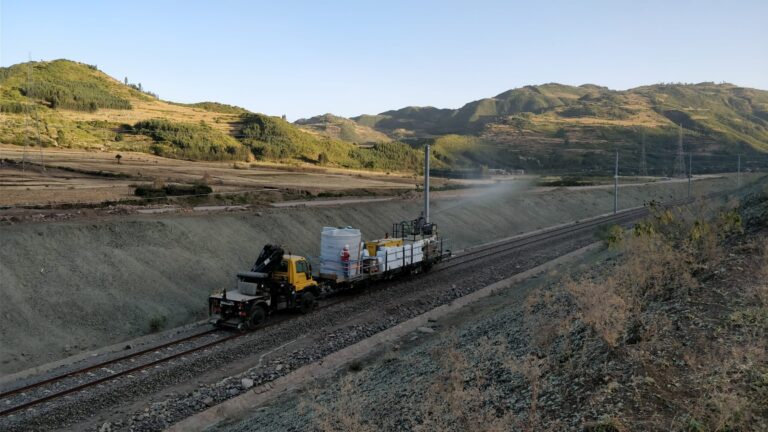
Road and motorway embankments, railway formations, noise barriers, airport grounds. Fiber-reinforced hydroseeding systems ensure vegetation establishment under sustained erosion and traffic loads — tender-ready and documented to the relevant standards.
Read more →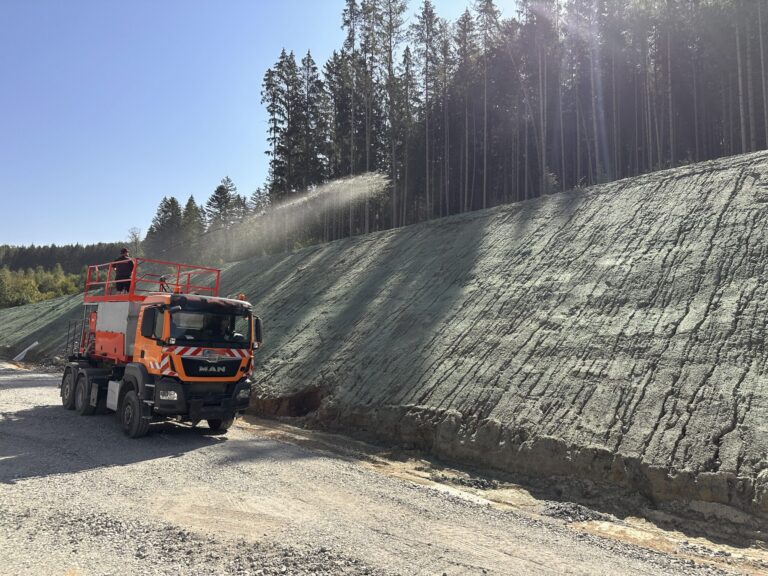
Post-mining land, landfills, peatlands and floodplains — sites where seeding alone will not carry a vegetation cover. SRBT builds functioning soil structures from the ground up: pedogenesis methods, phytostabilization of contaminated substrates and aerial seeding for inaccessible high-altitude terrain. The objective is to restore ecological soil function, not just ground cover.
Read more →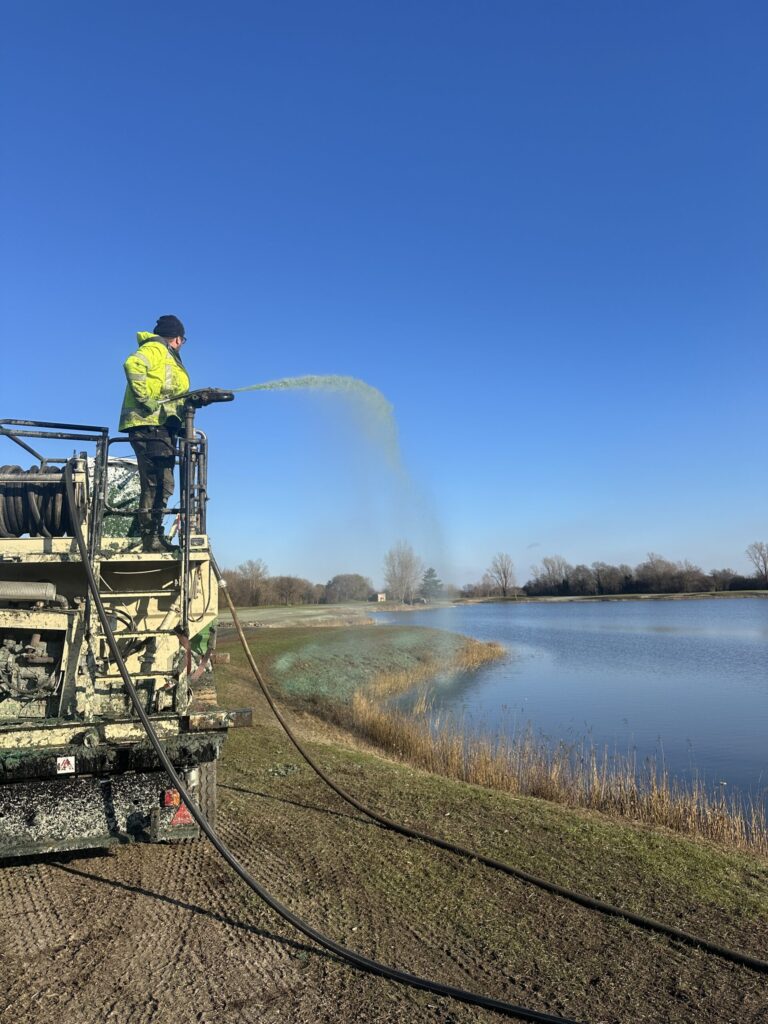
Spoil heaps, gravel plants, mines, unpaved works areas and forest roads. Hydraulically applied polymer suspensions bind fine dust for the long term — no water spraying, no interruption of operations. Every formulation is fully biodegradable.
Read more →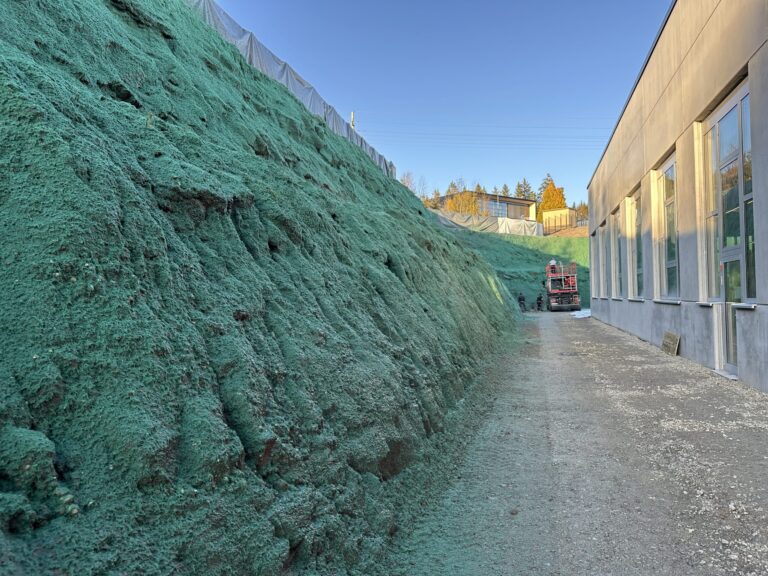
Reclamation obligations do not have to interrupt ongoing operations. SRBT carries out revegetation alongside active extraction and reclaims areas in stages as they are released — matched to permit conditions and the constraints of the site.
Read more →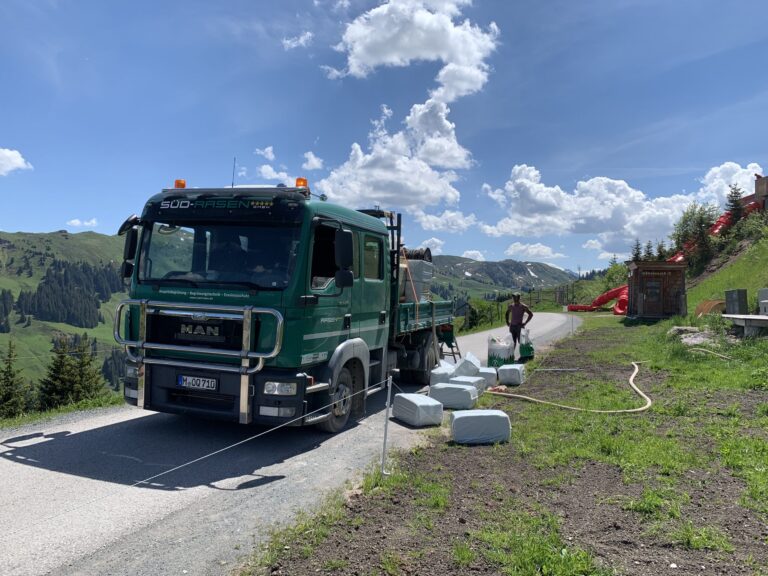
New construction, renovation and surface repair on golf courses and sports facilities. Hydroseeding is matched precisely to playing requirements and maintenance intensity; surfaces are typically playable again after 6–8 weeks.
Read more →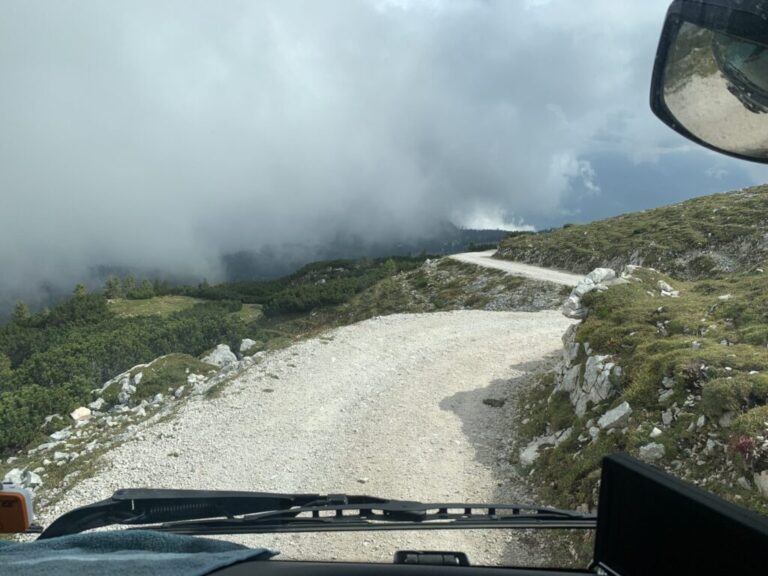
Protecting burned terrain from erosion during the critical recovery period.
Read more →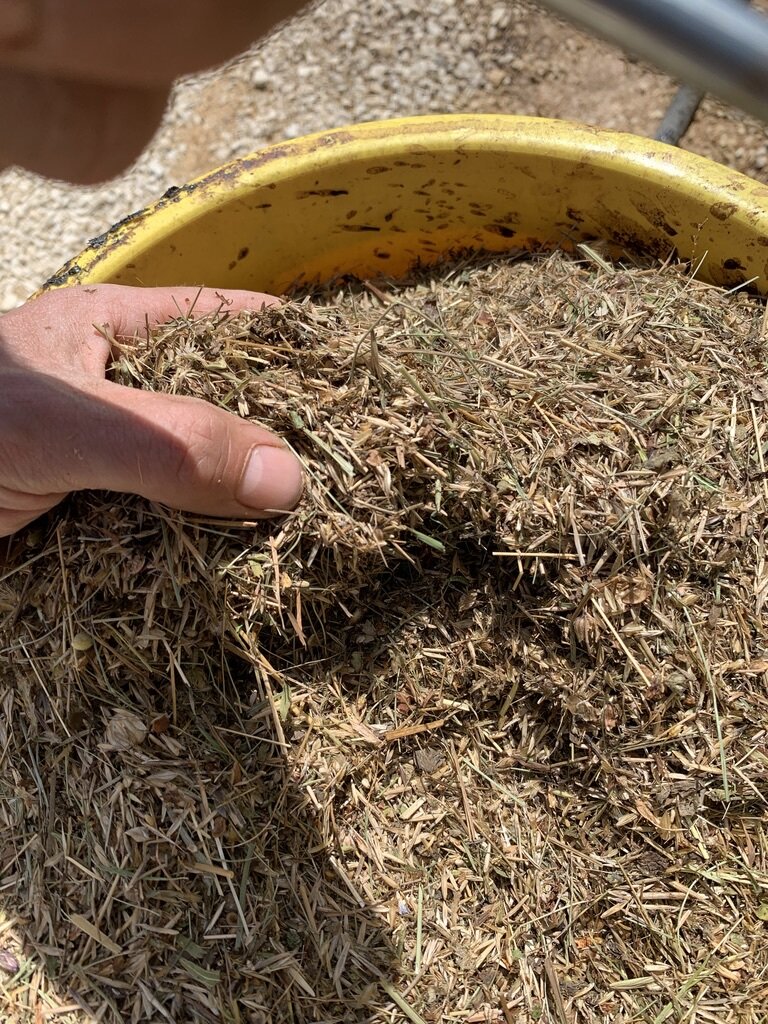
Preparing vulnerable surfaces for drought, extreme rainfall and climatic stress.
Read more →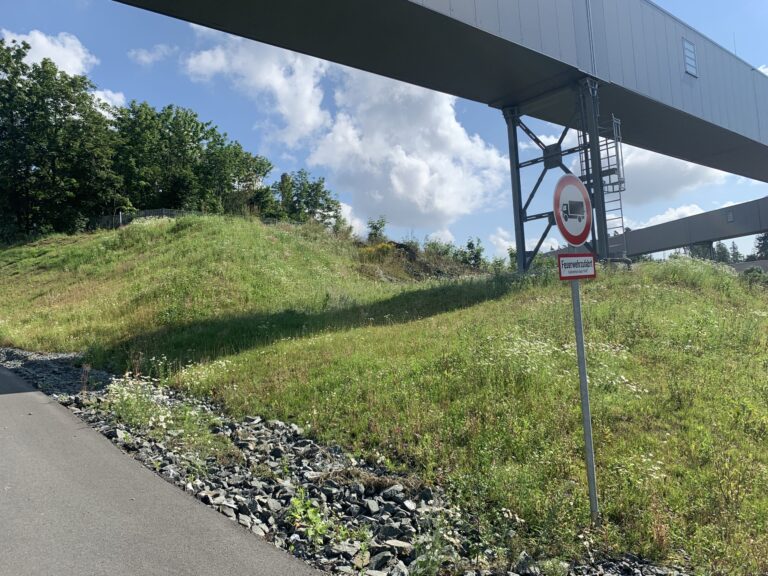
Coordinating dust, erosion, drainage and cover across active industrial sites.
Read more →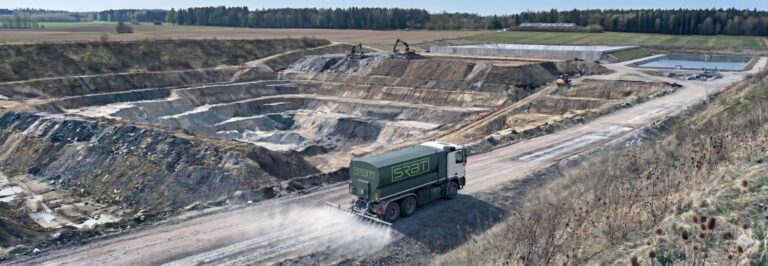
High-altitude sites, steep faces, lift corridors and avalanche defense structures — terrain that ground-based machinery cannot reach. Weight-optimized formulations maximize the area covered per flight hour. Seed mixtures are selected for the specific site.
Read more →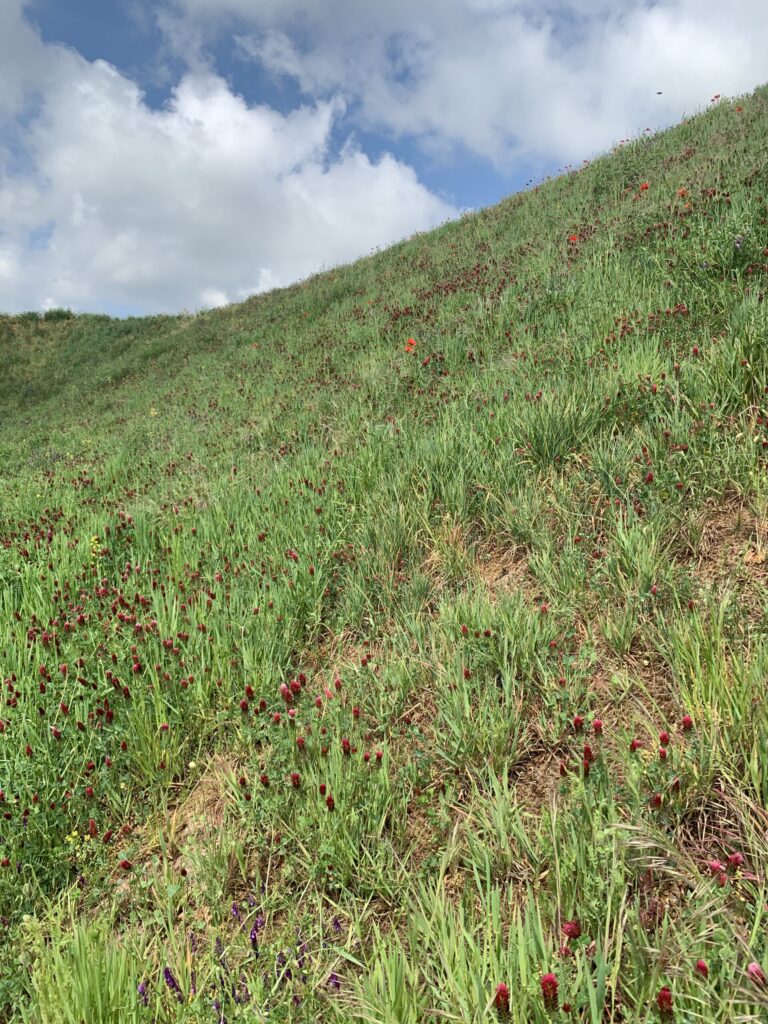
Gravel, crushed stone, construction rubble and contaminated substrates with no developed topsoil. A hydraulically applied growth medium replaces expensive soil haulage and creates the seedbed conditions directly on the raw substrate.
Read more →Infrastructure & Civil Engineering
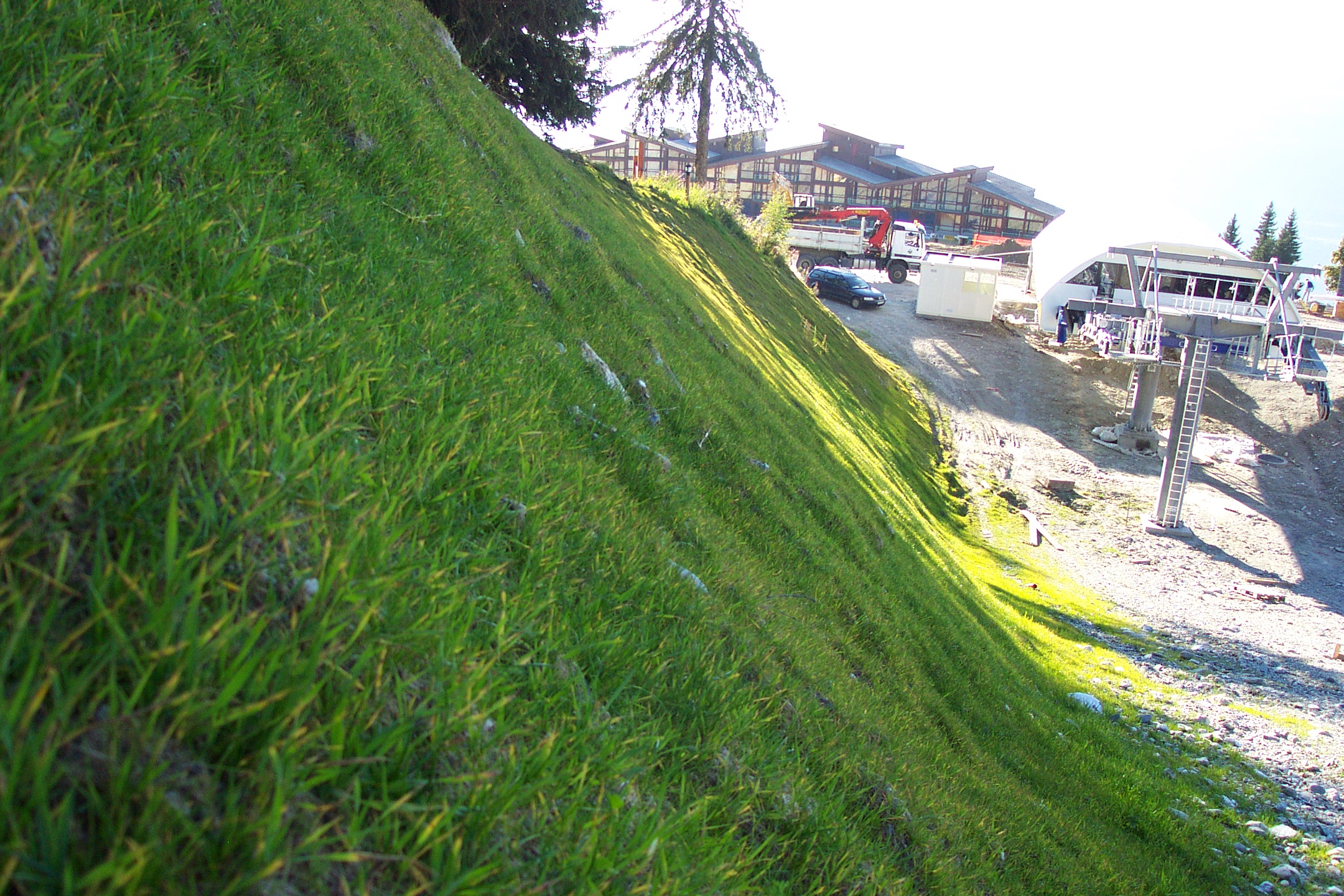
Hydroseeding and hydromulch systems for slopes under sustained erosion and traffic loads. Fiber-reinforced formulations ensure vegetation establishment on gradients of 1:1 and steeper — faster and more evenly across the area than conventional dry seeding.
Read moreHydraulically applied seeding for verges, central reservations and traffic islands. Large-area hydroseeding as an efficient alternative to hand seeding — including sections along motorways and trunk roads that are difficult to reach.
Read moreRevegetation of railway embankments and lineside areas with erosion-stable hydromulch systems. Formulations are matched to nutrient-poor substrates and to the operating constraints of the rail environment.
Read moreRevegetation of safety-relevant areas in the airport environment. Rapid vegetation establishment by hydroseeding reduces erosion and bird strike risk in jet blast zones and safety strips.
Read moreRevegetation of dike bodies and coastal defense structures with erosion-stable vegetation systems. Hydromulch formulations for alternating wet sites exposed to wave action and sandy substrates.
Read moreCommercial & Industrial
Hydroseeding and hydraulically applied revegetation for large raw soil areas on industrial and commercial sites. Formulations developed per project deliver even coverage on compacted, nutrient-poor ground.
Read moreRevegetation of noise barriers and screening bunds with hydromulch systems. Vegetation establishes quickly even on compacted, nutrient-poor bund material — without hand seeding and without turf rolls.
Read moreHydraulically applied polymer suspensions bind fine dust on unpaved parking areas and works access roads for the long term. Fully biodegradable and applicable without interrupting operations.
Read morePhytostabilization and surface sealing on contaminated ground. Hydraulically applied systems limit the spread of contaminants by wind and rainfall — with no mechanical soil removal.
Read moreA hydraulically applied growth medium replaces expensive soil haulage. It creates seedbed conditions directly on raw substrates with no developed topsoil — for reclamation, restoration and the revegetation of extreme sites.
Read moreErosion control
Hydraulically applied protective mulches for temporary and permanent erosion control on slopes, embankments and raw soil areas. Fiber-reinforced systems for steep terrain and safety-critical areas with high protection requirements.
Read moreHydraulically applied erosion control systems replace geotextiles wherever a slope can carry vegetation. No material logistics, no installation work and full biodegradability — at comparable protective performance.
Read moreRevegetation of areas steeper than 1:1, on raw soils without fine earth, or under extreme climatic conditions. Formulations for sites where standard hydroseeding and hydromulch systems no longer suffice.
Read moreA hydraulically applied fiber-bonded matrix as an alternative to prefabricated erosion control mats. Gap-free coverage without installation work — including on hard-to-reach slopes and irregular terrain.
Read moreHydroseeding and erosion control systems for vineyard slopes and terraces. Hydraulic application between vine rows protects the soil — no compaction from heavy equipment.
Read moreGolf & Sports Turf
Complete turf renovation on golf courses and sports grounds using the SR system. Hydroseeding produces an even surface; areas are typically playable again after 6–8 weeks.
Read moreHydromulch methods for areas of a golf course with no irrigation infrastructure. Water-retaining materials in the formulation extend germination moisture and reduce the watering required during establishment.
Read moreRevegetation and stabilization of bunker faces on golf courses. Precise hydroseeding produces even vegetation cover on steep, sandy substrates — without compacting the bunker sand.
Read moreEstablishing dry grassland and biodiversity areas on golf courses. Site-adapted seed mixtures create low-maintenance, ecologically valuable areas — matched to soil type, aspect and maintenance intensity.
Read moreAerial Seeding & Alpine Revegetation
Hydroseeding and hydromulch for alpine sites from 1,500 m above sea level. Formulations account for short vegetation periods, frost dynamics and nutrient-poor high-altitude soils — with native seed mixtures.
Read moreRevegetation and erosion control on ski slopes and lift corridors after construction work. Site-adapted mixtures of native species support ecologically sound vegetation that holds through the winter.
Read moreWeight-optimized hydromulch formulations for maximum area output per flight hour. Used on steep faces, avalanche defense structures and sites with no ground access — on specialist projects across Europe.
Read moreRapid revegetation and surface stabilization for military and security-critical areas. Formulations for extreme conditions, with short response times and documented performance.
Read moreReclamation & Restoration
Raw ground with no soil development, extreme pH, high heavy metal content. Multi-stage pedogenesis methods — hydraulically applied soil-building layers provide the base. Phytostabilization on contaminated sub-areas.
Read moreSurface sealing and erosion control alongside vegetation establishment. Formulations are fully biodegradable — nothing persistent enters the leachate or the deposited waste. Application without affecting the sealing layer.
Read moreLift corridors, ski slope construction, avalanche defense structures — short vegetation periods, extreme exposure. Thermocontrol formulations and aerial seeding for inaccessible terrain. Regional provenance seed for high-altitude sites.
Read moreSite-adapted seed mixtures for alternating wet conditions and fully biodegradable formulations. No material that can be washed into watercourses. Species spectra agreed with the authorities.
Read moreHighly sensitive sites with specific pH, nutrient and moisture requirements. Formulations without mineral additives that would alter peat chemistry. No nitrogen input through fertilization.
Read moreSpecies-rich target communities need nutrient-poor substrate conditions. Formulations with deliberately low nutrient content, site-typical regional provenance seed and no non-native species.
Read moreErosion control under flowing water loads, biodegradable materials and woody establishment on the upper bank. Species spectra for riparian vegetation agreed with the water authority.
Read moreCompacted, contaminated or anthropogenically altered substrates. Substrate assessment, contamination assessment and project-specific formulation development — phytostabilization or full reclamation depending on the project objective.
Read moreLarge-scale erosion control after bark beetle damage, windthrow or fire — initial revegetation ahead of replanting. Aerial seeding for inaccessible terrain, with execution timed against the onset of winter.
Read moreSoil Stabilization & Dust Control
Temporary emission control on open working areas. A single treatment replaces resource-intensive continuous wetting by water trucks.
Read moreDust binding plus shear strength under vehicle traffic. A mineral-fiber composite delivers long reapplication intervals even where heavy machinery runs regularly.
Read moreDust control as an ongoing operational task with defined reapplication intervals. Application concepts are built from traffic volume, heavy-load class and local climate conditions.
Read moreTrack stabilization and dust binding in a single pass. Frost-flexible formulations for sites with freeze-thaw cycles — no cracking after frost.
Read moreDust binding and erosion control combined on heap surfaces. Depending on the project phase, either temporary treatment or preparation for later reclamation. All formulations biodegradable.
Read moreWind-driven sand movement — nature-based binder systems without synthetic polymers, approvable in Natura 2000 sites and nature reserves.
Read moreMining, Landfill & Industry
Hydraulically applied polymer suspensions for haul roads, working floors and active heap surfaces. Dimensioned for the dust management plan of the operating site.
Read moreTemporary erosion protection on heap surfaces that have not yet been finally profiled. Formulations are biodegradable, so there is no conflict with later reclamation.
Read moreSurface sealing with erosion control and vegetation establishment. All formulations fully biodegradable — no leachate risk. Application without affecting the sealing layer.
Read moreDeliberate establishment of tolerant plant communities to immobilize heavy metals. Reduces dust discharge and leachate loads without soil remediation.
Read moreTemporary dust control and erosion protection on stockpiled soil. Soil classified for disposal purposes retains its classification — the formulations do not change its disposal status.
Read moreFull reclamation after closure — substrate assessment, pedogenesis methods and vegetation establishment in line with the permit conditions and the target vegetation.
Read moreHydroseeding, hydraulic seeding, revegetation or erosion control — we will answer your questions by phone or email.