Locations

Hydroseeding in Italy

Specialized revegetation and post-fire surface protection for difficult Mediterranean and Alpine terrain.

SRBT delivery capability in Italy

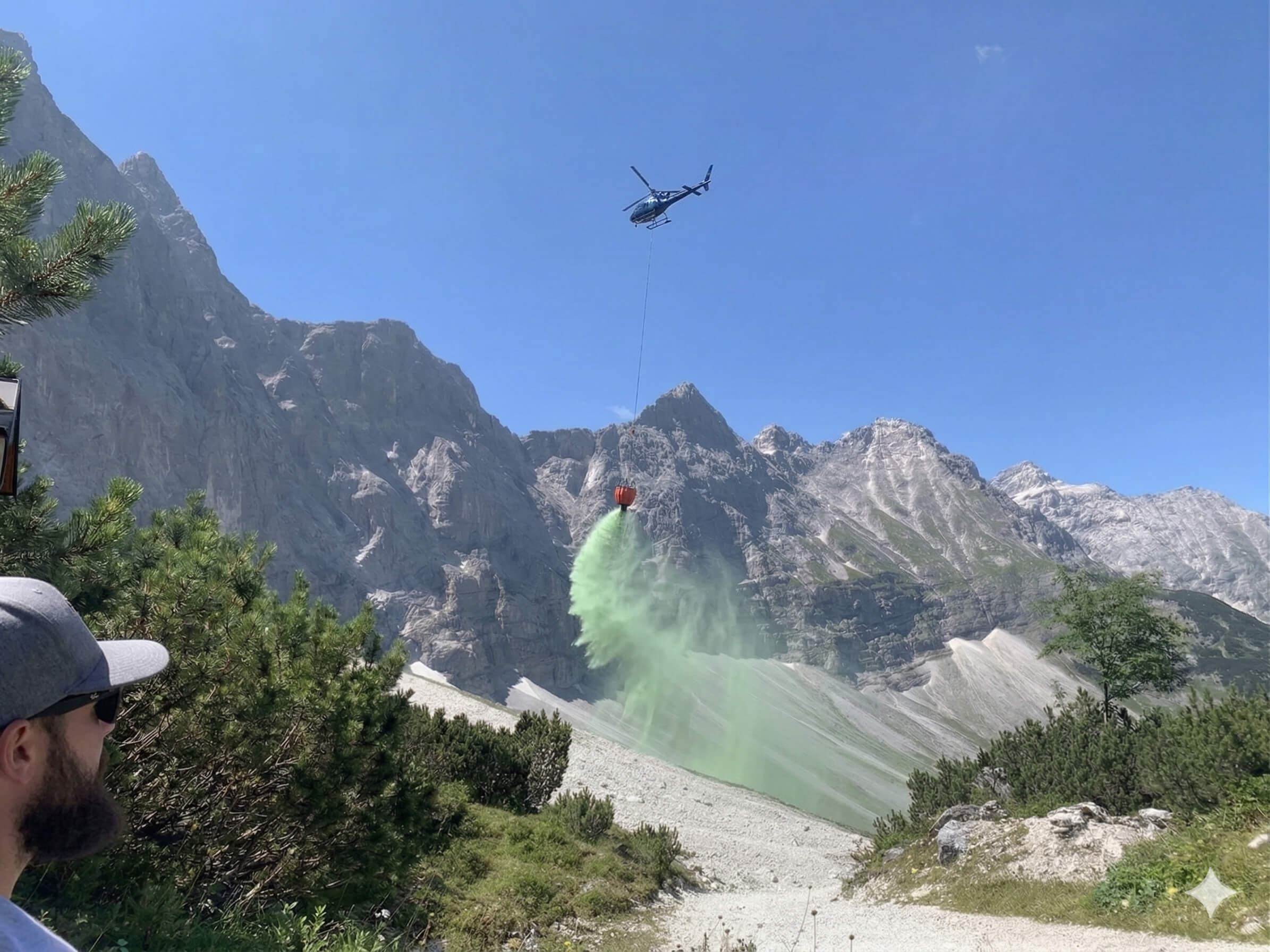
SRBT can mobilize project-specific hydroseeding and post-fire surface-protection systems for projects in Italy. Proximity to Mediterranean equipment and contractor capacity can support an accelerated response when burned or erosion-prone terrain must be evaluated before significant rainfall.

For time-critical inquiries, SRBT aims to activate the technical and logistics assessment within 48 hours after receiving sufficient initial site information. This is a response-planning target, not a guaranteed mobilization or on-site delivery time. Equipment availability, transport, regulatory approval, site access, fire-scene release and operating conditions must first be confirmed.

This describes international delivery capability, not a permanent local presence.

Where surface problems arise in Italy

Climate

Italy extends from Alpine conditions in the north to hot, dry Mediterranean climates in the south and on the islands. This range produces very different establishment windows. Summer drought and heat increase vegetation stress and wildfire susceptibility in Mediterranean regions, while high elevations impose shorter growing periods, snow cover and freeze-thaw cycles. After fire, seasonal or intense rainfall can mobilize exposed soil before vegetation recovers.

Dominant soils

Substrates include shallow calcareous soils, volcanic material, alluvial deposits, weathered rock and erosion-prone Mediterranean soils. Alpine and Apennine slopes may have limited rooting depth, while burned areas can exhibit ash accumulation, reduced organic cover and locally altered infiltration. Site assessment must distinguish between surfaces capable of natural regeneration and those requiring temporary protection, substrate improvement or active revegetation.

Vegetation zones

Vegetation ranges from Mediterranean shrubland and evergreen woodland to deciduous forests, mountain grasslands and Alpine communities. Many Mediterranean species show natural post-fire recovery mechanisms. Intervention should therefore not be automatic. Where reseeding is justified, species selection must follow elevation, exposure, local ecology and the approved land-management objective rather than rely on a uniform commercial seed mixture.

Water availability

Water availability differs substantially between northern catchments, mountain areas, Mediterranean regions and islands. Summer scarcity can constrain slurry preparation and biological establishment. Project planning must consider the permitted water source, quality, transport distance, storage and refill cycle. Where irrigation cannot be maintained, system design and application timing must reflect realistic natural precipitation and the substrate's actual capacity to retain moisture.

Regulation

Post-fire work may involve regional forestry authorities, environmental agencies, municipalities, protected-area administrations and other competent bodies. Burned forest areas are subject to specific legal and ecological constraints. Any intervention must be compatible with the approved restoration strategy and must determine whether natural regeneration, structural erosion control, revegetation or a combination of measures is appropriate. Urgency before rainfall does not remove these requirements.

Lead industries and land-management sectors

Relevant contexts include forestry, wildfire-risk management, conservation, agriculture, quarry and degraded-land rehabilitation, Alpine land management and tourism-related terrain management. SRBT does not position itself as a general landscaping provider within Italy's developed vegetation and land-management market. The focus is on technically difficult sites where steep terrain, hostile substrates, fire damage or limited access require specialized hydraulic application and project-specific material systems.

Topography and terrain

The Alps, Apennines, volcanic landscapes, steep coastal terrain and islands create widely varying access and application conditions. Long hose distances, high elevation differences and restricted machine positioning may determine pump selection and deployment planning. Hydraulic application can reach terrain that is difficult to treat mechanically, but it cannot compensate for unstable rock, inadequate drainage or insufficient rooting volume.

Structural risks

Wildfire can remove protective vegetation and litter, increase surface runoff and expose slopes to sheet, rill and gully erosion. Rockfall, shallow landslides and debris movement may occur where steep terrain, damaged roots and concentrated drainage interact. Structural stabilization and sediment-retention measures address these hazards. Hydroseeding provides surface protection and biological establishment only where the underlying terrain has been assessed as suitable.

Hydroseeding in Italy

Hydroseeding in Italy is an established technique, but specialist application on burned, rocky or otherwise difficult terrain remains distinct from general landscaping. SRBT's role is not to duplicate the work of capable local vegetation contractors. It is to address projects requiring site-specific substrate analysis, difficult-access application, engineered surface binding or coordinated post-fire response.

The system may combine fibers, biologically based binders, growth-supporting components, moisture-management functions and an ecologically appropriate seed mixture. Burn severity, substrate chemistry, slope, infiltration, erosion exposure and natural regeneration potential determine the specification. Proprietary formulations remain project-specific.

Water-retaining materials may also be evaluated for managed low-fuel vegetation strips or selected fuel-break environments. Their potential function is to support moisture availability and maintain a controlled, low-growing cover during dry periods. This is an additional project-specific option, not an established substitute for conventional firebreaks. It does not prevent ignition or fire spread and cannot replace fuel-load reduction, access planning, prescribed maintenance, water points or the requirements of the competent fire and forestry authorities.

Any preventive use requires testing against local ecology, combustibility, degradation behavior, water demand and long-term maintenance.

Italian terminology

Idrosemina is the established Italian term for hydraulic seeding. Although recognized in environmental engineering and slope-restoration practice, specialist use on severely degraded, fire-affected or difficult-access terrain represents a narrower field than general landscaping. Related terms include controllo dell'erosione, ripristino post-incendio and rinverdimento.

Relevant applications

Wildfire Recovery

Protecting burned surfaces during the critical interval between vegetation loss and the first significant rainfall.

Application
Read more →
Difficult Revegetation

Establishing functional vegetation on steep, rocky, shallow or biologically limited substrates.

Application
Read more →
Post-fire erosion control: the first-rains window

Why burn assessment, approvals, logistics and surface protection must be coordinated before rainfall begins to mobilize ash and exposed soil.

Engineering Insight
Read more →
Any questions?

A project, a partnership or a research collaboration — get in touch by phone or email.