Locations

Hydroseeding in Croatia

Engineered post-fire stabilization and revegetation for karst terrain, coastal infrastructure and difficult slopes.

SRBT delivery capability in Croatia

SRBT can mobilize project-specific surface engineering systems for applications in Croatia. Delivery begins with an assessment of fire severity, substrate continuity, slope geometry, karst features, drainage, water availability and intended vegetation. These parameters determine whether hydraulic application is appropriate and which material functions are required.

Projects may be implemented through qualified regional resources and SRBT's international partner and equipment-fleet network. This represents a delivery capability, not a claim of permanent local presence. Mobilization remains subject to technical feasibility, regulatory requirements, project scale and the availability of suitable access, water and application infrastructure.

Where surface problems arise in Croatia

Climate

Croatia combines Mediterranean conditions along the Adriatic coast with continental influences inland and cooler conditions at higher elevations. Coastal areas experience hot, dry summers followed by rainfall that can act on fire-damaged or sparsely vegetated slopes. Inland sites face different seasonal patterns, including frost, prolonged wet periods and intense rainfall events.

Dominant soils

Karst landscapes commonly contain thin, discontinuous soils over fractured limestone, often with exposed rock between isolated pockets of rooting material. Red Mediterranean soils occur in parts of the coastal karst, while deeper agricultural and forest soils occur inland. Construction adds cut rock, compacted fills and mineral substrates with limited moisture-retention capacity.

Vegetation zones

Coastal vegetation includes Mediterranean scrub, grassland, pine forest and other drought-adapted communities. Inland and mountain regions support deciduous, mixed and coniferous forests. Post-fire treatment must consider burn severity and the remaining capacity for natural regeneration. Immediate seeding is not automatically appropriate where viable roots or seed banks remain.

Water availability

Croatia has substantial water resources, but karst hydrology complicates local availability and flow prediction. Rainfall can infiltrate rapidly through fractures and sink features, leaving limited moisture near the surface. Underground pathways may transport water and suspended material beyond the visible surface catchment. Water sourcing and groundwater protection therefore require site-specific assessment.

Regulation

Projects may be subject to environmental, water-management, forestry, infrastructure, nature-conservation and construction requirements. Coastal zones, protected habitats, groundwater resources and road corridors can require additional review. Hydroseeding does not replace permits, ecological assessment, geotechnical design or the technical acceptance procedures applying to public infrastructure.

Lead industries

Road construction is a directly relevant application field. Croatian technical road specifications recognize hydroseeding as a method for establishing grass cover on prepared slopes. Tourism-related infrastructure, utilities, quarrying and the rehabilitation of fire-affected land create further requirements. Each setting requires coordination with drainage, access, maintenance and surrounding ecological conditions.

Topography and terrain

The Dinaric mountains, Adriatic islands, coastal escarpments and deeply incised inland terrain create substantial variation in slope, elevation and accessibility. Equipment may need to operate from roads, service areas or other stable positions. Pumping distance, elevation difference, wind exposure and hose routing must therefore be included in application planning.

Structural risks

Wildfires can remove vegetation from steep coastal catchments and expose shallow soils before seasonal rainfall. Karst terrain adds rockfall, cavities, sink features and highly variable rooting depths. Hydroseeding can reduce surface erosion on a stable, adequately prepared surface, but it cannot secure unstable rock, remediate a landslide or bridge an unsupported karst void.

Hydroseeding in Croatia

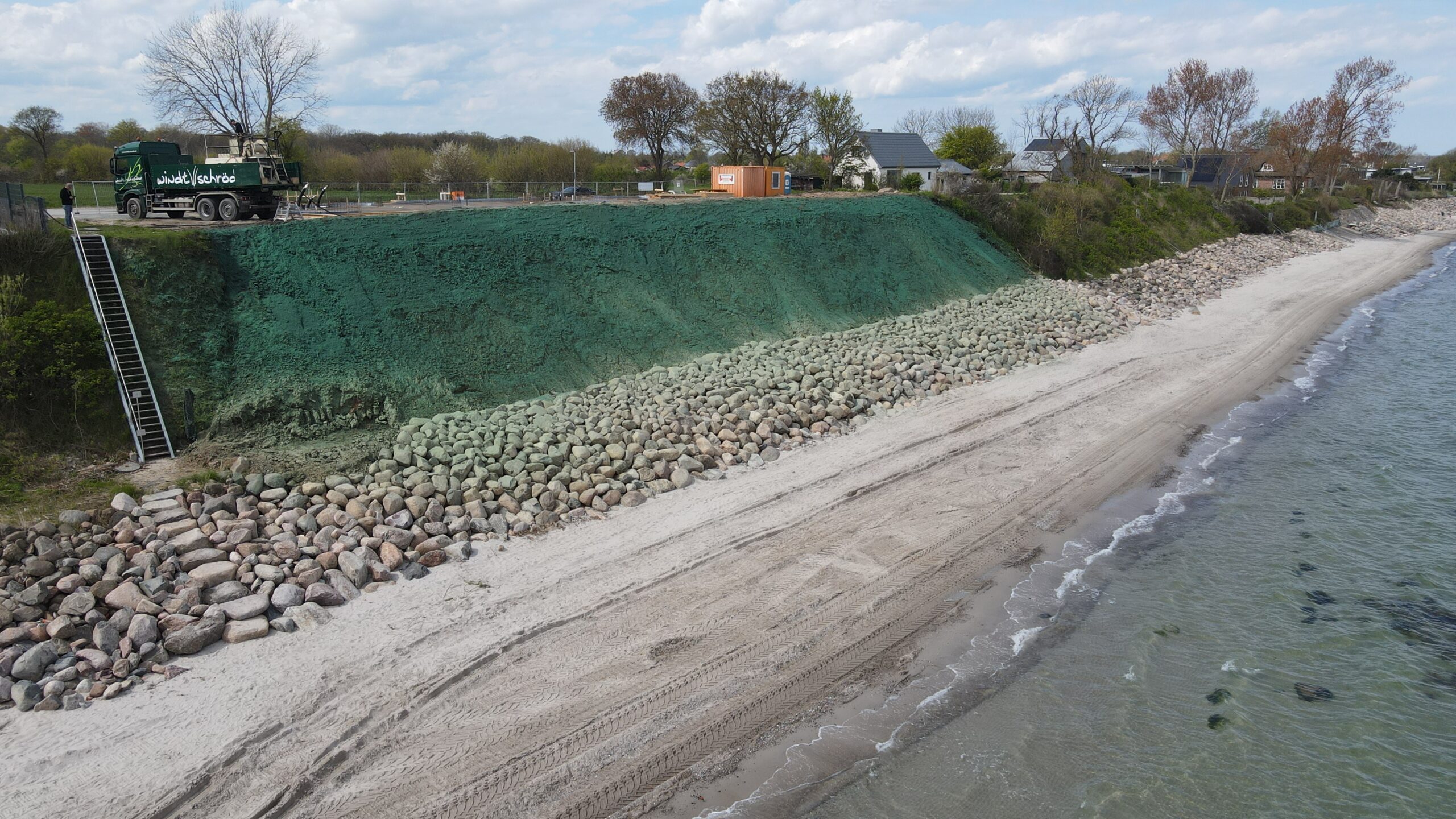
Hydroseeding in Croatia should be designed around the mechanism creating the surface risk. After wildfire, assessment should cover burn severity, remaining vegetation, ash depth, possible soil water repellency, slope, expected rainfall and downstream receptors. The appropriate response may be temporary surface stabilization, assisted natural regeneration or active revegetation. These interventions should not be treated as a single standard specification.

Where immediate protection is required, the engineered system may combine selected fibers, a biologically based binder and moisture-management functions. Seed and nutrient support are included only where justified by the ecological objective and substrate condition. On sensitive karst terrain, material selection must also consider rapid infiltration and possible connections to groundwater.

Thin, discontinuous soil over limestone requires particular care. Hydraulic application can distribute materials across stable soil pockets and prepared surfaces, but it cannot create a viable continuous rooting layer on bare, unsupported rock. Additional growth medium or substrate preparation may be required where the existing material is insufficient.

Rockfall protection, drainage, retaining structures and landslide remediation remain separate engineering measures. Hydroseeding follows these interventions where biological cover and surface erosion control are required. Applicable Croatian and EU environmental requirements must be assessed for each site, and proprietary formulations remain project-specific.
Local terminology

The established Croatian term for hydroseeding is hidrosjetva, including in technical road-construction specifications. Related terms include zaštita pokosa for slope protection and zaštita od erozije for erosion protection. These terms help define the required function but do not replace a project-specific technical specification.

Relevant applications

Wildfire Recovery

Surface assessment and stabilization during the critical period between vegetation loss and the first erosive rainfall.

Application
Read more →
Difficult Revegetation

Vegetation establishment on thin, rocky, discontinuous or otherwise unfavorable substrates.

Application
Read more →
Post-fire erosion control: the first-rains window

Why the period between fire damage and the first significant rainfall determines the immediate stabilization strategy.

Engineering Insight
Read more →
Any questions?

A project, a partnership or a research collaboration — get in touch by phone or email.