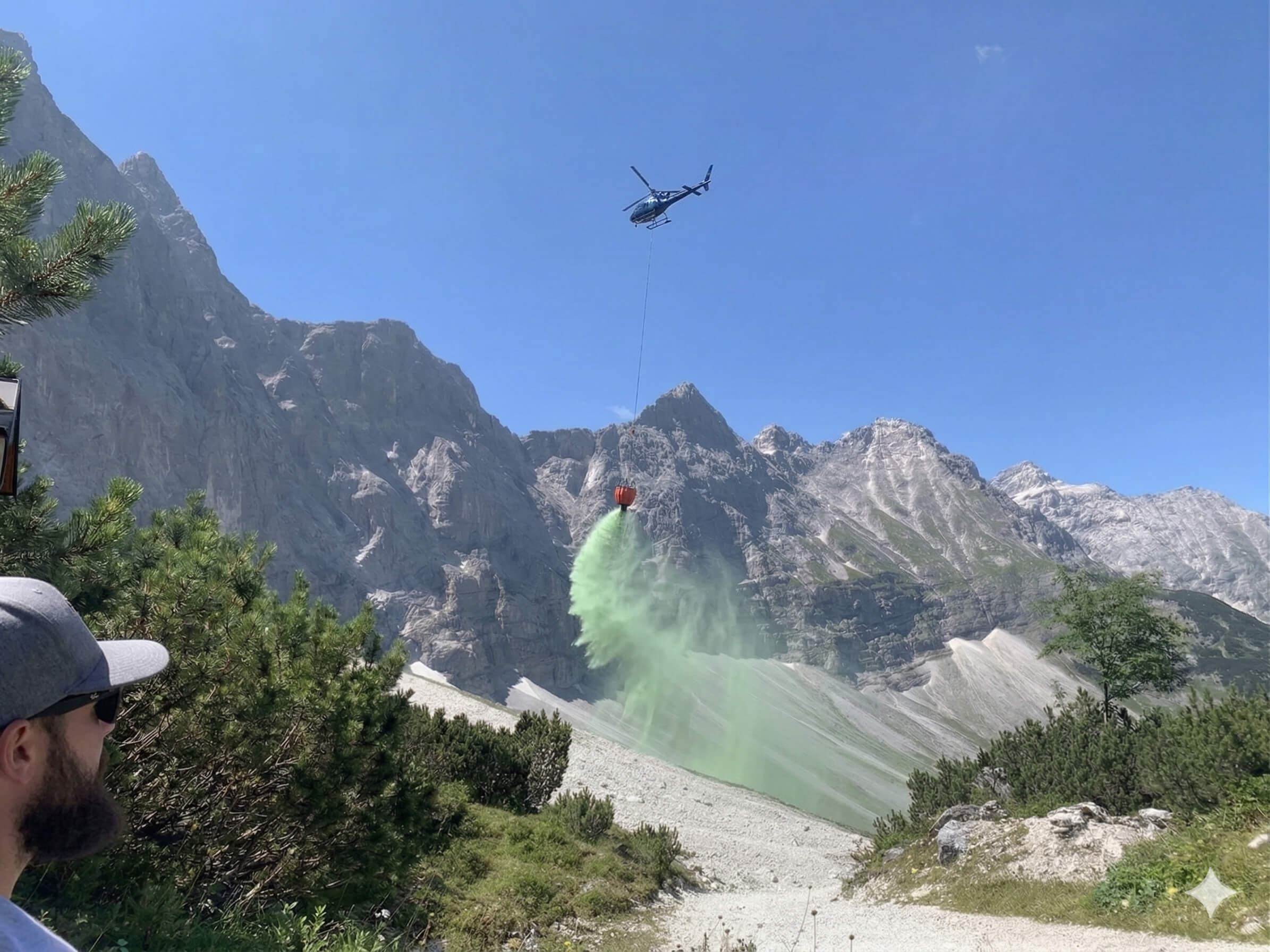
Locations

Iceland

Hydroseeding and revegetation systems for erosion-prone volcanic substrates and exposed northern terrain.

SRBT delivery capability in Iceland

SRBT can mobilize environmental surface engineering projects in Iceland through an international partner and equipment-fleet network.

Delivery capability is assessed for each project according to substrate properties, terrain, wind exposure, vegetation objectives, equipment access, water logistics and applicable environmental requirements. A dedicated Iceland page describes technical capability and relevant project conditions; it does not imply a permanent office, local branch or continuous operational presence.

Potential applications include the revegetation of disturbed volcanic surfaces, erosion control on exposed slopes, rehabilitation around infrastructure and temporary stabilization before permanent vegetation can establish. Each system is developed from field conditions rather than selected from a standard product catalog.

Where surface problems arise in Iceland

Climate

Iceland has a cold maritime to subarctic climate with strong winds, short establishment periods and substantial regional variation in precipitation. Low temperatures, wind exposure and repeated freeze–thaw stress can slow vegetation development and prolong the period during which treated surfaces remain vulnerable.

Dominant soils

The principal soil groups include Andosols formed under vegetation and Vitrisols associated with volcanic desert surfaces. These materials can have high porosity and water-storage capacity but limited cohesion and bearing strength. Once vegetation is lost, wind and water can remove volcanic soil rapidly.

Vegetation zones

Vegetation includes grassland, moss and heath communities, wetlands and limited birch or willow cover, while large highland areas remain barren or sparsely vegetated. One published reconstruction estimated that vegetated land declined from approximately 52% around settlement to about 28% in measurements from 1990. These historical estimates describe national land degradation, not the condition of every project site.

Water availability

Iceland is not generally defined by national water scarcity, but effective water availability for plant establishment remains site-specific. Coarse volcanic deposits, wind exposure, shallow soil profiles and rapid drainage can restrict moisture within the rooting zone even where precipitation is substantial.

Regulation

Land-restoration work must account for protected areas, volcanic formations, lava fields, wetlands and other features covered by Icelandic nature-conservation requirements. Seed and plant selection may also require review where non-native species are proposed. Permits, landowner approval and environmental assessment depend on the location and project scope.

Lead industries

Relevant project contexts include transport and civil infrastructure, tourism facilities, geothermal and hydropower development, utilities and other construction on disturbed volcanic ground. Each sector can create temporary or permanent requirements for erosion control and vegetation restoration.

Topography and terrain

Iceland combines volcanic highlands, mountains, glaciers, lava fields, glacial river plains and coastal lowlands. Steep or inaccessible terrain can require long pumping distances, substantial elevation changes and carefully planned equipment positioning.

Structural risks

Key risks include wind erosion, water erosion, sand movement, freeze–thaw disturbance and renewed tephra deposition. Trampling, vehicle access and construction disturbance can initiate erosion by breaking otherwise continuous vegetation cover on sensitive volcanic soils.

Hydroseeding in Iceland

Hydroseeding in Iceland must address surface stability before it can focus on seed distribution. On exposed volcanic material, conventional seeding may fail because seed, fertilizer and mulch can be displaced before roots develop sufficient reinforcement.

Site analysis considers soil type, erosion status, wind direction, slope, elevation, surface moisture, existing vegetation and the intended ecological outcome. Treatment must also distinguish between intact Andosols, degraded soil remnants, loose Vitrisols, tephra deposits and construction-derived mineral surfaces.

The applied system may combine functional fibers, a hydraulic growth medium, moisture- and nutrient-management components, suitable vegetation and a biopolymer-based binder. The initial matrix is designed to improve surface cohesion, retain applied material and protect the establishment zone from wind and rainfall. Binding behavior must remain compatible with infiltration, root development and the long-term recovery pathway.

Species selection is not an independent machine decision. It must reflect local ecology, land use, project authorization and the risk associated with introducing non-native plants.

Application planning also accounts for short weather windows, equipment access, hose distance and elevation. Proprietary formulations remain project-specific.

Relevant applications

Difficult Revegetation

Engineered establishment systems for volcanic, mineral and sparsely vegetated substrates.

Application
Read more →
Climate Adaptation

Surface systems designed around wind, freeze–thaw stress, variable precipitation and short establishment periods.

Application
Read more →
Guide to Slope Stabilization

A technical guide to runoff, erosion mechanisms and stabilization strategies on exposed slopes.

Engineering Guide
Read more →
Any questions?

A project, a partnership or a research collaboration — get in touch by phone or email.