Applications

Difficult Revegetation

Engineered vegetation-establishment systems for complex sites where conventional seeding is unlikely to succeed.

Application

Where complex substrates resist vegetation

Revegetation becomes difficult when a surface does not provide the physical, chemical or hydrological conditions required for plant establishment. Rock, construction fill, demolition material, industrial ground, heavily disturbed soils and exposed mineral substrates may contain little organic matter, retain insufficient water or restrict root development.

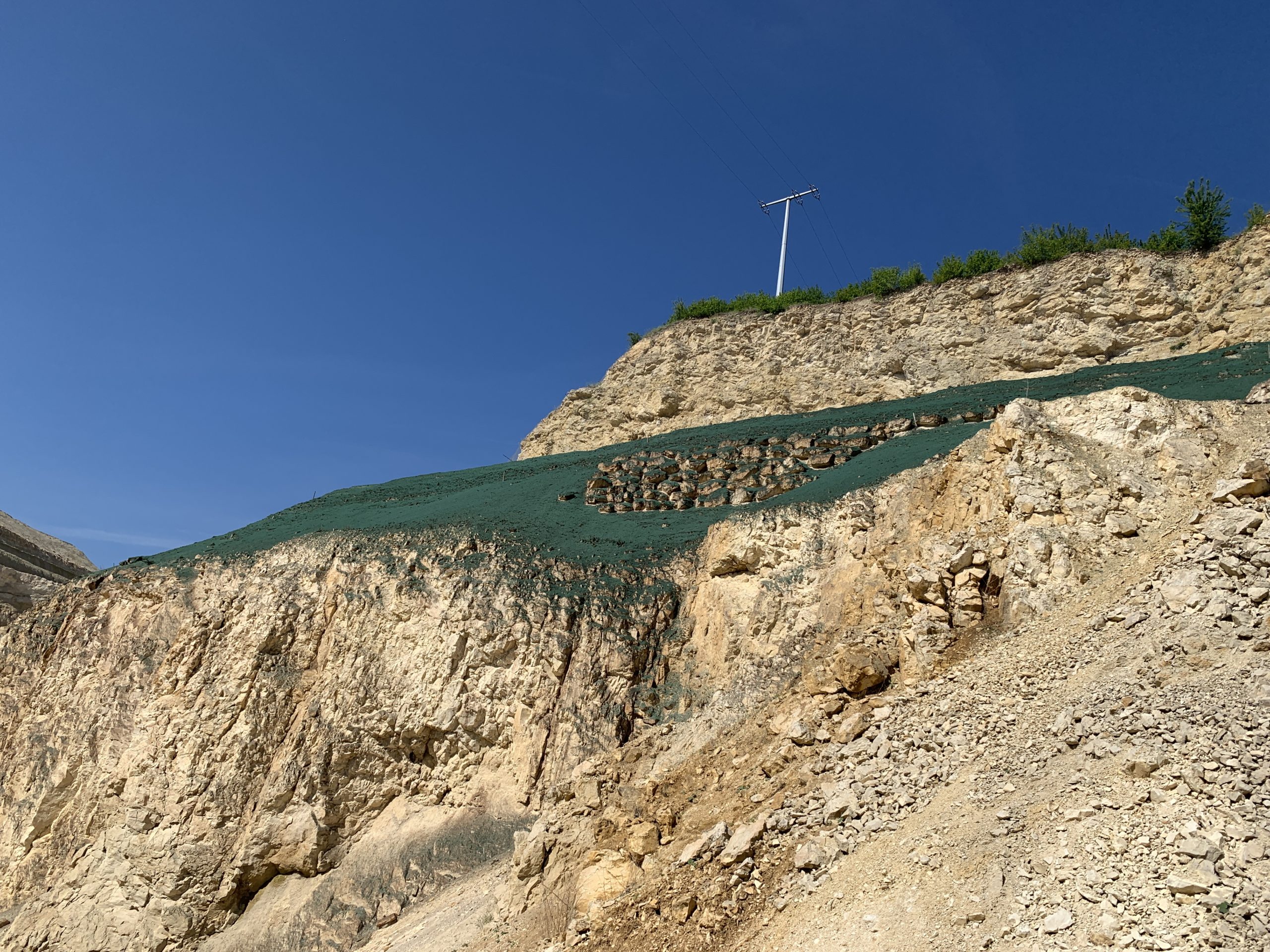
Extreme pH, low nutrient availability, compaction and rapid moisture loss can prevent germination or cause young plants to fail before they develop functional root systems. Slopes and exposed sites create an additional challenge: seed, fine material and amendments may be displaced by runoff or wind during the period before vegetation provides protection.

Conventional seeding often addresses only seed placement. It does not necessarily create a viable growth environment or stabilize the surface during establishment. Adding more seed cannot compensate for unsuitable substrate conditions, limited water availability or continuing material loss.

Complex revegetation therefore requires an integrated assessment of the substrate, climate, terrain, water regime and intended vegetation outcome before a treatment system is defined.
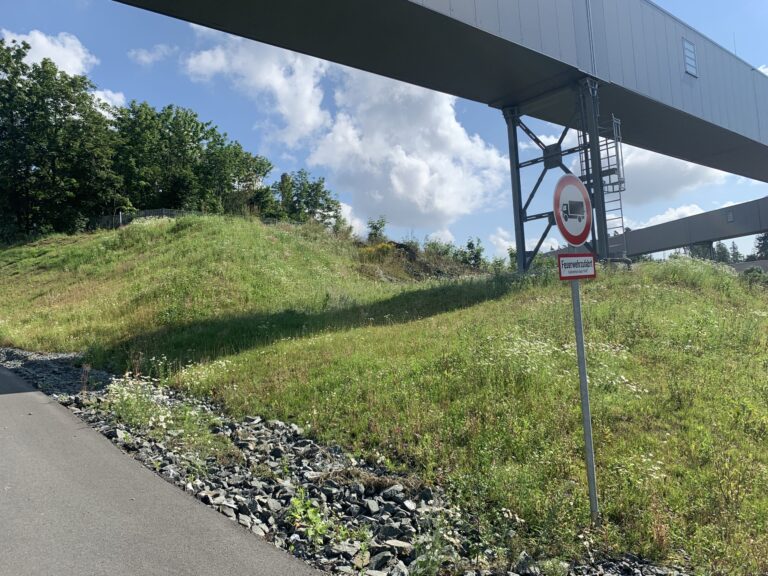
Revegetation and dust control on unpaved parking areas

Fields of application

Why standard methods fall short

Nutrient-poor substrate

Raw mineral surfaces, rock, fill and construction-derived materials may contain little organic matter or plant-available nutrition. Seed can germinate briefly but fail as reserves are depleted and roots encounter an environment with limited biological function.

Extreme pH

Strongly acidic or alkaline conditions can restrict nutrient availability and affect root development. The underlying cause must be characterized because surface amendments alone may not provide an appropriate or lasting response to chemically unsuitable material.

Water stress

Exposed substrates often have limited water-holding capacity and high evaporation rates. Without irrigation or reliable rainfall, germination may be interrupted and young plants may fail before roots reach more stable moisture within the surface profile.

Erosion window

A newly treated surface remains vulnerable before roots and vegetation cover develop. Rainfall, runoff or wind can remove seed, growth medium and fine particles during this critical period, preventing uniform establishment and exposing the substrate again.

The engineered surface system

SRBT develops revegetation systems around the limitations of the individual site rather than applying a standard seed-and-mulch package. The objective is to create suitable initial conditions for vegetation while protecting the treated surface during the establishment period.

Site analysis considers substrate composition, compaction, pH, nutrient status, slope, exposure, climate, water availability and the intended vegetation community. Industrial or construction-derived substrates may require additional chemical or environmental assessment before a revegetation concept can be finalized.

The material system may combine a hydraulically applied growth medium, functional fibers, moisture-management components, seed and a biopolymer-based binder. At the functional level, the growth medium supports seed placement and early root development, moisture-management components moderate water loss, and the binder helps retain the applied layer on the surface.

Material and species selection must reflect the expected climate and maintenance regime. Where permanent irrigation is unavailable, the system must be designed around realistic rainfall, establishment periods and plant-water requirements rather than assuming continuous external water supply.

Selection is based on functional performance, environmental suitability and the constraints recorded for the site. Proprietary formulations remain project-specific.

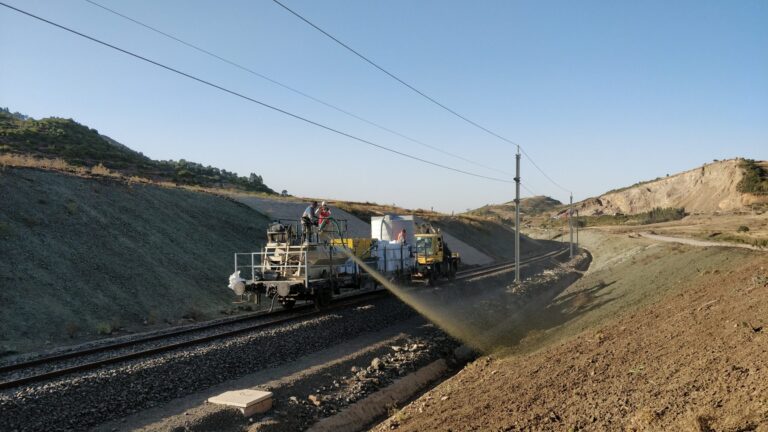
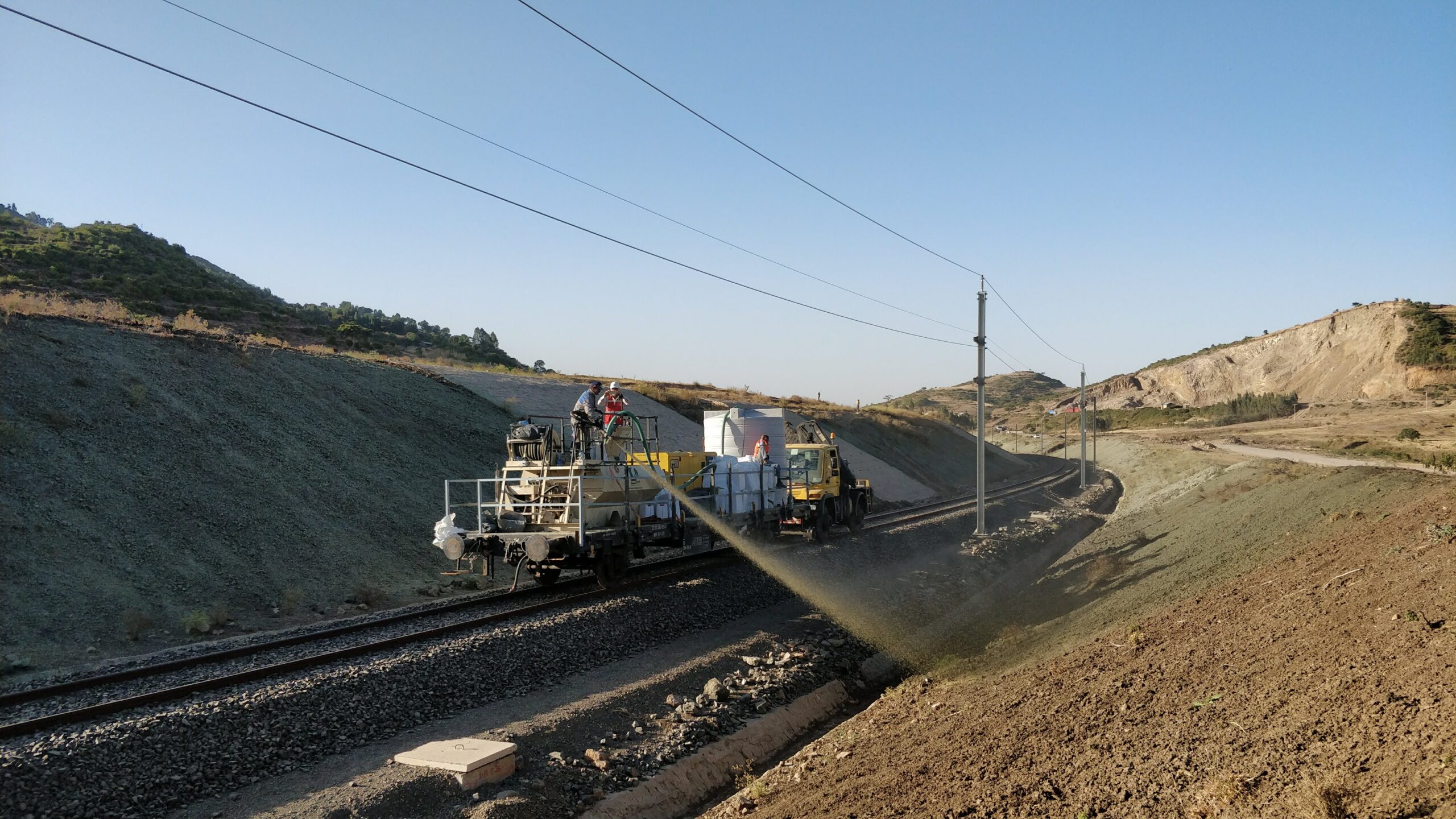
Application planning connects the material functions with terrain, access, equipment capacity, pumping distance, mixing requirements and coverage control.

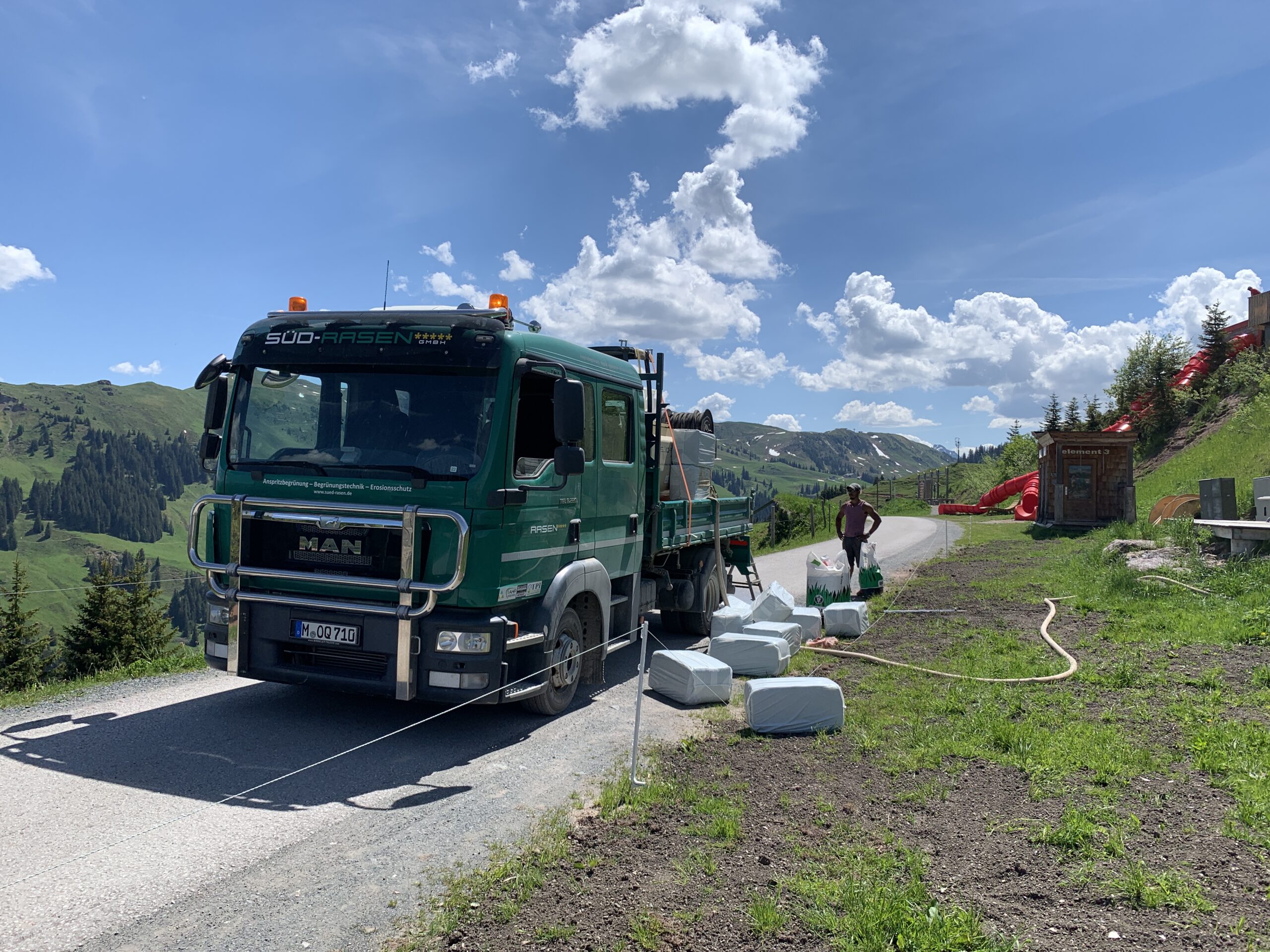
Service vehicle and mulch bales at a high-altitude revegetation site

Our approach

01
Site analysis

Assess substrate, pH, nutrients, compaction, water availability, exposure and vegetation objectives.

02
Material system

Define growth-medium, moisture-retention, binding and vegetation functions for the site.

03
Application

Coordinate preparation, equipment, mixing, distribution, coverage and establishment timing.

Related case studies

Revegetation of company premises and logistics areas
Progressive revegetation of a closed construction-waste mound

Dormant seeding and long-range pumping avoided driving on a sensitive closed surface.

Case Study
Read more →
Railway track revegetation by hydroseeding
Water retention in hydraulic growth media

How moisture behavior in an applied growth medium influences establishment.

Engineering Insight
Read more →
Any questions?

A project, a partnership or a research collaboration — get in touch by phone or email.