Locations

Norway

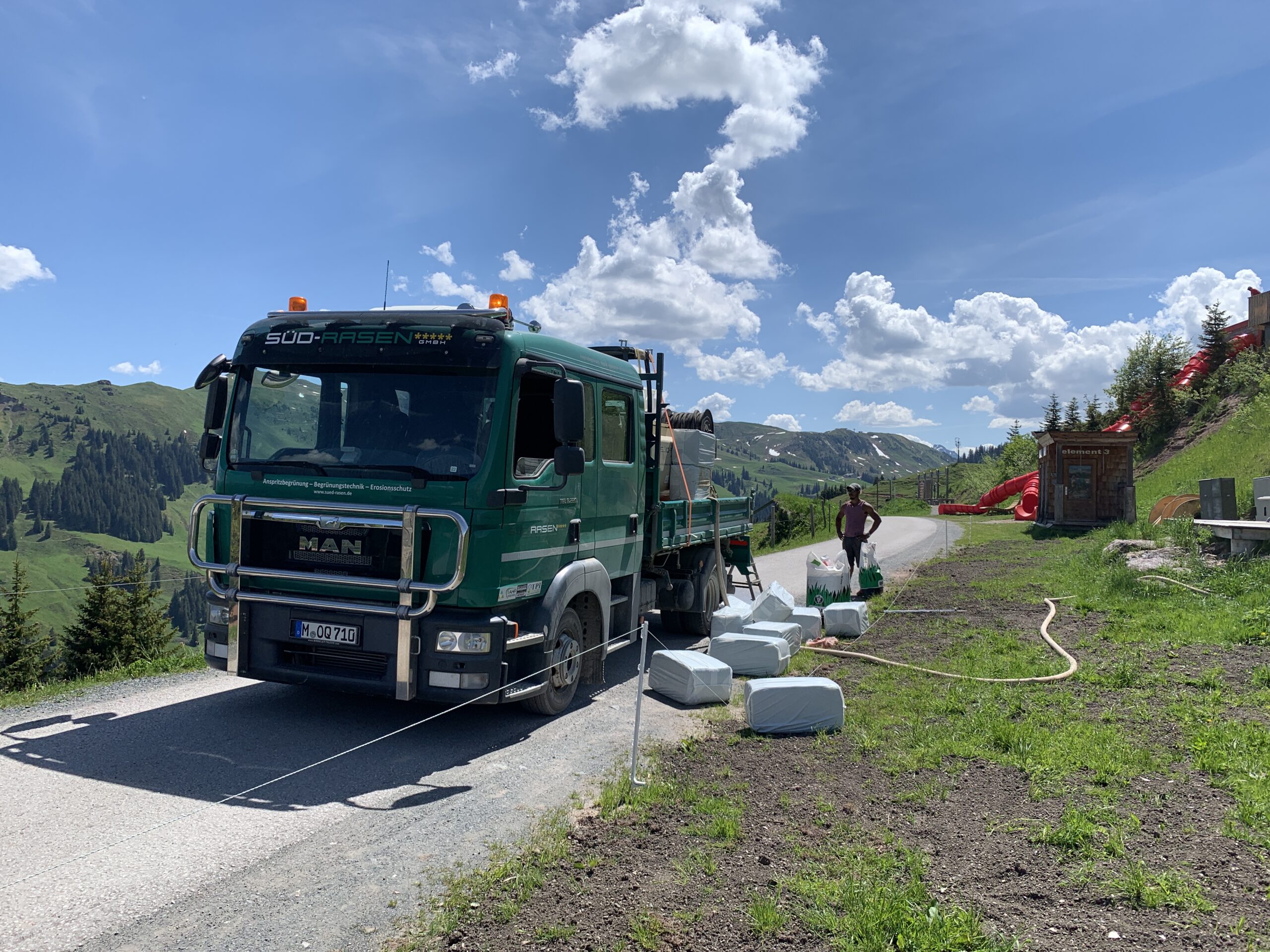
Hydroseeding and revegetation capability for rocky slopes, fjord terrain and cold-climate infrastructure.

SRBT delivery capability in Norway

SRBT can mobilize environmental surface engineering projects in Norway through an international partner and equipment-fleet network.

Delivery capability is assessed according to substrate, slope geometry, elevation, pumping distance, vegetation objectives, site access and applicable environmental and geotechnical requirements. This page describes technical capability and relevant Norwegian project conditions; it does not imply a permanent office, local branch or continuous operational presence.

Potential applications include revegetation of rock cuts and thin mineral soils, erosion control on infrastructure slopes and climate-adapted restoration following construction. Each system is developed from verified site conditions rather than selected from a standard product catalog.

Where surface problems arise in Norway

Climate

Norway's climate varies substantially between exposed maritime coasts, inland valleys and northern or alpine areas. Cool temperatures, short establishment periods, intense rainfall, snow cover and freeze–thaw cycles can delay vegetation development and increase erosion before roots provide reinforcement.

Dominant soils

Large areas combine exposed bedrock with shallow soils, glacial till, moraine deposits and localized marine sediments. Rock cuts and coarse mineral fills may provide little rooting volume, while fine or saturated deposits require separate geotechnical assessment.

Vegetation zones

Vegetation ranges from coastal grass and heath communities to boreal forest and alpine tundra. Elevation, aspect, moisture and snow duration strongly influence species suitability. Restoration should normally reference the surrounding vegetation rather than impose one universal seed mixture.

Water availability

Water is widely present, but application water must still be evaluated by location, access and quality. High rainfall does not guarantee moisture retention on steep rock or coarse fill, while work beside rivers and fjords requires control of runoff and applied material.

Regulation

Projects must account for nature protection, waterways, construction requirements and geotechnical safety. In possible quick-clay areas, TEK17 Section 7-3 and NVE Guide 1/2019 define the investigation and documentation pathway. NS 5815 supports construction-work risk assessment but does not replace qualified geotechnical investigation.

Lead industries

Relevant project contexts include roads, railways, hydropower, construction, tourism infrastructure, mining and quarrying, and onshore facilities supporting offshore oil and gas activity. These sectors frequently create cuts, fills and disturbed mineral surfaces requiring rehabilitation.

Topography and terrain

Fjords, mountains, valleys and steep infrastructure corridors create demanding access conditions. Long hose runs, substantial elevation differences and limited equipment positions may be more important to application planning than the nominal treatment area.

Structural risks

Relevant hazards include rockfall, shallow landslides, runoff erosion and, in identified areas with marine clay, quick-clay landslides or kvikkleireskred. Quick clay is not a nationwide condition. Work within mapped susceptibility or hazard zones requires the prescribed geotechnical assessment.

Hydroseeding in Norway

Hydroseeding in Norway must connect vegetation establishment with substrate preparation, terrain access and the structural function of the slope.

Exposed rock provides little rooting volume and cannot be revegetated by seed application alone. The site may require pockets, benches or an engineered growth layer capable of retaining water, nutrients and roots. On moraine, fill or disturbed mineral soil, the system must address erosion resistance and surface cohesion while remaining permeable.

A hydraulic system may combine functional fibers, growth-medium components, moisture and nutrient management, suitable vegetation and a biopolymer-based binder. The applied matrix protects seed and fine material during the establishment period; it is not a substitute for rock reinforcement, drainage, structural erosion protection or geotechnical stabilization.

Application planning considers pump architecture, slurry viscosity, hose diameter, friction loss and vertical head. High-elevation or long-distance work may require pressure-capable equipment and intermediate operating positions rather than a larger tank alone.

Species and timing must reflect local vegetation, elevation and the available growing window. Proprietary formulations remain project-specific.

In quick-clay zones, no surface treatment should proceed until qualified specialists have confirmed that access, loading, grading and application activities are compatible with the required area-stability assessment.

Hydroseeding, erosjonssikring and vegetasjonsetablering

The international term hydroseeding is retained for equipment and application searches in Norway. Norwegian technical project language commonly uses erosjonssikring for erosion protection and vegetasjonsetablering for vegetation establishment. These terms describe broader project functions and are not direct synonyms for one application method.

Relevant applications

Difficult Revegetation

Engineered vegetation establishment on rock, thin soils, mineral fills and other restricted substrates.

Application
Read more →
Climate Adaptation

Surface systems designed around intense rainfall, cold conditions, freeze–thaw stress and short establishment periods.

Application
Read more →
Guide to Slope Stabilization

A technical guide to runoff, erosion mechanisms and stabilization strategies on exposed slopes.

Engineering Guide
Read more →
Any questions?

A project, a partnership or a research collaboration — get in touch by phone or email.