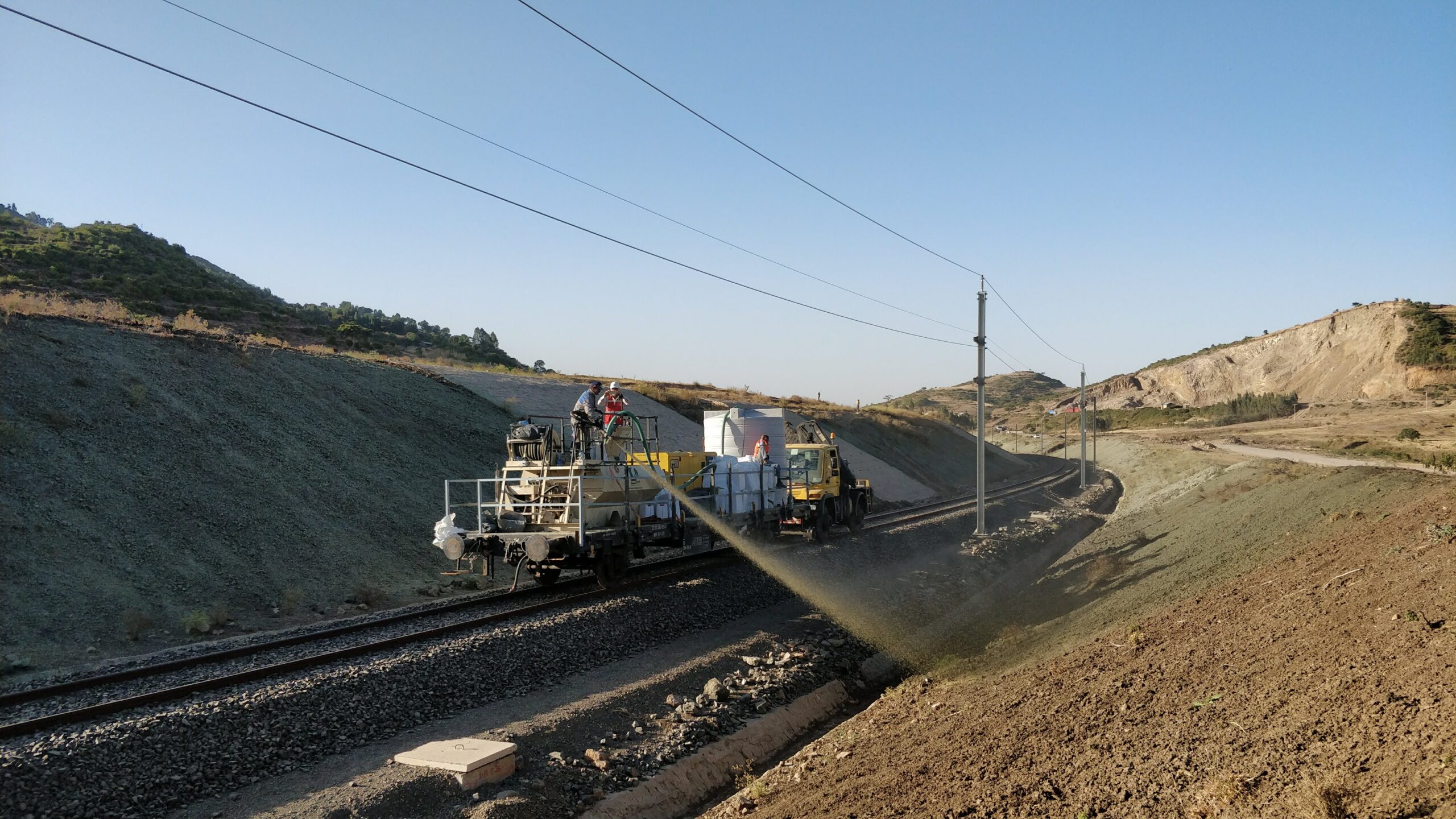
Hydroseeding in Finland must be designed around the seasonal window, substrate and actual need for intervention. Following a forest fire, not every site requires hydraulic seeding. Existing roots, surviving vegetation and the natural seed bank may provide sufficient recovery potential. Intervention should therefore follow an assessment of fire severity, remaining organic layers, soil exposure, slope, drainage pathways and downstream receptors.
Where rapid stabilization is justified, the material system may combine adapted seed, fibers, hydraulic growth media, moisture-management components and a biologically based binder. The intended functions can include retaining ash and fine particles, limiting surface erosion during rainfall or snowmelt, and supporting vegetation establishment without unnecessarily suppressing natural regeneration.
On sandy or gravelly substrates, water retention and protection against rapid drying may be more important than adding large quantities of organic material. On peat or wetland-adjacent ground, hydrology and ecological sensitivity take priority. Conventional erosion-control assumptions should not be transferred to these environments without site-specific review.
Materials must comply with applicable Finnish and European environmental and chemical requirements. Biopolymer-based binders may provide an alternative where conventional synthetic systems are unsuitable or restricted. Their functional lifetime must nevertheless be assessed realistically because naturally degradable components do not provide indefinite stabilization.
Application timing, water logistics, machine access and the ability to pump the specified slurry are incorporated into the delivery design. Proprietary formulations remain project-specific.