Locations

Hydroseeding in Albania

Engineered revegetation for steep mountain terrain, infrastructure corridors and fire-affected surfaces.

SRBT delivery capability in Albania

SRBT can mobilize project-specific surface engineering systems for applications in Albania. Delivery begins with an assessment of substrate depth, slope geometry, drainage, water availability, climatic exposure and the intended vegetation or erosion-control function. These parameters determine whether hydraulic application is appropriate and which material functions are required.

Projects may be implemented through qualified regional resources and SRBT's international partner and equipment-fleet network. This represents a delivery capability, not a claim of permanent local presence. Mobilization remains subject to technical feasibility, regulatory requirements, project scale and the availability of suitable access, water and application infrastructure.

Where surface problems arise in Albania

Climate

Albania combines Mediterranean conditions along the coast and lower valleys with continental and mountain influences inland. Coastal areas generally experience hot, dry summers and wetter winters, while higher elevations have lower temperatures, snow and shorter vegetation periods. Establishment timing must account for both summer moisture stress and intense rainfall on exposed slopes.

Dominant soils

Soils range from alluvial and agricultural soils in coastal plains and river valleys to brown forest soils, calcareous substrates and shallow mountain soils. Steep terrain, vegetation loss and construction can leave discontinuous or heavily eroded rooting layers. Road cuts, pipeline corridors, quarries and other earthworks add compacted fills and exposed mineral subsoil.

Vegetation zones

Vegetation changes significantly with elevation. Mediterranean shrub communities occur at lower levels, followed by oak woodland, beech forest and Alpine pasture at higher elevations. Seed and growth-medium selection must reflect this vertical zonation, the surrounding ecosystem and the intended land use rather than relying on one standard national mixture.

Water availability

Albania has substantial water resources, but availability varies strongly by season, catchment and elevation. The electricity system's dependence on hydropower also reflects the importance of rainfall and river flows. Hydraulic application requires a defined and authorized water source, while vegetation establishment requires a separate assessment of soil-moisture availability after application.

Regulation

Law No. 9244, as amended, establishes requirements for the protection and rehabilitation of agricultural land. It does not provide the complete regulatory framework for every surface project. Environmental assessment, water, forestry, construction, protected-area and infrastructure requirements may also apply. Current provisions and competent authorities must be confirmed for each location.

Lead industries

Roads, energy infrastructure, pipelines, hydropower and agriculture create relevant erosion-control and revegetation requirements. The Albanian environmental documentation for the Trans Adriatic Pipeline provides a public example of project-level obligations covering regrading, topsoil replacement, erosion control and vegetation reinstatement. This is contextual evidence, not an SRBT project reference.

Topography and terrain

Much of Albania consists of mountains, hills and deeply incised valleys, with narrower lowland and coastal plains in the west. Steep elevation changes complicate access and create long slope lengths with concentrated runoff. Equipment positioning, pumping height, hose routing and safe access must therefore form part of application planning.

Structural risks

Steep terrain can combine surface erosion with rockfall, shallow failures and deeper landslides. Wildfire can remove protective vegetation and expose soil before heavy rainfall, increasing runoff and sediment movement. Hydroseeding can support surface protection on adequately engineered ground, but it cannot secure unstable rock, arrest a landslide or replace structural drainage and stabilization.

Hydroseeding in Albania

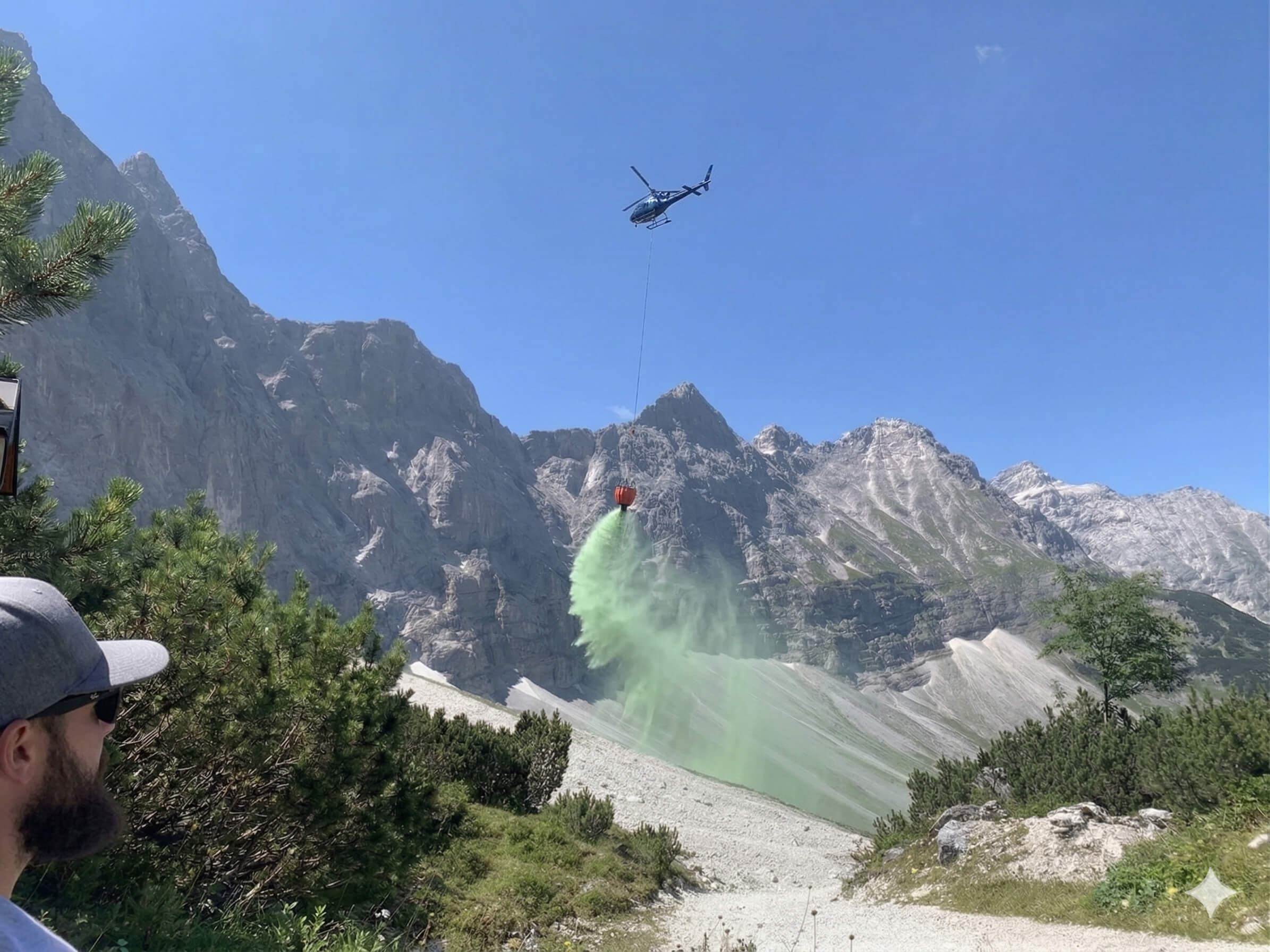
Hydroseeding in Albania should be specified according to the function required from the completed surface. On steep or rocky terrain, the first assessment determines whether sufficient stable rooting material exists. Hydraulic application can distribute materials across difficult-to-access slopes, but it cannot create a viable soil profile on unsupported rock or compensate for continuing ground movement.

Where adequate substrate is present, the engineered system may combine selected fibers, a biologically based binder, growth-medium components, moisture-management functions and vegetation suited to elevation and exposure. Application design must account for slope length, runoff concentration, rainfall timing and the realistic establishment period.

Linear infrastructure requires coordinated reinstatement rather than isolated seeding. Topsoil handling, regrading, drainage, erosion and sediment controls, access management and vegetation establishment must operate as one sequence. Publicly documented pipeline requirements in Albania demonstrate this broader process, without implying any SRBT involvement in that project.

Post-fire sites require separate assessment of burn severity, remaining vegetation, ash, expected rainfall and natural regeneration potential. Geotechnical stabilization and rockfall protection remain separate disciplines. Applicable Albanian requirements must be assessed for each site, and proprietary formulations remain project-specific.

Terminology in Albania

No Albanian translation of "hydroseeding" is presented here as an established professional or commercial term. Hydroseeding remains the procedural keyword. Project documentation should additionally define the intended function—such as slope revegetation, erosion control or post-fire stabilization—rather than rely on an unverified translation.

Relevant applications

Difficult Revegetation

Vegetation establishment on steep, rocky, shallow or otherwise unfavorable substrates.

Application
Read more →
Wildfire Recovery

Surface assessment and stabilization during the critical period between fire damage and erosive rainfall.

Application
Read more →
Guide to Slope Stabilization

How structural slope engineering, surface erosion control and vegetation establishment perform different but coordinated functions.

Engineering Guide
Read more →
Any questions?

A project, a partnership or a research collaboration — get in touch by phone or email.