Technology & Methods
Technology & Methods
Operating principles
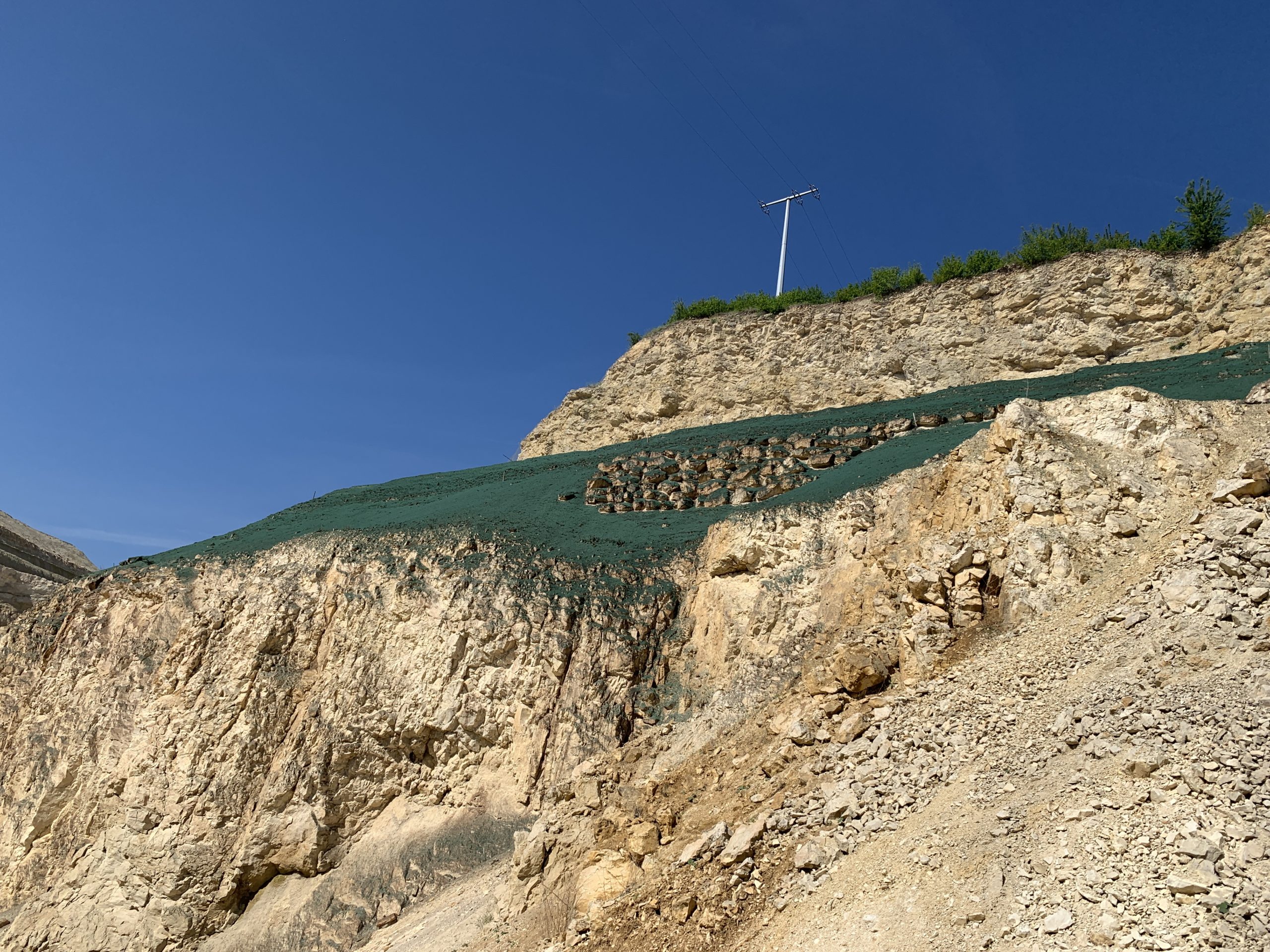
Continuous wetting is not a solution — it ties up resources and its effect ends with evaporation. SRBT applies nature-based binder systems that fix dust particles permanently, form a crust or stabilize with frost flexibility — without synthetic polymers and with nothing to remove afterwards.
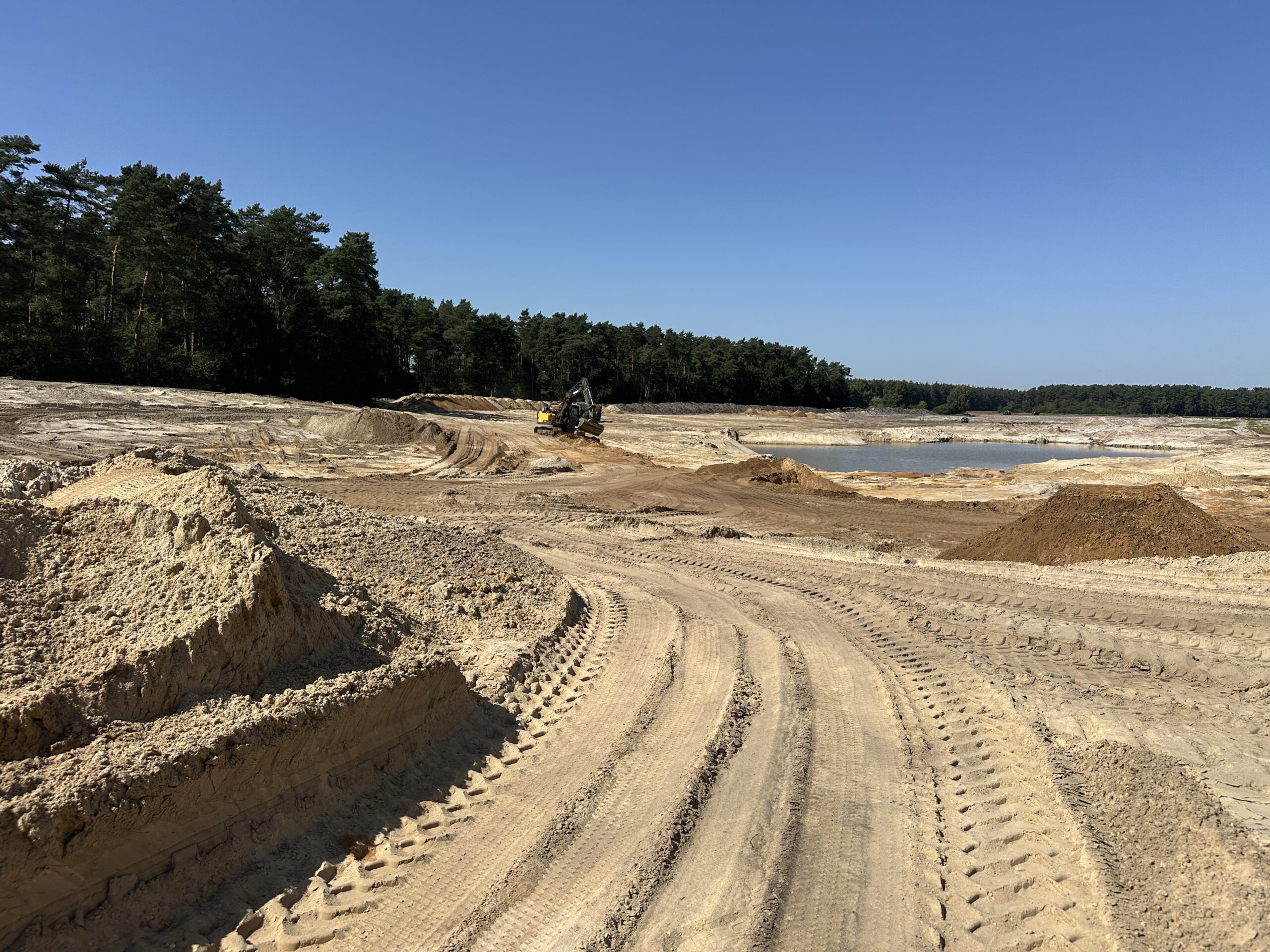
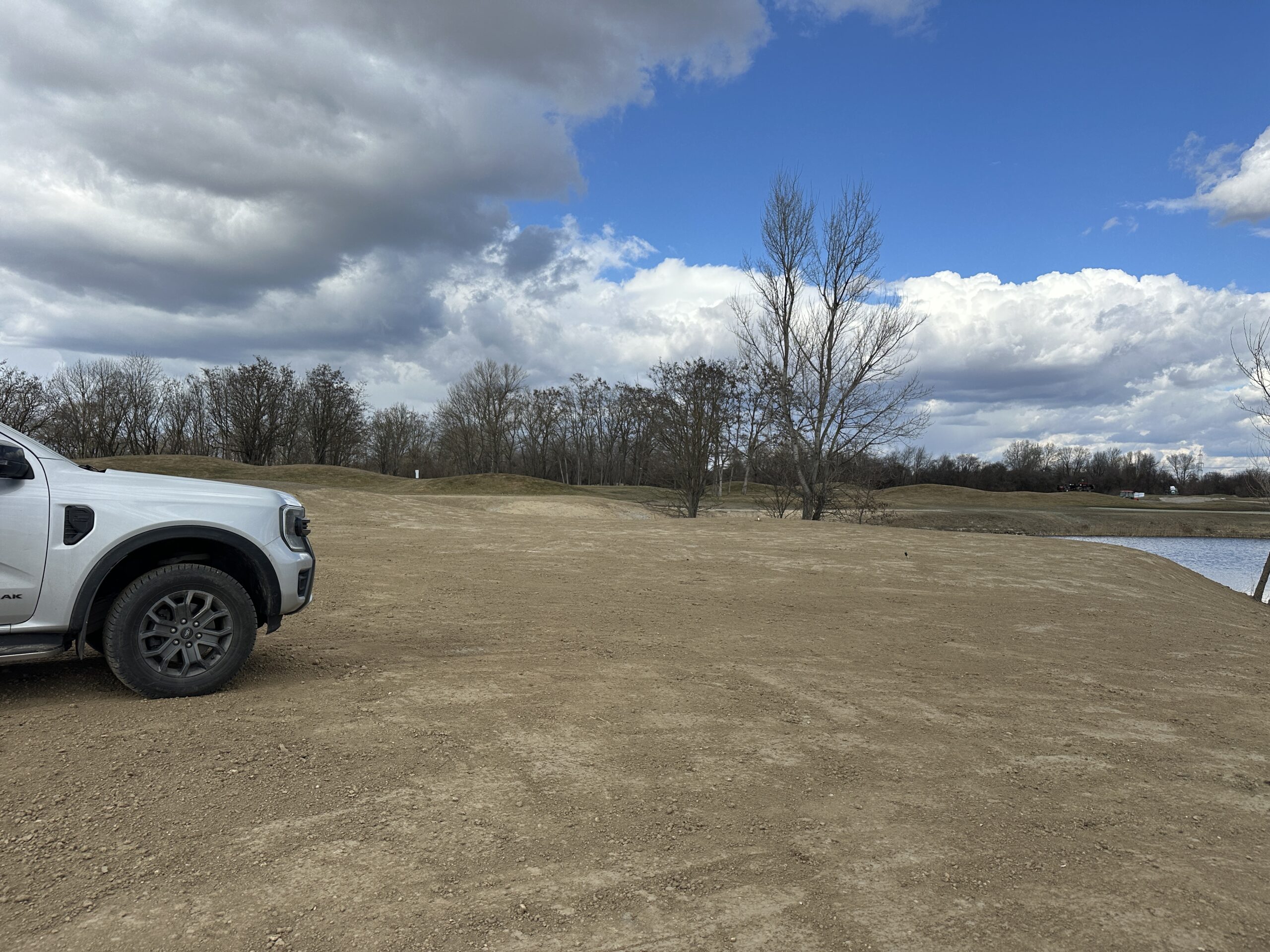
A film-forming biopolymer formulation — the binder dries into a cohesive surface layer that fixes particles and prevents them being lifted by wind or mechanical loading. Temporary service life, nothing to remove, fully biodegradable.
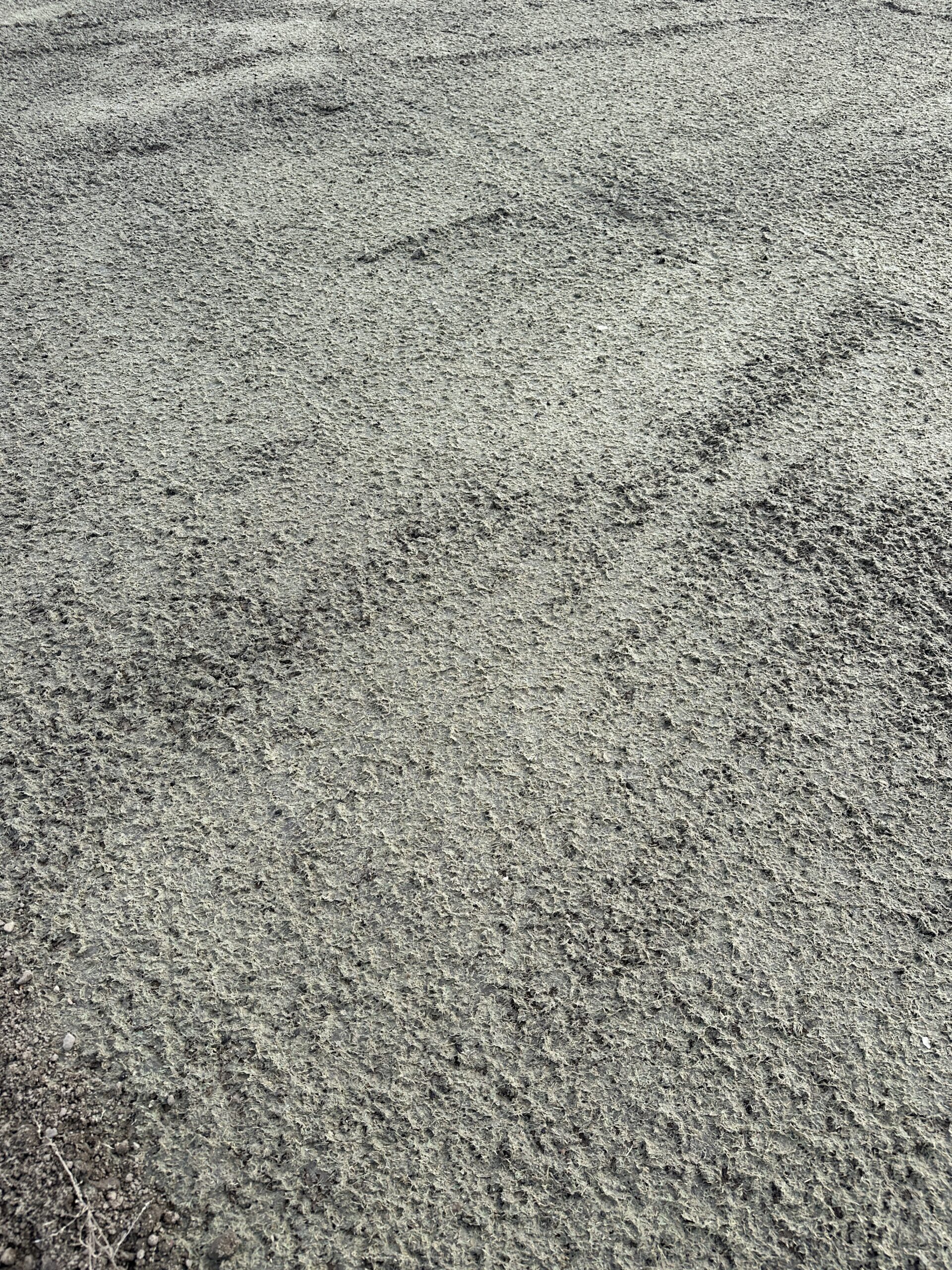
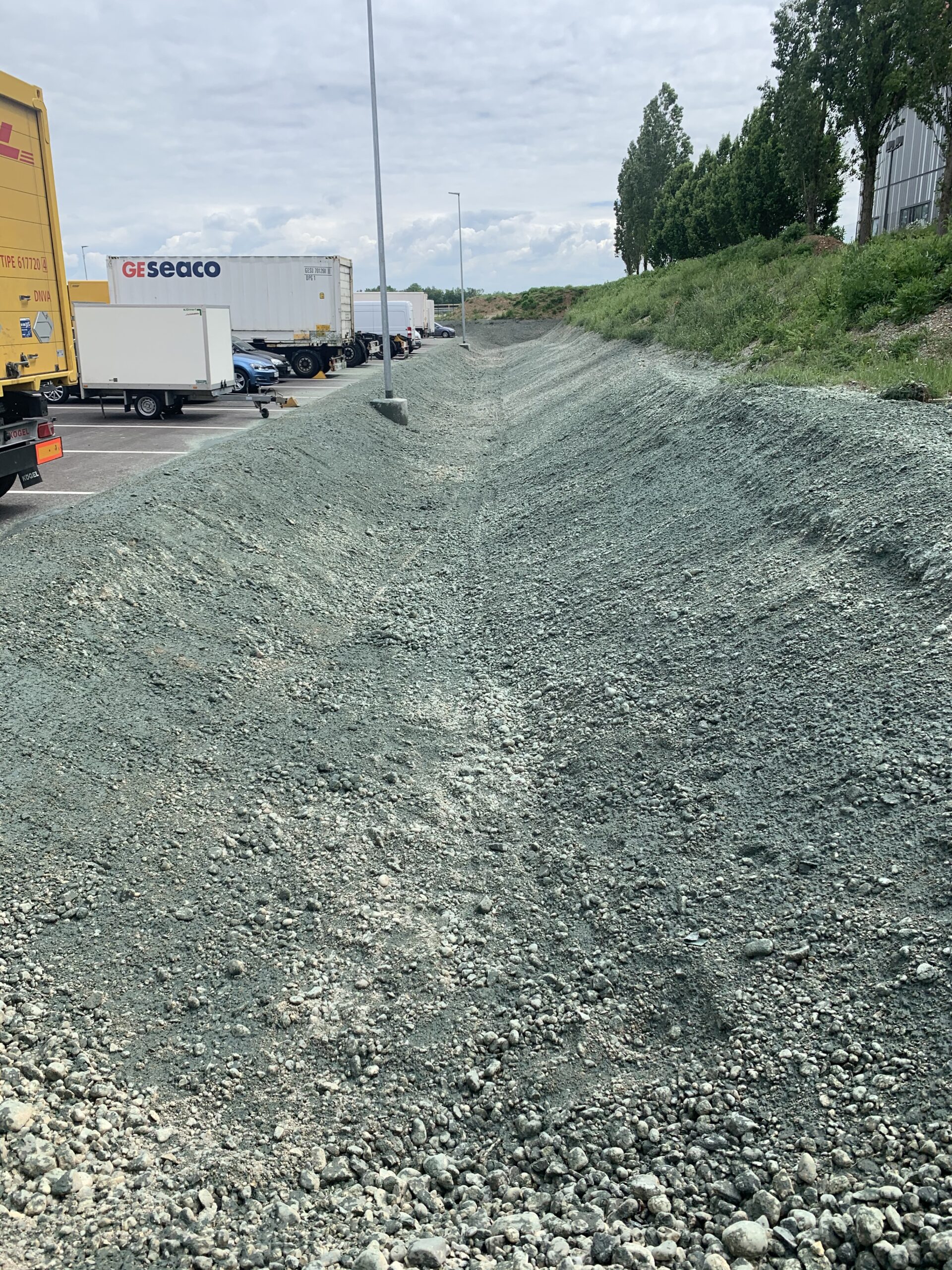
A combined system of mineral additives and biopolymer binders. Mineral particles close pore spaces and raise the shear strength of the surface — the biopolymer binder forms a durable crust that stays stable under increased wind load and regular traffic.
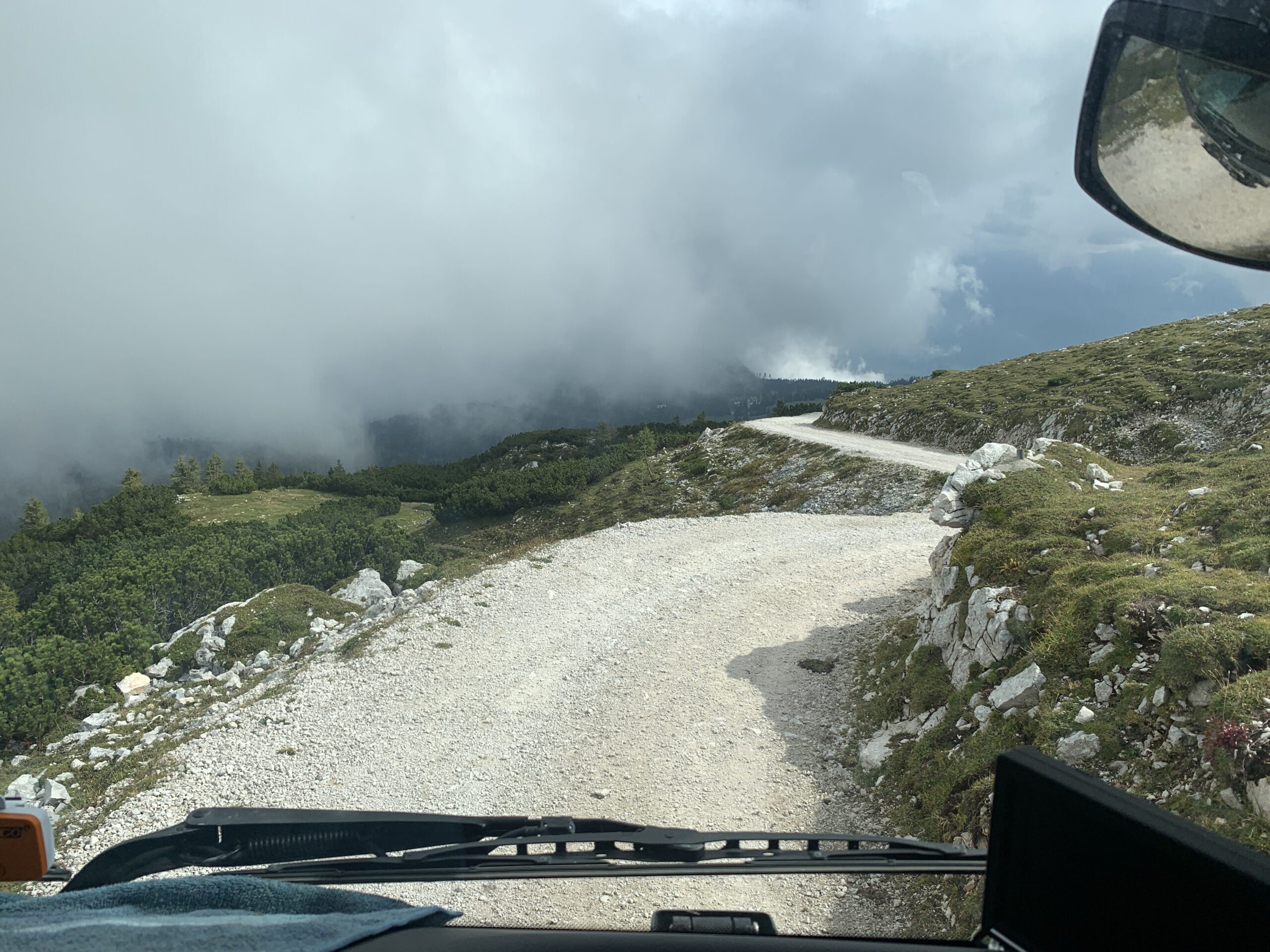
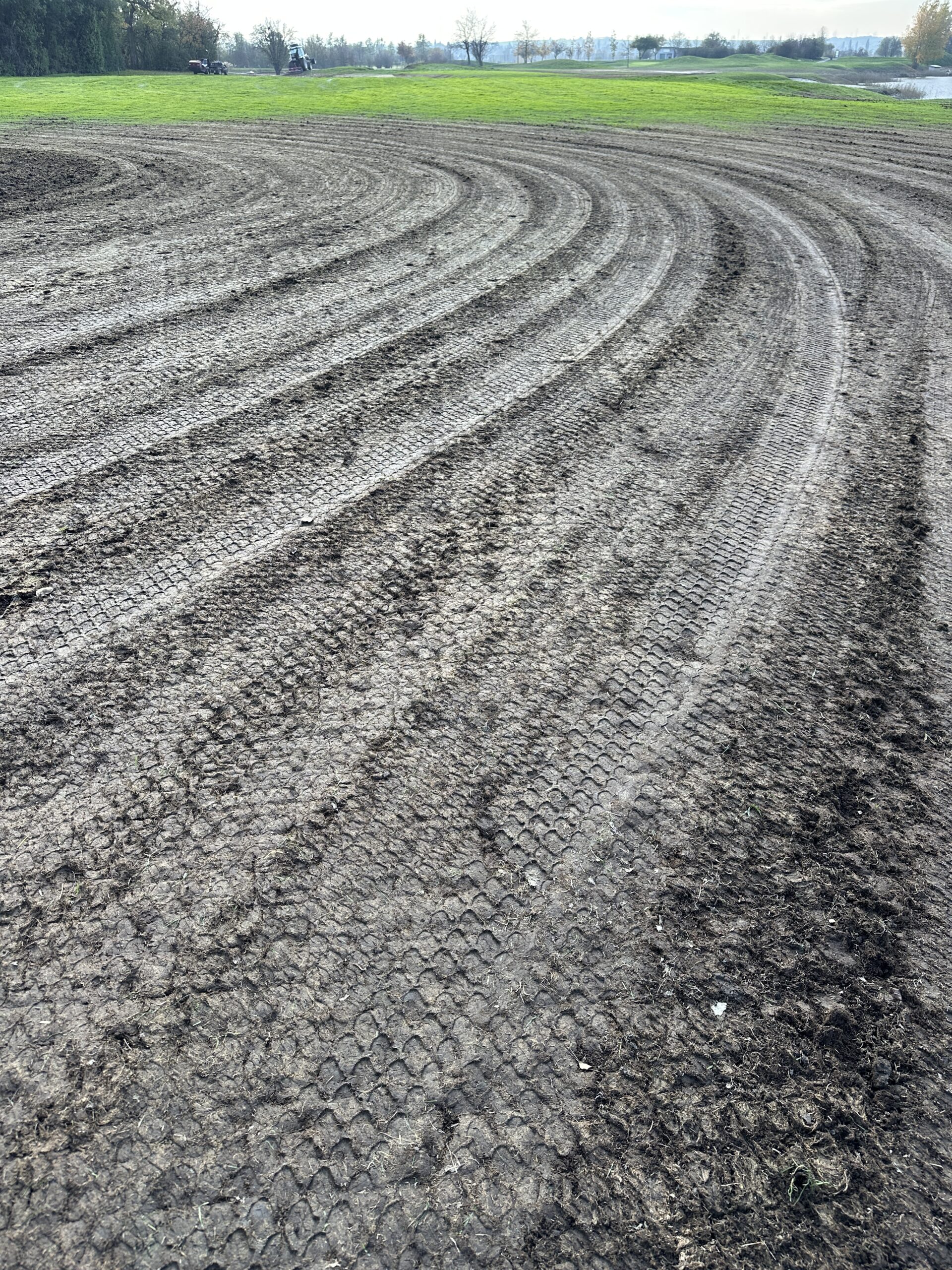
An elastic binder matrix that accommodates the volumetric expansion of the substrate under frost — the binding layer follows the movement without tearing. Rigid systems fail on freeze-thaw sites through cracking and delamination. After every thaw cycle the function is fully intact.
Technical background:
Film-forming biopolymers (sealing): polysaccharide-based binders adsorb onto particle surfaces through electrostatic interaction and hydrogen bonding. On drying they form a cohesive film that bridges neighbouring particles. The mechanism is reversible on contact with water — which is what you want for temporary applications, and which can be compensated for permanent applications by adding mineral components.
Mineral-biopolymer composite (crust): fine mineral particles (limestone flour, zeolite) fill the pore spaces between substrate grains and increase the contact area available to the biopolymer binder. The combination produces a mechanically loadable crust that resists shear far better than a polymer film alone. Mineral content and grading are matched to the substrate and the traffic class.
Frost-flexible matrix: conventional dust control systems based on synthetic polymers (linear chain structures) become brittle in frost and crack. Elastically cross-linked biopolymer matrices absorb the stresses caused by frost heave through reversible deformation — the network stays intact. The difference lies in the molecular architecture of the binder: branched and cross-linked rather than linear.
Fiber-mineral combination: formulations for heavy haul routes additionally use fiber materials (cellulose or mineral fiber). Fibers act as mechanical reinforcement in the crust — they increase tensile strength across the direction of travel and limit crack propagation under dynamic loading. The result is a composite layer with a longer service life than pure polymer or pure mineral formulations.
System comparison
Two system classes are common in the dust control market: nature-based biopolymers and synthetic polymers on a petrochemical basis. The differences matter for permitting, ecology and sustainability.
| Criterion | Nature-based biopolymers (SRBT) | Synthetic polymers |
|---|---|---|
| Biodegradability | ✔ Complete — nothing to remove | Persistent in soil; problematic in water-adjacent areas |
| Persistence in soil and water | ✔ Fully biodegradable, no persistent residue | Persistent to slowly degrading depending on product |
| Freeze-thaw behaviour | ✔ Can be elastically cross-linked — frost-flexible variants available | Linear polymers turn brittle in frost; cracking after freeze-thaw cycles |
| Suitability in protected and water-adjacent areas | ✔ Ecologically sound, suitable for use in sensitive areas | Restricted wherever persistence in soil or water is unacceptable |
| Mechanical load capacity (heavy haul) | ✔ Can be specified for heavy-load classes via a mineral-fiber composite | High inherent strength, but biologically persistent |
| Service life without reapplication | Weeks to months — depending on substrate and loading | Comparable, but degradation behaviour is less predictable |
Background:
Synthetic polymers on a petrochemical basis (linear or weakly cross-linked polymer structures) are still widely used in the dust control market. Their mechanical performance is good in the short term — the problem is the long-term behaviour: they do not break down in soil, or only very slowly, accumulate in the soil matrix and can be washed into surface waters.
For water-adjacent areas, for protected sites and for landfills with leachate collection they are therefore problematic or ruled out. Under freeze-thaw cycles, linear polymer chains also tend to embrittle — the binding layer fails after a few frost cycles through cracking.
SRBT uses nature-based binder systems exclusively. The formulations are fully biodegradable and usable in every sensitive context.
Fields of application
Dust control is not one single task. Requirements for durability, regulatory compliance and load profile differ considerably from one context to the next.
Temporary emission control for neighbours and personnel on open working areas. A single treatment replaces resource-intensive continuous wetting.
A combined requirement: dust control plus shear strength under vehicle traffic. A mineral-fiber composite delivers long reapplication intervals even under regular traffic.
Dust control as an ongoing operational task with defined reapplication intervals. SRBT develops project-specific application concepts from traffic volume, heavy-load class and local climate conditions.
Surface protection alongside operations on active landfills — every formulation fully biodegradable, with no leachate risk. Fully biodegradable once no longer needed.
Wind-driven sand movement damages infrastructure and harms habitats. Nature-based binder systems without synthetic polymers — approvable in Natura 2000 sites and nature reserves.
Water-bound and unbound path surfacings at hotels, leisure facilities and public green spaces — low-dust surfaces with frost-flexible stabilization for freeze-thaw locations.
Our approach
Dust control is not a standard product — substrate, load profile, climate zone and the constraints recorded for the site determine the formulation and the reapplication concept.
Grain size, cohesion, moisture regime, traffic class and climate conditions are recorded. The constraints of the site feed directly into the choice of system.
Operating principle, binder-mineral-fiber ratio and reapplication intervals are defined per project from field test data, not as blanket figures. For continuous operations a maintenance concept with defined cycles is built in.
Hydraulic application with our own machinery. Quality control, performance documentation and reapplication planning are part of every contract — documented in a form that can be submitted as evidence of the measure.
Tell us the substrate, the service life required and the load profile — we will match a suitable system.