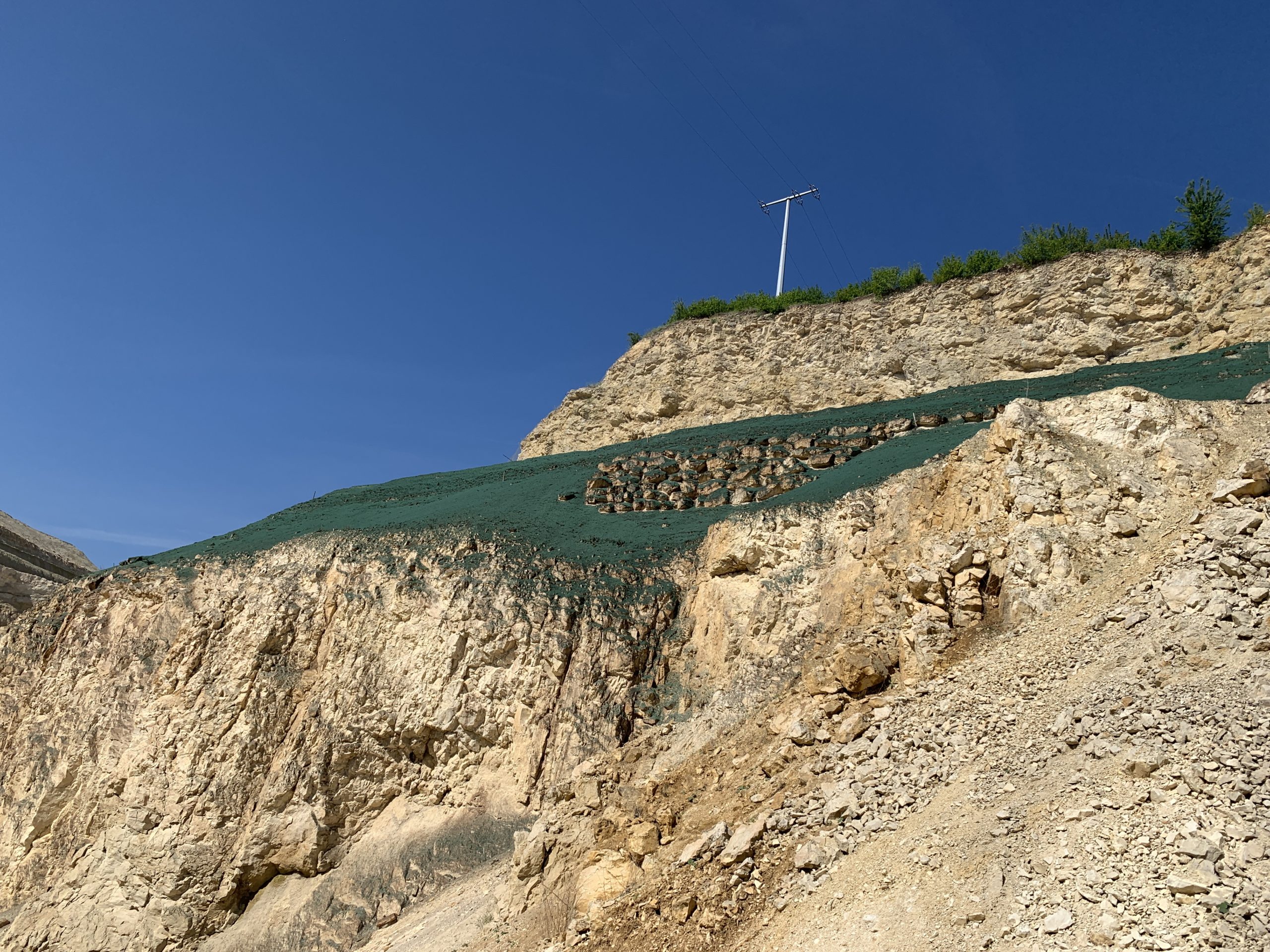
Applications

Mine Rehabilitation

Engineering surface systems for stabilizing, protecting and revegetating disturbed mine land.

Application

Understanding mine rehabilitation

Mining can leave behind surfaces with little resemblance to naturally functioning soil. Topsoil may have been removed, stored or lost, while waste rock, tailings and compacted fill provide limited structure for vegetation establishment. These materials may retain little water, contain few available nutrients and offer poor conditions for root development.

Heavy equipment can further compact the surface, reducing infiltration and increasing runoff. On waste-rock slopes, spoil heaps and graded landforms, steep gradients concentrate water flow and expose loose material to erosion.

Some mine substrates may also produce acidic drainage or contain elevated metal concentrations. These conditions require site-specific geochemical assessment before materials or vegetation systems are selected. Mine rehabilitation must not assume a legal or environmental classification without supporting data.

The objective is therefore not simply to apply seed to a disturbed area. Effective rehabilitation requires a system that addresses substrate limitations, surface stability, water behavior and vegetation establishment while remaining practical across large or difficult-to-access areas.
Revegetation and dust control on unpaved parking areas

Fields of application

Why standard methods fall short

No topsoil

Waste rock, tailings and processed mineral substrates often lack organic matter, biological activity and plant-available nutrients. Without a functional growth layer, conventional seeding may provide seed placement but not the conditions required for sustained establishment.

Compaction

Repeated loading by heavy machinery compresses the substrate and reduces pore space. Water infiltration, gas exchange and root penetration become restricted, while increased surface runoff can remove seed, mulch and fine material before vegetation develops.

Acid / metal load

Sulfide-bearing or mineralized materials may create acidic conditions or release metals when exposed to air and water. These risks vary by substrate and require geochemical characterization rather than assumptions based solely on site history or appearance.

Slope stability

Steep waste-rock and spoil slopes are vulnerable to rilling, surface erosion and localized material movement. Limited access, variable particle sizes and concentrated runoff make uniform treatment and early-stage vegetation establishment particularly difficult.

The engineered surface system

SRBT develops mine-rehabilitation systems around the physical, chemical and biological limitations of the individual site. The process begins by defining the required function of the rehabilitated surface: erosion protection, vegetation establishment, moisture retention, dust reduction, temporary stabilization or a combination of these outcomes.

Site analysis considers substrate type, particle-size distribution, compaction, slope, drainage, climate, water availability and vegetation objectives. Where acidic conditions or elevated metal concentrations may be relevant, available geochemical information must be included in the system design. Surface treatment alone cannot replace the assessment or management of underlying contamination and drainage risks.

The material system is designed to create suitable initial conditions on a hostile substrate. Depending on the project, this may involve a hydraulically applied growth medium, functional fibers, moisture-management components and a biopolymer-based binder. Together, these elements can improve surface cohesion, protect seed and fine material, moderate moisture loss and support early vegetation development.

Material selection is based on functional performance, environmental suitability and the constraints recorded for the site. Proprietary formulations and mixing ratios remain project-specific.

Application planning then connects the material concept with field delivery. Equipment selection, access, pumping distance, slope geometry, mixing, distribution and quality control are coordinated to achieve consistent coverage under actual site conditions.

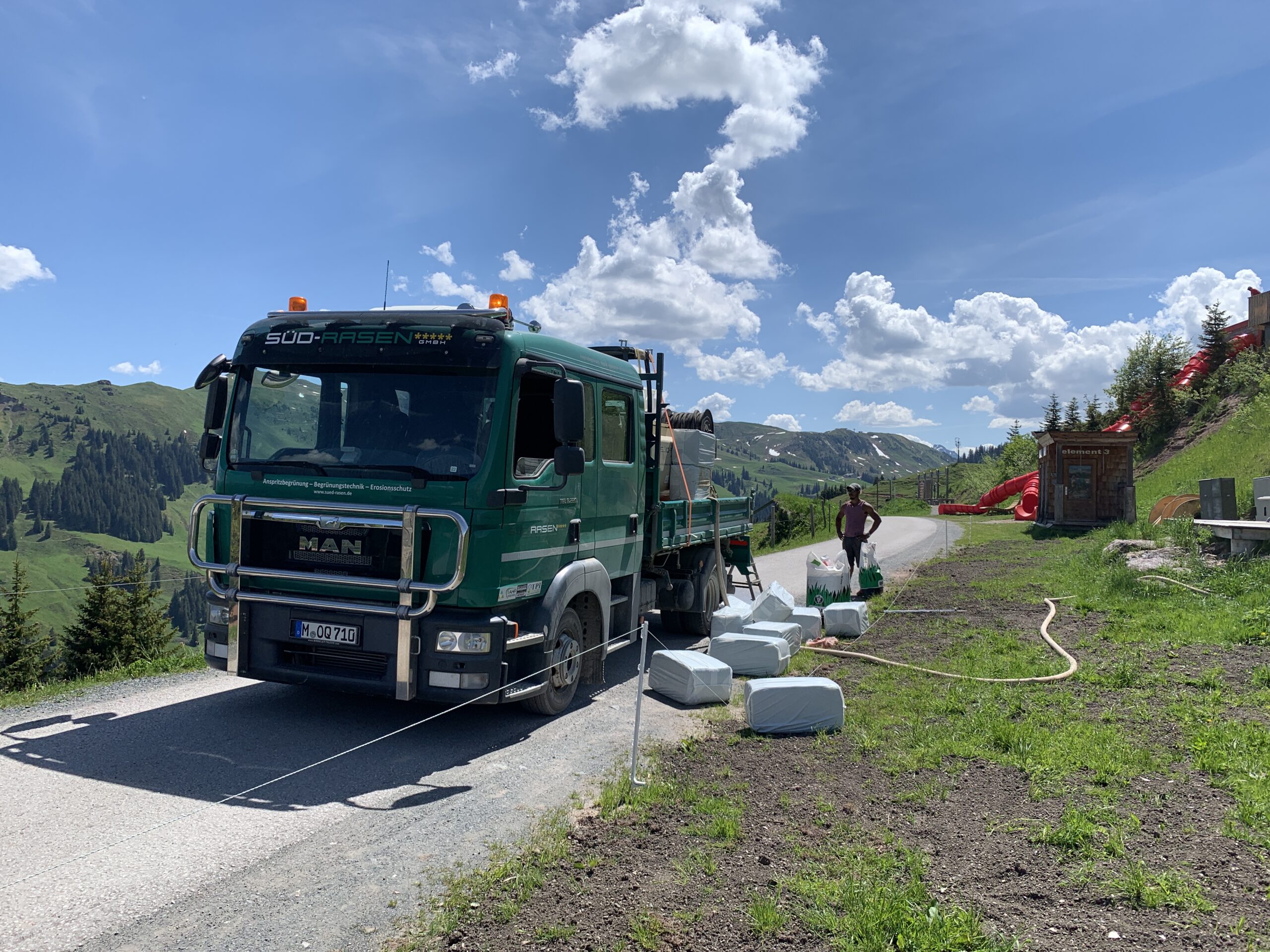
Service vehicle and mulch bales at a high-altitude revegetation site

Our approach

01
Site analysis

Assess substrate, geochemistry, compaction, slope, drainage, climate and rehabilitation objectives.

02
Material system

Define stabilization, moisture, growth-medium and vegetation functions for the site.

03
Application

Coordinate access, equipment, mixing, distribution, coverage and field quality control.

Any questions?

A project, a partnership or a research collaboration — get in touch by phone or email.