Locations

Hydroseeding in Kosovo

Engineered revegetation for rocky slopes, mining overburden and difficult mineral substrates.

SRBT delivery capability in Kosovo

SRBT can mobilize project-specific hydroseeding and surface-engineering systems for projects in Kosovo. Delivery begins with an assessment of substrate chemistry, compaction, slope geometry, drainage, water availability and the intended future use of the surface.

Equipment, application capacity and technical support can be coordinated through an international partner and equipment-fleet network. The appropriate delivery model depends on technical feasibility, regulatory requirements, site access and project scale.

This describes project capability, not a permanent local presence. Each inquiry is assessed individually before a material system, application method or mobilization route is proposed.

Where surface problems arise in Kosovo

Climate

Continental conditions dominate the central basins, while elevation creates colder and more variable conditions in the surrounding mountain regions. Warm, comparatively dry summer periods can restrict germination and early root development. Cold winters shorten the effective establishment window at higher elevations. Intense rainfall, spring runoff and snowmelt can generate surface erosion before vegetation has developed sufficient protective cover.

Dominant soils

Substrate conditions range from productive valley soils and alluvial deposits to shallow, rocky and mineral soils in upland terrain. Carbonate and other geologically complex formations occur alongside areas affected by mining. Overburden, ash deposits and processed mineral material must not be treated as conventional topsoil: their chemistry, structure, compaction and biological activity require separate assessment before revegetation.

Vegetation zones

Agricultural basins, deciduous forests, upland grasslands and mountain vegetation create different establishment requirements. Seed selection therefore needs to reflect elevation, exposure, substrate and intended land use. A mixture suitable for a lowland infrastructure corridor may be inappropriate for a mining slope or an exposed mountain site. Revegetation planning must prioritize functional and locally compatible plant communities rather than generic amenity mixtures.

Water availability

Kosovo's river systems ultimately drain toward three seas: the Drini i Bardhë basin toward the Adriatic, the Ibri and Morava e Binçës systems toward the Black Sea, and the Lepenci basin toward the Aegean. This hydrological position does not automatically provide process water at a project site. Source reliability, water quality, transport distance, storage and any applicable abstraction requirements remain part of project planning.

Regulation

Revegetation work may interact with environmental, mining, water, agricultural-land, construction and waste-management requirements. The applicable approvals depend on the condition and legal classification of the site. Mining residues, ash deposits and potentially contaminated substrates require particular care. Hydroseeding specifications must therefore be coordinated with the approved rehabilitation, drainage, containment and aftercare plans rather than developed as an isolated landscaping measure. Kosovo's EU accession process includes addressing water-quality obligations, including inadequate wastewater treatment and pollutant discharge into surface waters, as documented in EU accession assessments. Sediment control from erosion-prone and disturbed surfaces forms part of this broader water-quality agenda. Standardized technical specifications for erosion- and sediment-control works are not yet consistently established in the Kosovo market; early projects may therefore require close coordination between the project owner, the regulator and the delivery partner to define an appropriate technical approach.

Lead industries

Surface-engineering requirements are particularly relevant around lignite extraction and power generation near Obiliq/Kastriot, the lead-zinc-silver mineralization associated with the Trepça metallogenic belt, and magnesite deposits such as Golesh. Transport and energy infrastructure create additional demand for slope protection and difficult revegetation. These sectors produce very different substrates, ranging from road cuttings and rocky embankments to overburden, ash and processed mineral surfaces.

Topography and terrain

Central and western basins are bordered by mountain ranges, producing short transitions from relatively level land to steep and difficult terrain. Infrastructure corridors, quarry faces, mine slopes and disposal areas may have restricted access and irregular surface geometry. Hydraulic application can reach slopes that are difficult to treat mechanically, but spraying capability alone does not resolve inadequate grading, unstable material or uncontrolled drainage.

Structural risks

Spatial-planning documents identify erosion-prone areas as well as landslide and rock-topple zones. Mining areas add risks associated with loose overburden, settlement, contaminated material, ash movement and dust emissions. A World Bank-financed cleanup and land-reclamation project provides useful context: more than 85% of an ash dump was rehabilitated, while 70% of the total overburden area—more than 600 hectares—was reclaimed for community purposes. Around 150,000 trees were planted, but their survival rate was reported as substantially lower than in other areas. This demonstrates that reclamation does not automatically ensure biological establishment. The project is contextual evidence, not an SRBT reference.

Hydroseeding in Kosovo

Hydroseeding in Kosovo must be designed around the actual function and limitations of the substrate. Site assessment should establish pH, salinity, potential contamination, compaction, available rooting depth, moisture behavior and erosion exposure. On mining substrates, ash deposits or overburden, these findings determine whether direct revegetation is feasible or whether technical preparation, cover construction or soil improvement must occur first.

The hydraulic system can combine suitable seed, fibers, growth-supporting components, moisture-management functions and a biologically based binder. The binder helps maintain contact between the applied system and the mineral surface during the critical period before vegetation becomes established. Material selection and application rates remain project-specific.

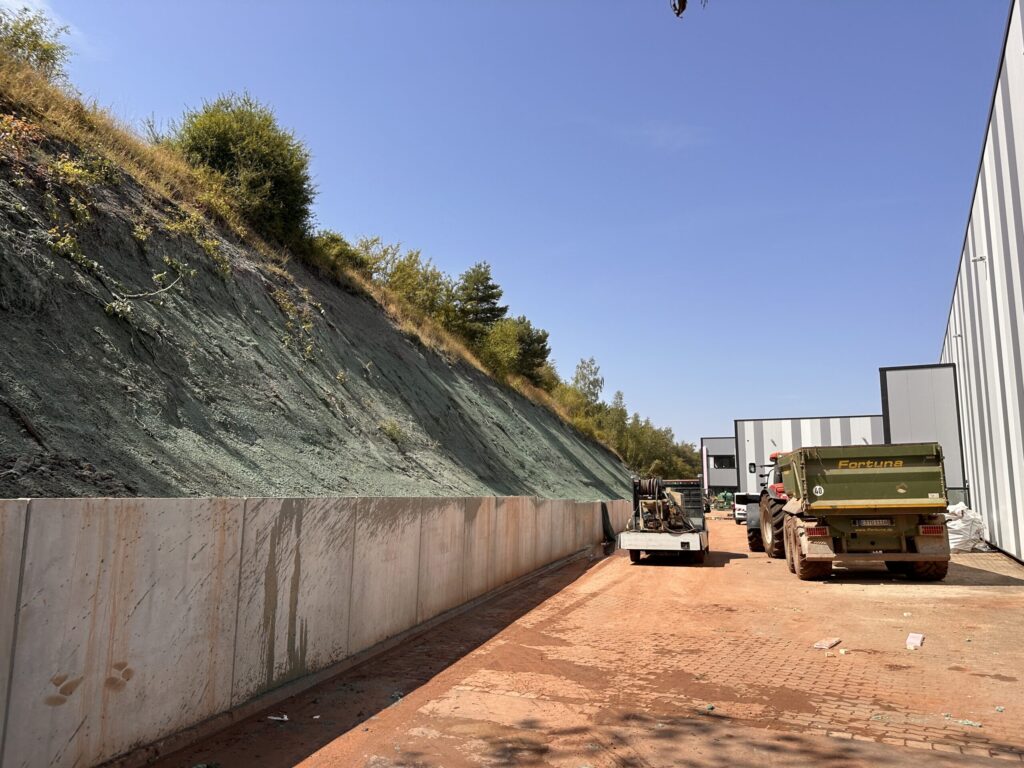
On rocky slopes, hydraulic placement can improve access and distribute material across irregular terrain. It cannot, however, create sufficient rooting volume on exposed rock or stabilize an unsafe slope. Likewise, hydroseeding does not remediate contamination, replace engineered containment or correct uncontrolled mine drainage.

Geotechnical stabilization, grading, drainage and any required environmental remediation must be completed or incorporated into the approved design first. Hydroseeding then supports the biological rehabilitation and surface-erosion-control phase.

Where a project sits within this developing regulatory context, SRBT's role can extend beyond executing an existing specification to helping define a technically sound approach for the specific site, in coordination with the relevant authorities and project owner. This reflects an evolving area of practice rather than an established standard procedure.
Terminology

No Albanian- or Serbian-language expression is presented here as a confirmed Kosovo-specific commercial term for hydroseeding. The international term hydroseeding is retained and defined through its practical functions: hydraulic vegetation establishment, erosion control and the rehabilitation of difficult mineral substrates.

Relevant applications

Difficult Revegetation

Establishing vegetation on rocky, shallow or biologically inactive substrates.

Application
Read more →
Mine Rehabilitation

Coordinating substrate preparation, erosion protection and biological establishment on mining-affected land.

Application
Read more →
Guide to Mine Rehabilitation

How technical stabilization, substrate management and biological establishment interact in mine-rehabilitation planning.

Engineering Guide
Read more →
Any questions?

A project, a partnership or a research collaboration — get in touch by phone or email.