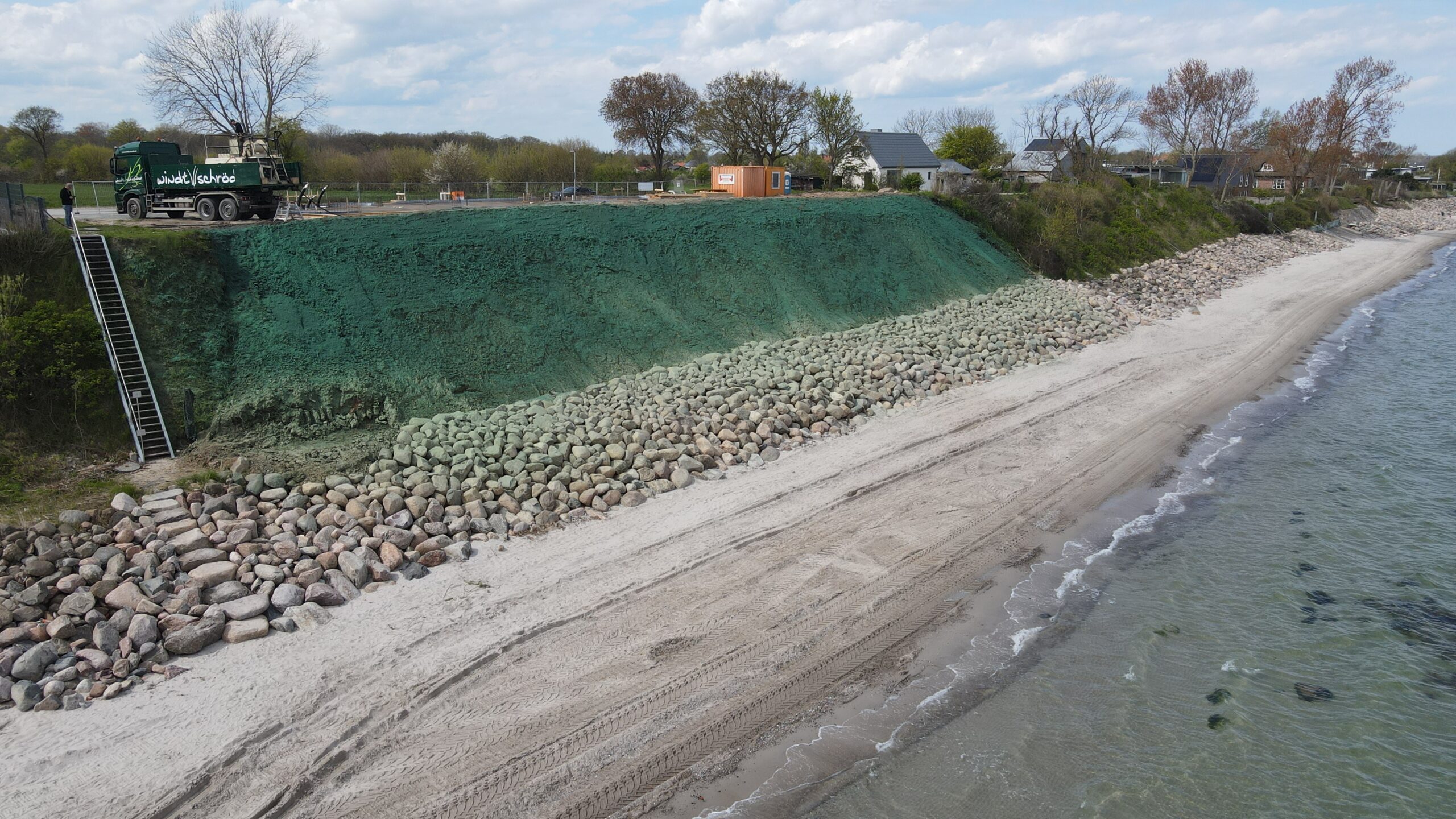
Hydroseeding in Latvia must be adapted to wind exposure, sandy substrates and the comparatively short vegetation-establishment window. Conventional seeding alone may fail on mobile sand because seed and fine material can be displaced before roots provide protection. Low water retention can further interrupt germination during dry periods.
Where intervention is technically and environmentally justified, the system may combine locally appropriate seed, fibers, moisture-management components and a biologically based binder. The initial functions are to retain seed, reduce surface movement and create more stable moisture conditions. Vegetation can then assume the longer-term protective role as the temporary binder degrades.
Coastal applications require a distinction between protecting infrastructure and altering a naturally dynamic dune. Native pioneer vegetation, salt exposure, wind direction, sand transport and protected habitats must be evaluated before treatment boundaries are defined. The objective is not to produce a rigid or permanently sealed surface, but to provide the temporary cohesion required for targeted vegetation establishment.
Material selection must comply with Latvian and European environmental and chemical requirements. Nature-based binders can provide an alternative where conventional synthetic polymers are unsuitable or restricted. Their service life must be evaluated honestly: biodegradable materials cannot provide indefinite stabilization and require vegetation or another mechanism to take over.
Water logistics, site access, wind conditions and the remaining growing period form part of the delivery design. Proprietary formulations remain project-specific.