Locations

Hydroseeding in Bulgaria

Engineered post-fire stabilization and mine-site revegetation for exposed surfaces across contrasting climatic and terrain conditions.

SRBT delivery capability in Bulgaria

SRBT can mobilize project-specific surface engineering systems for applications in Bulgaria. Delivery begins with an assessment of fire severity, substrate condition, slope geometry, drainage, water availability, intended vegetation and operational constraints. These parameters determine the required material functions, application method and equipment configuration.

Projects may be implemented through qualified regional resources and SRBT's international partner and equipment-fleet network. This represents a delivery capability, not a claim of permanent local presence. Mobilization remains subject to technical feasibility, regulatory requirements, project scale and the availability of suitable access, water and application infrastructure.

Where surface problems arise in Bulgaria

Climate

Bulgaria lies between continental and Mediterranean climatic influences. Northern and inland areas experience pronounced seasonal temperature differences, while southern regions are affected more strongly by warm, dry Mediterranean conditions. Extended periods of heat and limited rainfall can increase vegetation stress and fire-weather exposure, followed by rainfall capable of rapidly mobilizing unprotected soil.

Dominant soils

Soil conditions include chernozems in parts of the north, alluvial soils along river corridors, forest soils, clay-rich substrates and shallow mountain soils. Disturbed sites add compacted subsoil, waste rock, tailings and industrial fills. These materials may have limited organic content, unfavorable chemistry or insufficient structure for conventional vegetation establishment.

Vegetation zones

Vegetation ranges from agricultural plains and steppe-influenced landscapes to deciduous and coniferous forests, mountain grasslands and sub-Mediterranean communities in the south. Post-fire treatments must reflect the natural regeneration strategy of the affected ecosystem. Immediate seeding is not automatically appropriate where viable roots, seed banks or natural succession remain.

Water availability

Water availability varies by region, season and elevation. Mountain areas may receive substantial precipitation, while southern and eastern sites can experience extended dry periods. Project design must distinguish between water required for hydraulic application and moisture available during establishment. Water abstraction, transport and suitability therefore form part of the feasibility assessment.

Regulation

Projects may be subject to environmental, mining, water-management, soil-protection, forestry and nature-conservation requirements administered by the Ministry of Environment and Water and other competent authorities. Work in protected areas or on former mining sites requires project-specific review. Hydroseeding does not replace permitting, ecological assessment or statutory rehabilitation planning.

Lead industries

Mining, mineral processing and energy production create relevant rehabilitation requirements, particularly around waste-rock dumps, tailings facilities and disturbed industrial land. Infrastructure, forestry and utility projects generate additional applications on cut slopes, embankments and temporary construction surfaces. Each setting requires a different balance between erosion control, vegetation establishment and operational access.

Topography and terrain

The Balkan Mountains, Rila, Pirin and Rhodope ranges create steep terrain, variable elevations and restricted access. Valleys and plains present different conditions, including wind exposure, agricultural erosion and drought stress. Equipment positioning, pumping distance, elevation difference and hose routing must be evaluated before an application method is selected.

Structural risks

Wildfire can remove protective vegetation and expose slopes to runoff before natural recovery begins. Mining areas may add settlement, contaminated material, unstable dumps and tailings-related risks. A national environmental assessment states that approximately 85% of Bulgarian soils are affected by erosion processes and around 30% are subject to wind erosion. Because official monitoring distinguishes modeled potential from annually calculated actual risk, these figures should be treated as broad national indicators—not as evidence that every site is actively eroding.

Hydroseeding in Bulgaria

Hydroseeding in Bulgaria should be designed around the mechanism creating the surface risk. After wildfire, the first assessment considers burn severity, remaining vegetation, ash depth, possible soil water repellency, slope, anticipated rainfall and downstream receptors. The objective may be temporary surface protection, supported natural regeneration or active revegetation. These are different interventions and should not be specified as one standard treatment.

Where immediate protection is required, the engineered system may combine selected fibers, a biologically based binder and moisture-management components. Seed and nutrient support are included only where justified by the ecological objective and substrate condition. The required persistence must match the period before natural or introduced vegetation can assume the protective function.

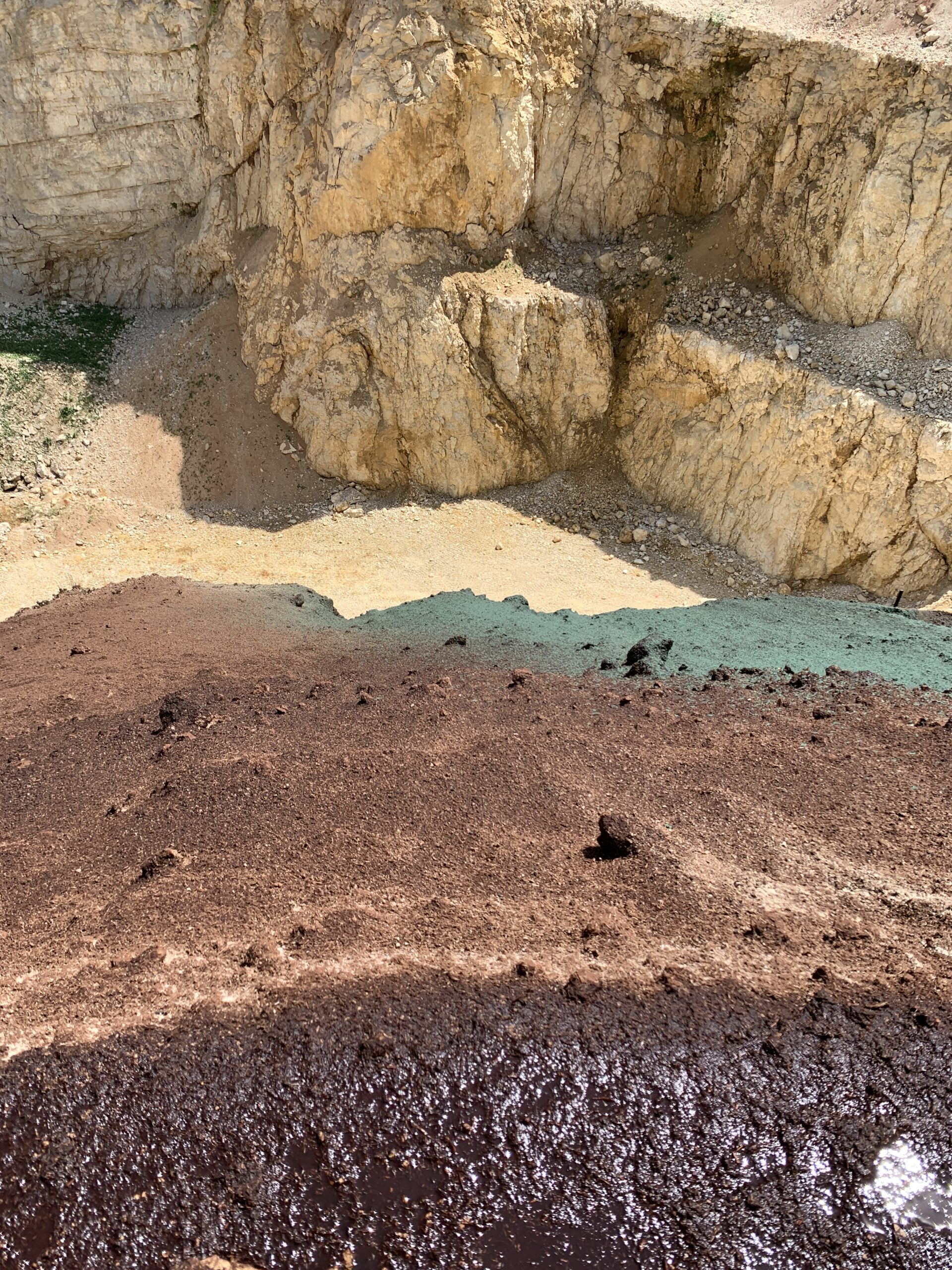
Mine-site applications follow a different sequence. Technical rehabilitation—including drainage, regrading, containment, geotechnical stabilization or treatment of contaminated material—must be completed where required before biological establishment begins. Hydroseeding can support the revegetation and surface-protection phase, but it cannot stabilize an unsafe tailings structure, prevent uncontrolled settlement or remediate contaminated mine waste by itself.

Material selection considers site chemistry, expected exposure and applicable Bulgarian and EU environmental requirements. Proprietary formulations remain project-specific.

Local terminology

The established Bulgarian term for hydroseeding is хидропосев (hidroposev). Relevant technical terminology includes рекултивация for rehabilitation or reclamation and контрол на ерозията for erosion control. These terms are used alongside English terminology when defining post-fire, mining and infrastructure applications in Bulgaria.

Relevant applications

Wildfire Recovery

Rapid surface assessment and stabilization during the critical period between fire damage and the first erosive rainfall.

Application
Read more →
Mine Rehabilitation

Engineered vegetation establishment on waste rock, tailings surfaces and other disturbed mining substrates.

Application
Read more →
Post-fire erosion control: the first-rains window

Why the period between fire damage and the first significant rainfall determines the immediate stabilization strategy.

Engineering Insight
Read more →
Any questions?

A project, a partnership or a research collaboration — get in touch by phone or email.