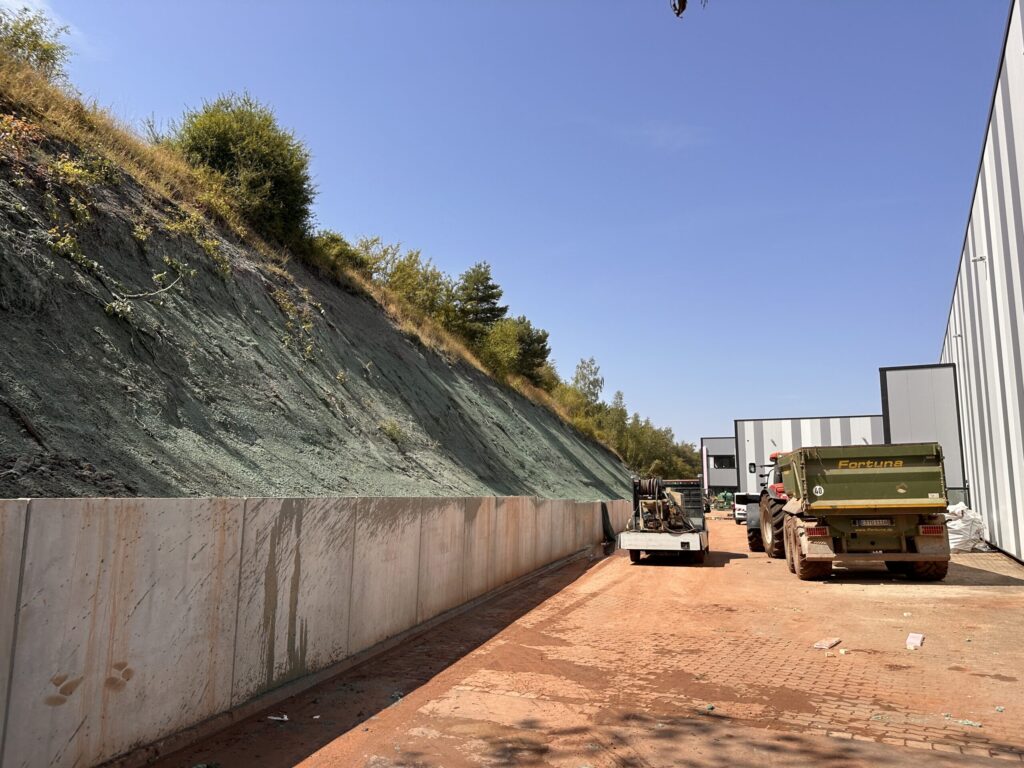
Hydroseeding in Poland can support the biological phase of post-mining rehabilitation once the site's geotechnical, hydrological and chemical conditions have been established. The assessment should distinguish between natural soil, overburden, waste rock, processed residues and imported cover material. Relevant parameters include particle size, compaction, pH, salinity, nutrient availability, potential contamination, water retention and slope stability.
Where direct establishment is technically appropriate, the system may combine adapted seed, fibers, a hydraulic growth medium, moisture-management components and a biologically based binder. Its functions can include retaining fines, reducing rainfall erosion, supporting germination and creating an initial rooting environment on a hostile mineral substrate.
Hydroseeding is not the first intervention on every site. Unstable slopes may require grading or structural reinforcement. Contaminated or reactive materials may require isolation, capping or controlled drainage. Severe chemical limitations may require a defined cover layer before vegetation can be established. These measures must be resolved within the approved reclamation design.
Material systems must comply with Polish and European environmental and chemical requirements. Biopolymer-based binders can provide an alternative where conventional synthetic polymers are unsuitable or restricted, but their functional lifetime must be assessed realistically. Long-term performance must ultimately come from vegetation, an engineered cover or another permanent mechanism.
Application timing, water supply, equipment access and quality-control requirements form part of the delivery design. Proprietary formulations remain project-specific.