Technology & Methods

Hydraulically Applied Erosion Control

How it works

Full-surface contact is the precondition for erosion control.

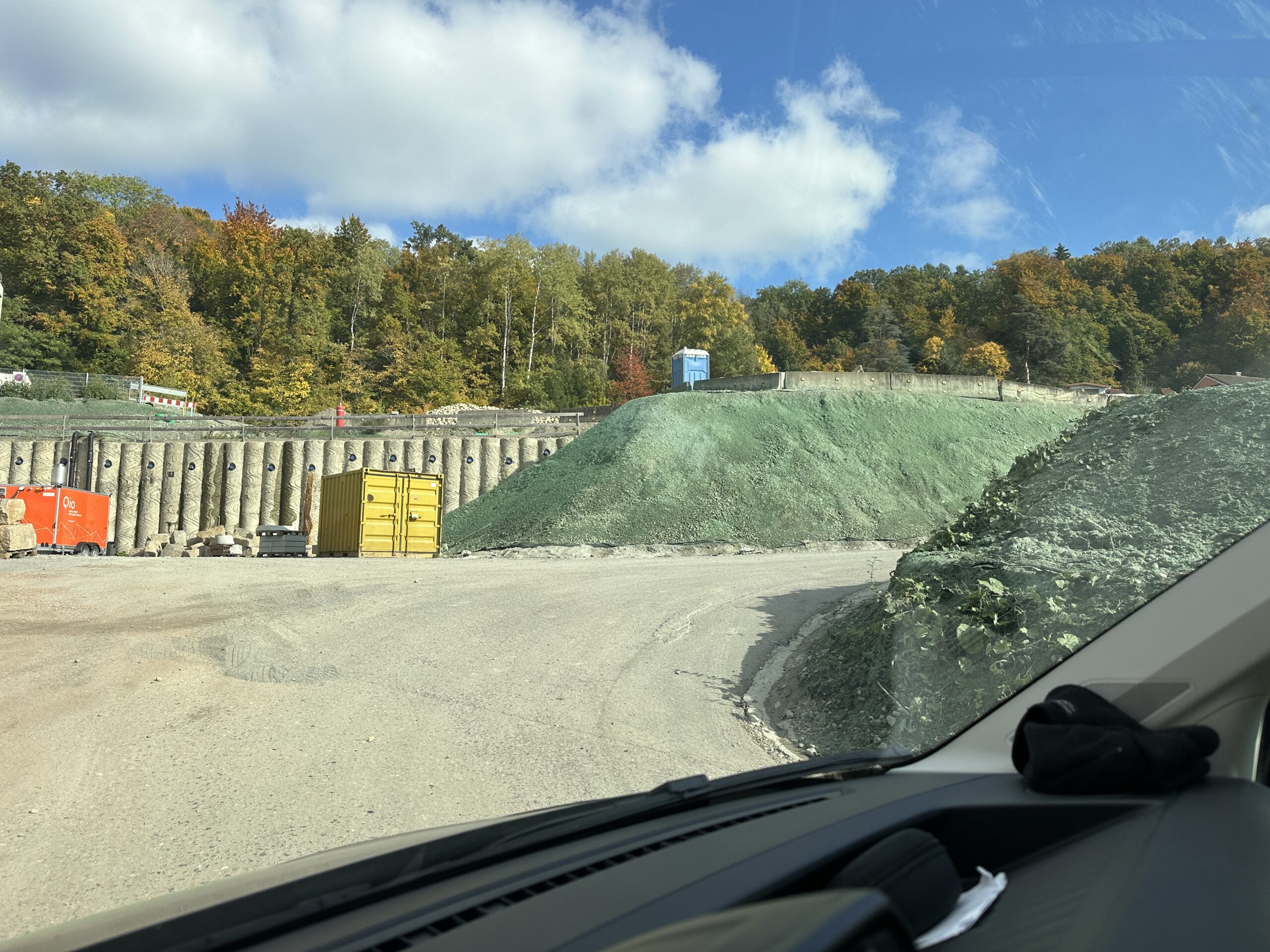
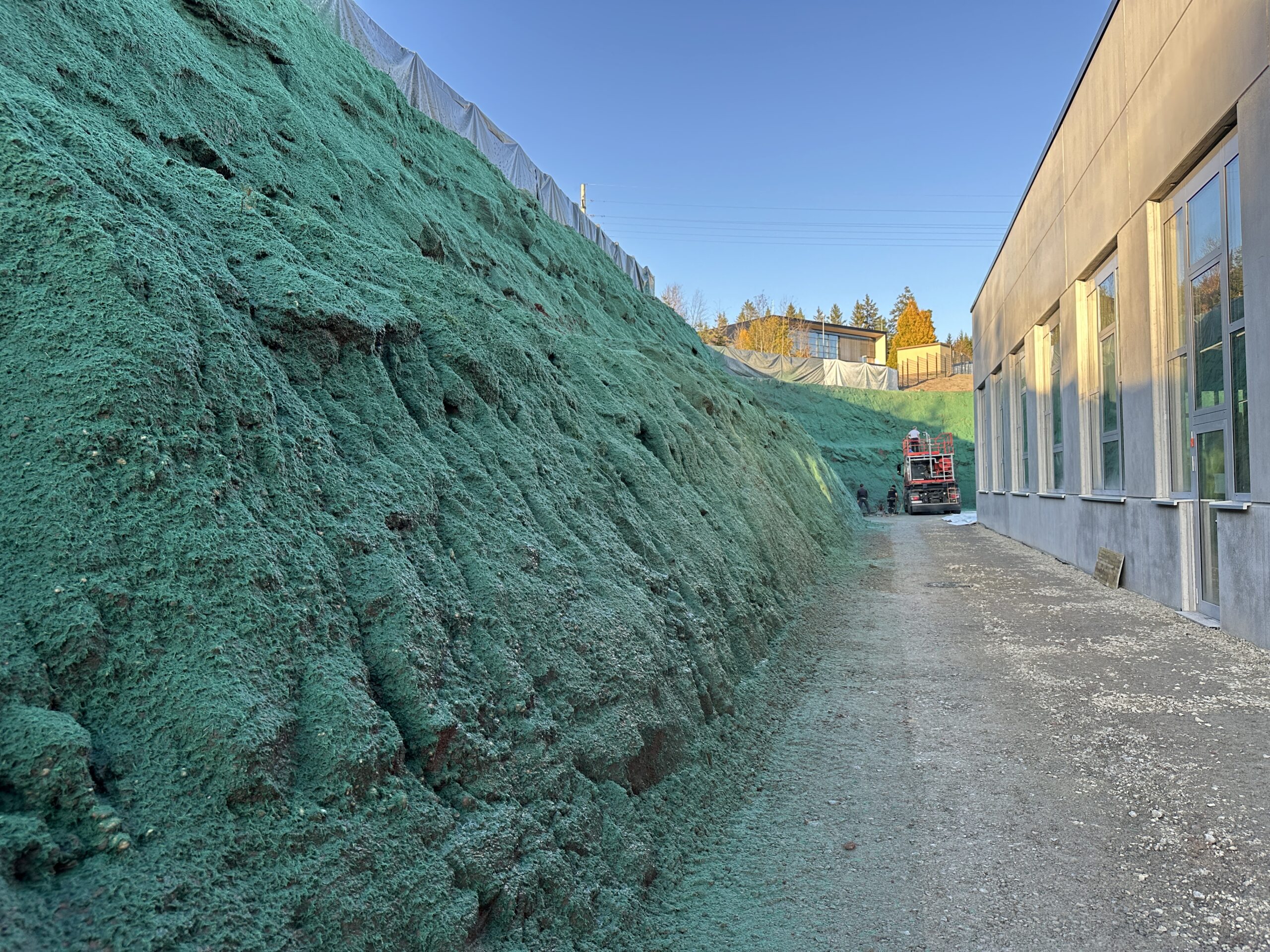
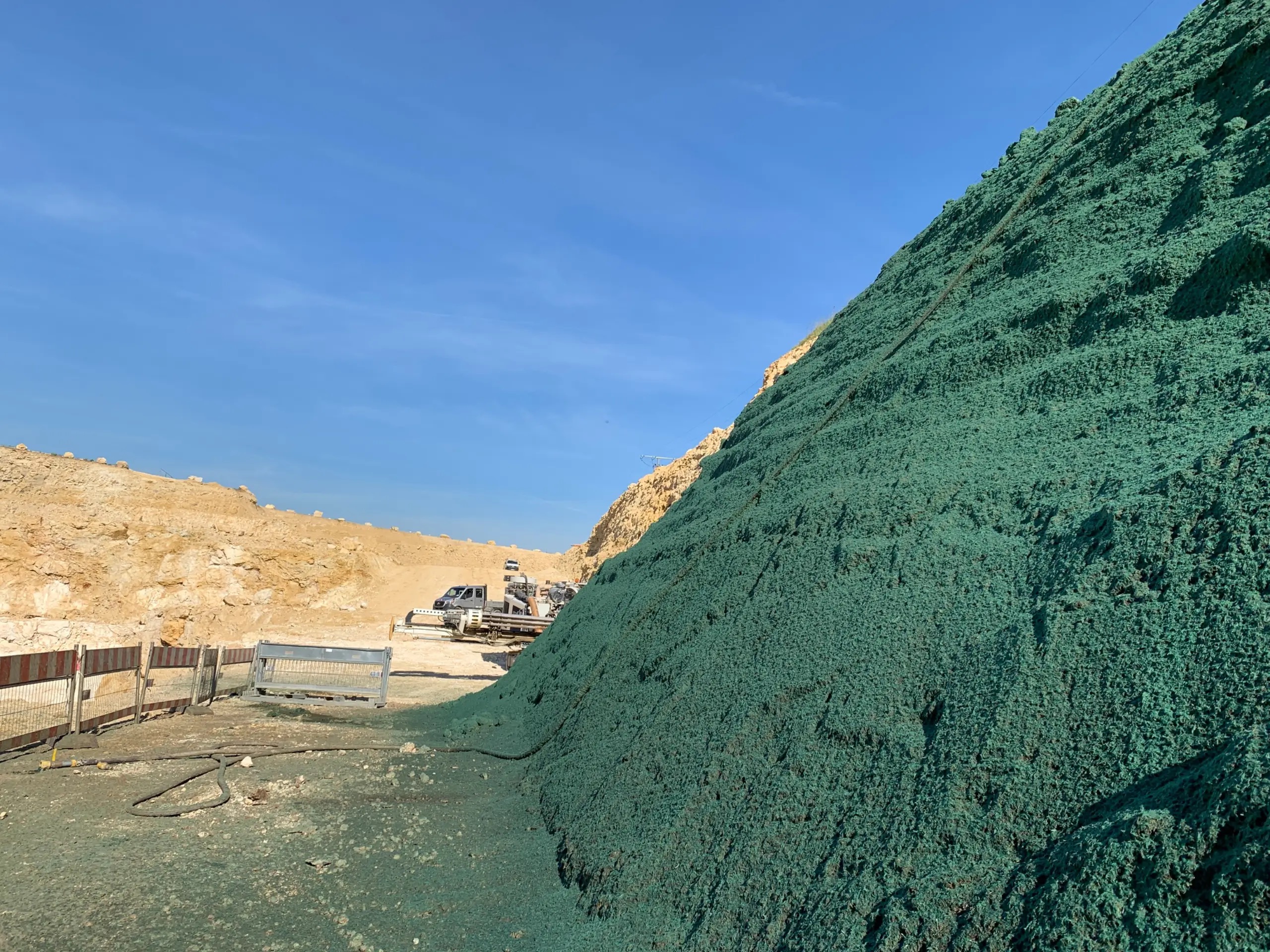
Hydraulically applied protective mulch settles flush onto the substrate — no voids, no flow paths beneath the protective layer. It is biodegradable, carries no entrapment risk for wildlife and actively supports vegetation establishment. The comparison below sets out where it differs from matting systems.

Erosion starts where water meets unprotected soil particles. The impact of raindrops — the splash effect — detaches fines from the soil matrix. Surface runoff then carries those particles downslope. Effective erosion control has to interrupt both mechanisms at once.

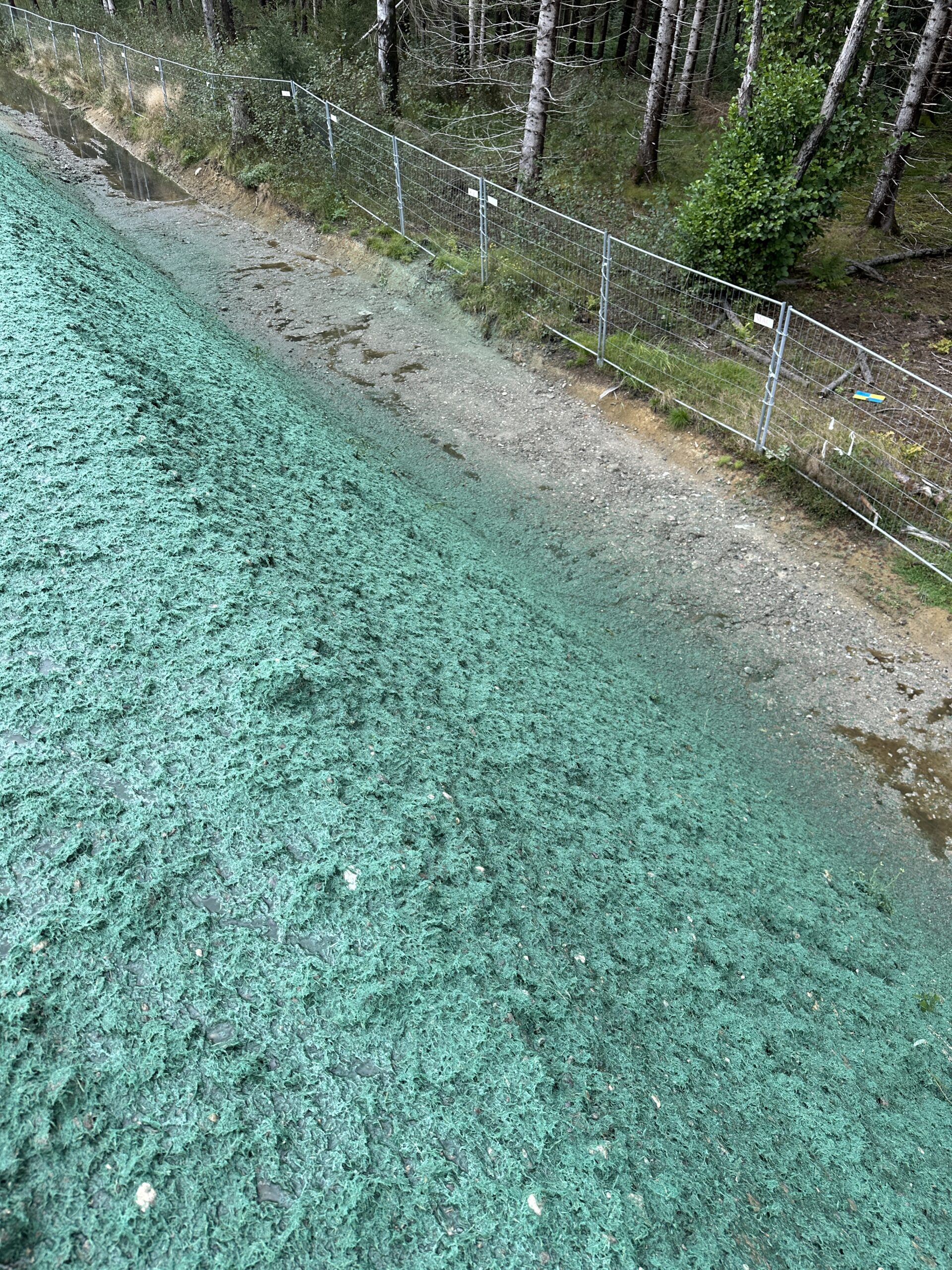
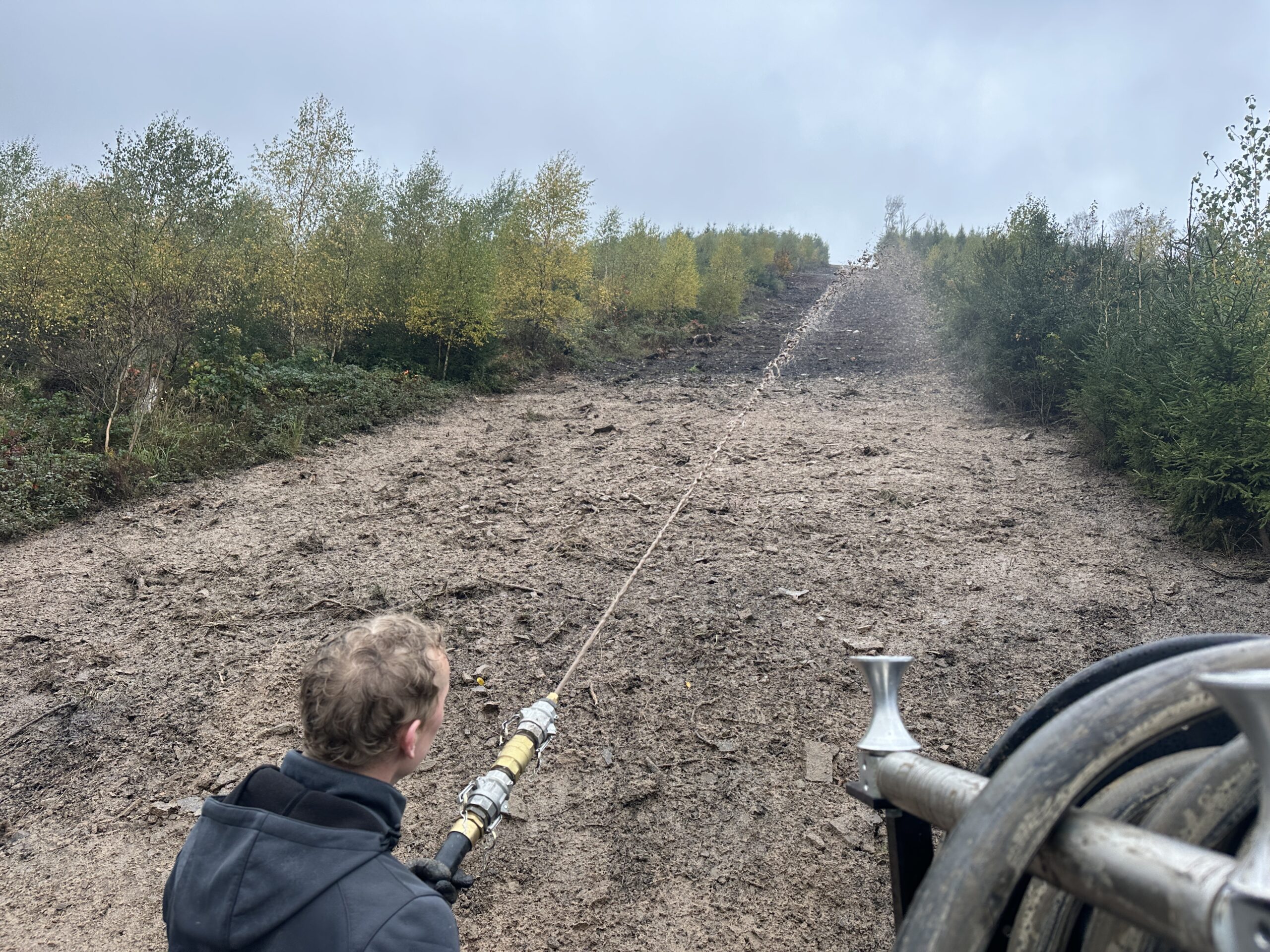
A hydraulically applied mulch layer hits the surface as a pumpable mixture and settles onto the substrate immediately and across the full area. The resulting matrix of fibers, biopolymer binders and mulch material bonds with the soil particles near the surface into a cohesive protective layer — no voids, no flow paths underneath.

The layer is breathable, lets rainfall in under control and supports germination and early root development. As vegetation establishes, the root matrix takes over the mechanical stabilizing function — the mulch layer breaks down biologically and leaves no residues.
Protective effect over time

1 — Immediate protection from application: the mulch layer lies flush across the whole area — splash effect and surface runoff are reduced straight away. Independently of germination or vegetation development.

2 — Germination phase: the mulch regulates soil temperature and moisture. Seed germinates in a protected microclimate. The biopolymer binder holds the seed in place — no wash-out in heavy rain.

3 — Root development and handover: as rooting progresses the root matrix takes over the mechanical stabilizing function. The mulch begins to break down and supplies organic matter for soil formation.

4 — Lasting vegetative stabilization: a closed vegetation cover with an intact root matrix. Erosion control is permanent through soil bioengineering — no material left on the surface, nothing to remove.

Protective effect over time — from mulch layer to root matrix

01 Immediate protection from application 02 Germination Microclimate protection 03 Root development Handover phase 04 Lasting stabilization Soil bioengineering 100% 75% 50% 25% 0% Day 1 Week 1 Week 4–6 Month 3–6 Permanent Time Protective effect Protective function handed to the vegetation Mulch → Vegetation → Splash effect blocked Effective from day 1 Seed fixed in place no wash-out Biological breakdown supplies organic matter Nothing to remove no residues Protection from the mulch layer — full-surface contact, splash protection, fiber bonding; declines as it breaks down Protection from vegetation — rooting, soil bioengineering; takes over the stabilizing function for good

Technical background:

RUSLE parameters, splash effect, fiber-binder interaction

Erosion mechanics (RUSLE): the Revised Universal Soil Loss Equation quantifies annual soil loss as a function of rainfall erosivity (R), soil erodibility (K), slope length and gradient (LS), cover (C) and support practices (P). Hydraulic protective mulch acts primarily on the C factor — it reduces rainfall energy at the soil surface and raises the degree of cover from the first day of application.

Splash effect: raindrops carrying kinetic energy of up to 50 mJ strike bare soil and detach fines from the aggregate structure. A cohesive mulch layer absorbs that energy before it reaches the soil. The protective effect is immediate and does not depend on vegetation establishment — which is what counts in the interval between application and closed vegetation cover.

Fiber-binder interaction: wood fibers in the mulch mixture form a three-dimensional fiber matrix that is mechanically anchored in the substrate. Biopolymer binders cross-link the fibers with one another and with soil particles — electrostatic adsorption onto clay minerals, hydrogen bonding to organic matter. The combination produces a cohesive layer with greater abrasion resistance than either component alone.

Mulch material and C/N: the C/N ratio of the mulch material affects not only nitrogen availability for seedlings but also how fast the protective layer breaks down. On sites with a long vegetation-free phase, a higher lignin content — and therefore slower degradation — is the right choice.

System comparison

Hydraulic vs. matting systems — a factual assessment.

Coir and jute mesh matting is still frequently written into tenders for erosion control. The comparison below sets out how the systems differ — technically, ecologically and in terms of risk to wildlife.

CriterionHydraulic protective mulchCoir / jute mattingWood wool matting
Substrate contact✓ Flush across the full area with no voids— Point contact; flow paths under the mat possible✓ Better contact than mesh matting
Wildlife protection✓ No entrapment✗ Reptiles snakes and ground-nesting birds become trapped in the mesh✓ Coarse structure with no entrapment
Biodegradability✓ Complete with nothing to remove— Partly synthetic reinforcing threads; residues possible✓ Fully biodegradable
Origin / CO₂✓ Available regionally— Mostly imported from South-East Asia; high transport CO₂✓ European raw material base possible
Application on steep slopes✓ Hydraulic with no fixing required— Mechanical fixing with soil anchors required— Mechanical fixing required
Extreme gradients (>45°)— Combination with matting advisable— Flow paths under the mat are critical✓ Combination with hydraulic mulch recommended
Protection from day one✓ Immediate effect✓ Immediate effect✓ Immediate effect
Coir / jute matting Hydraulic protective mulch VoidFlow path under the mat Water beneath the matruns downslope Scour at the toe of the slopeFine sediment washed out Slope 1:1.5 (~34°) Full-surface soil contactno void · no flow path Surface runoffruns downslope (↓ blue) Partly absorbed by the mulchMoisture stored (↓ green) Particles fixed in placeno sediment loss Slope 1:1.5 (~34°) Coir / jute matting — stretched, voids over uneven ground, water runs downslope beneath the mat Hydraulic protective mulch — a layer that follows the contour, surface runoff (blue), partial absorption (green)

Wildlife protection and what it means for system selection:

Reptiles such as the sand lizard, smooth snake and slow worm, along with ground-nesting bird species, are particularly at risk from mesh-type surface protection.

Mesh geotextiles made from coir or jute fibers pose an entrapment risk to reptiles and ground-nesting birds — animals can become caught in the mesh.

On sites with known or potential populations of protected species, this is a documented ecological concern that project planners should account for regardless of what a tender specifies. Hydraulically applied protective mulch does not carry this risk.

Fields of application

Where hydraulic erosion control is used.

The method can be used anywhere — the formulation and the mulch material are matched to gradient, substrate, rainfall profile and vegetation objective.

Slopes in civil engineering

Road and motorway slopes, railway embankments, noise barriers — fiber-reinforced formulations with biopolymer binders for immediate erosion protection under traffic and mowing loads. No entrapment risk on sites with reptile populations.

Landfill slopes & spoil heaps

Full-surface substrate contact with no voids — no undercutting, no flow path beneath the protective layer. Applicable alongside operations on active landfills; every formulation fully biodegradable.

Restoration areas & protected sites

The only defensible choice in reptile and bird protection areas. Fully biodegradable, no synthetic residues, and it actively supports vegetation establishment with site-adapted seed mixtures.

Post-mining land & reclamation

Heavily disturbed substrates with no soil structure — hydraulically applied protective mulch as an immediate measure, combined with pedogenesis methods to build soil biologically on extreme sites.

Alpine intervention areas & steep slopes

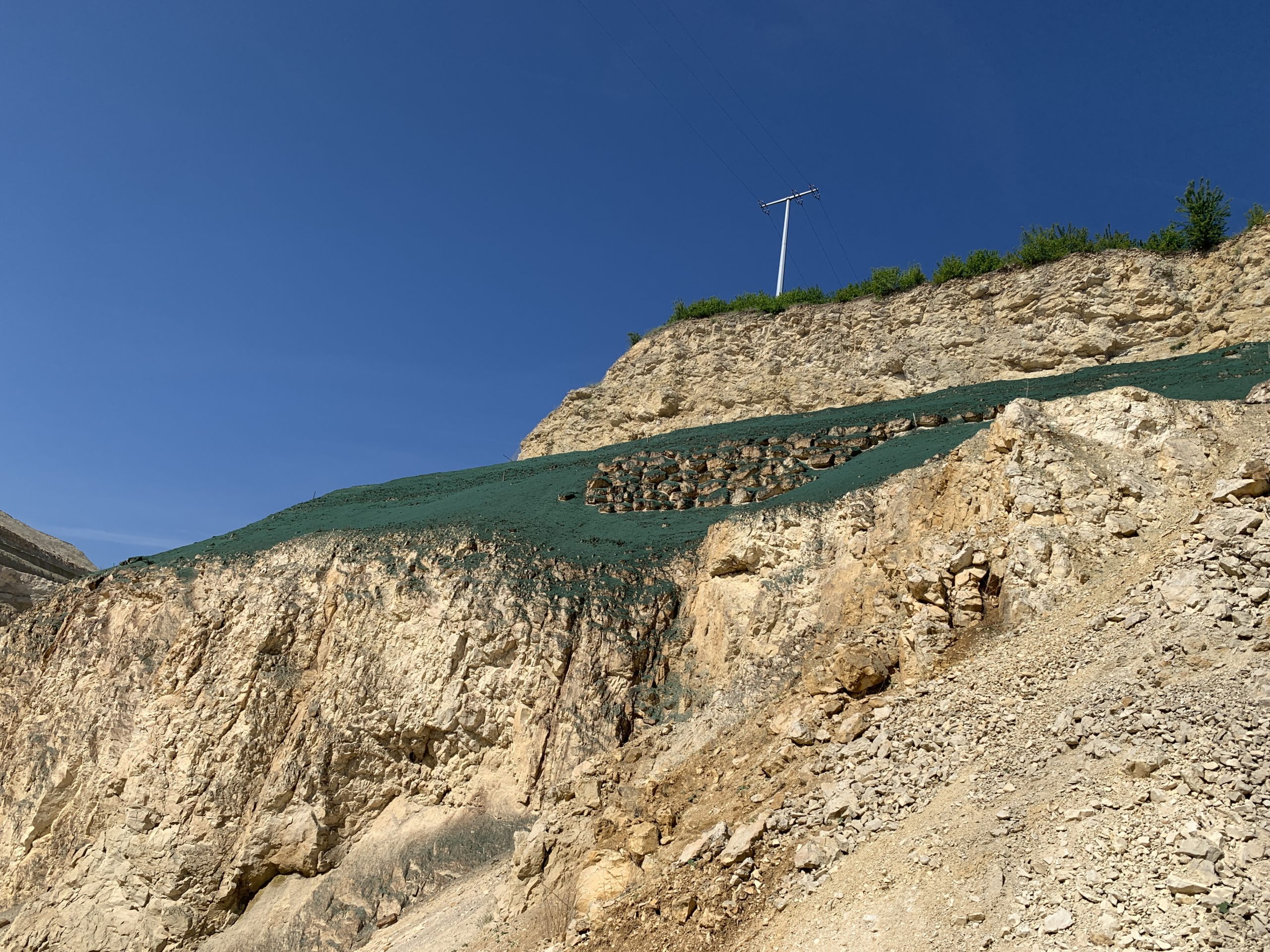
Lift corridors, track construction slopes, avalanche defense structures — applied hydraulically on gradients up to about 45°. On extreme gradients a combination with wood wool matting is possible. Thermocontrol formulations for short vegetation periods.

Vineyards & specialty crops

Erosion control on steep sites with vegetation establishing between the vine rows at the same time — formulated for low growth height and little competition with the main crop.

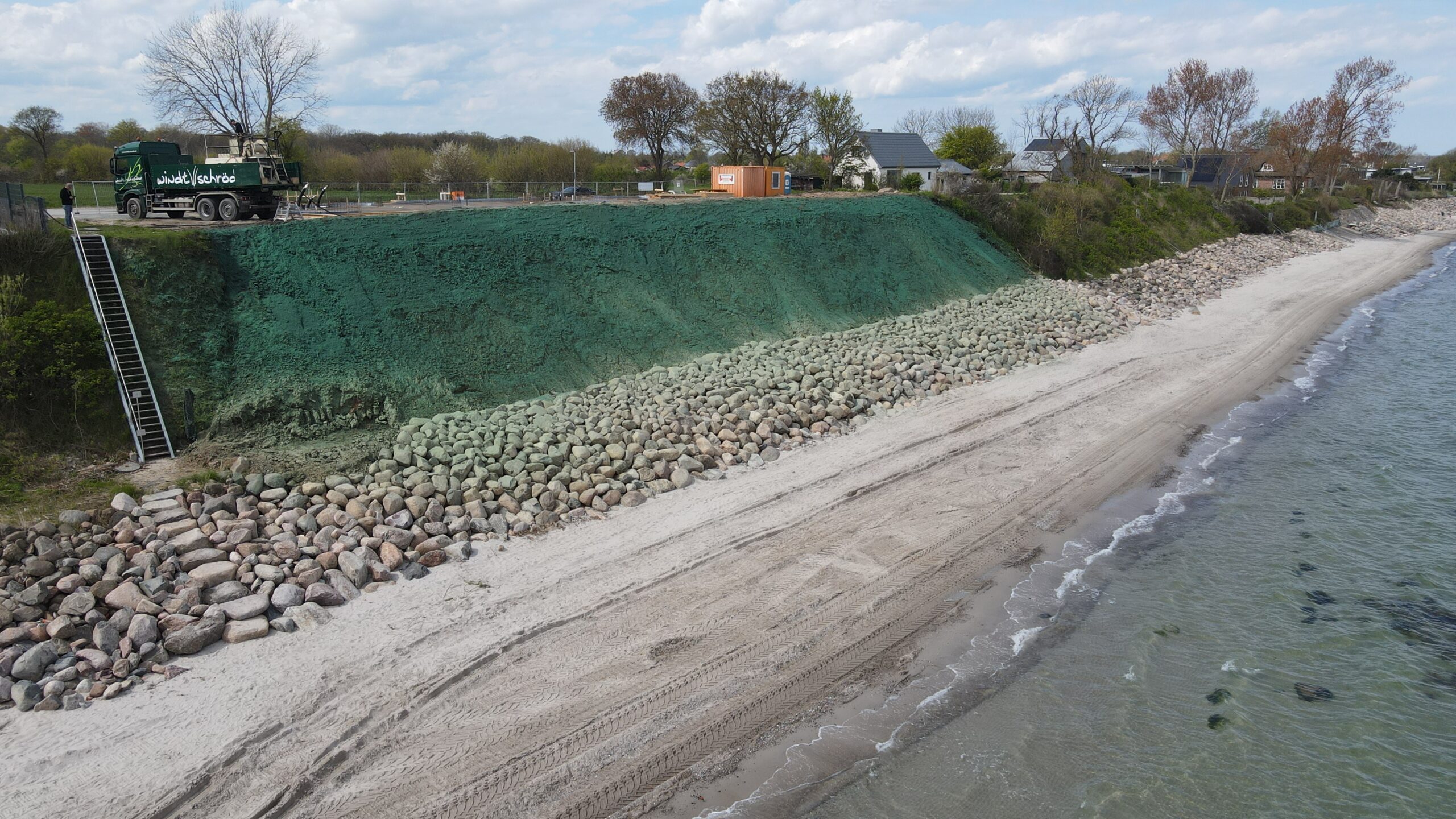
Hydraulically applied erosion control matting on a graded slope

Our approach

From system selection to establishment.

SRBT supports erosion control projects from the technical specification through to establishment monitoring — including a check of whether the specified bill of quantities is defensible in terms of wildlife protection and ecology.

01
Site & risk analysis

Gradient, substrate, rainfall profile, vegetation objective and the presence of protected species are recorded. On sites with reptile or ground-nesting bird interests the choice of system is documented accordingly.

02
Formulation & system configuration

Mulch material, biopolymer class, fiber content and seed mixture are configured for the project. C/N ratio and the breakdown rate of the protective layer feed into the recipe.

03
Application & monitoring

Own machinery and trained crews. Quality control, with the protective effect and vegetation development documented as evidence for clients and authorities.

Request an erosion control concept.

Tell us the gradient, the substrate and the project objective — we will check which system fits and whether protected species are a factor on the site.