Applications

Climate Adaptation

Climate-resilient surface systems for changing heat, drought, rainfall and seasonal stress.

Application

Surfaces designed for a climate that has already shifted

Many engineered and rehabilitated surfaces were designed using historical assumptions about temperature, rainfall, seasonal moisture and vegetation performance. When actual conditions move beyond those assumptions, the surface may no longer perform as intended.

Longer dry periods can reduce vegetation cover and leave soil exposed. High temperatures accelerate moisture loss and increase plant stress. When intense rainfall follows drought, dry or sealed surfaces may absorb water too slowly, producing rapid runoff and erosion. Repeated freeze–thaw cycles create a different form of stress by disrupting soil structure and weakening newly established vegetation.

Climate adaptation does not mean designing around a single forecast or extreme event. It requires identifying which environmental stresses are relevant to the site and how they may interact over the expected life of the surface.

The objective is to develop systems that can maintain essential functions—such as erosion resistance, infiltration, moisture availability and vegetation cover—across a wider range of conditions.
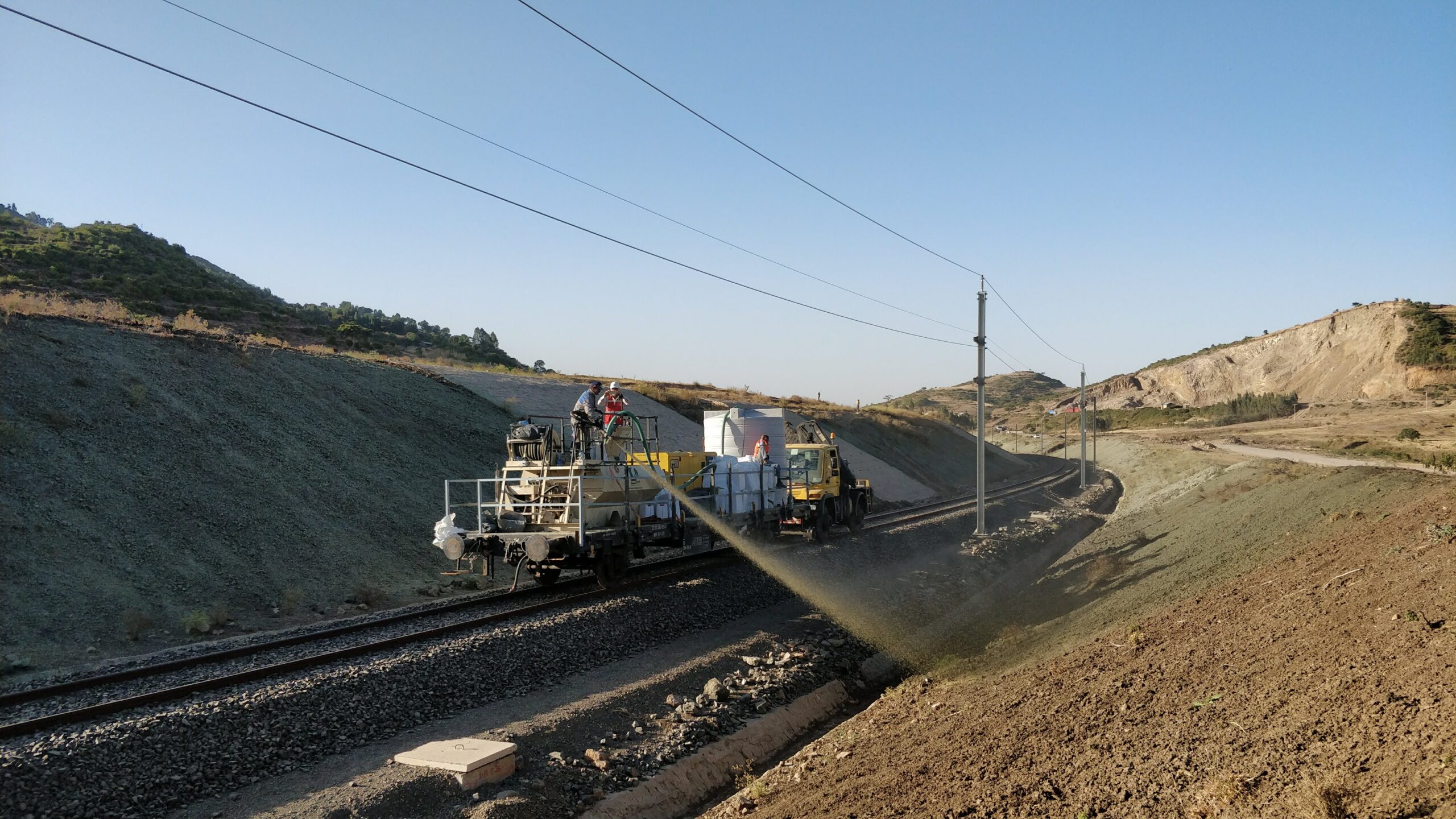
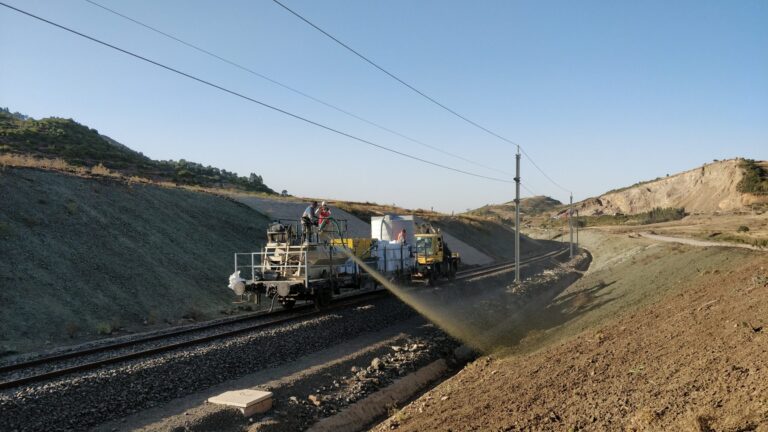
Railway track revegetation by hydroseeding

Fields of application

Why standard methods fall short

Heat load

High surface temperatures accelerate evaporation and increase thermal stress on germinating seed and young plants. Dark, exposed or south-facing surfaces may experience conditions substantially more severe than standard air-temperature measurements suggest.

Drought

Extended periods without effective rainfall deplete moisture within shallow growth layers. Vegetation may fail before roots reach deeper reserves, particularly on coarse, compacted or low-organic substrates with limited water-holding capacity.

Intense rainfall

High-intensity rainfall can exceed the infiltration capacity of a surface within minutes. Runoff then concentrates across slopes and disturbed ground, detaching particles and creating rills before vegetation or root reinforcement has developed.

Surface sealing

Raindrop impact, fines migration and compaction can close surface pores and reduce infiltration. Water then moves laterally rather than entering the soil profile, increasing runoff while limiting moisture availability below the sealed layer.

The engineered surface system

SRBT develops climate-adaptation systems around the combination of stresses relevant to the individual site. The design process considers present conditions, plausible operational extremes and the consequences of system failure without relying on a single climate scenario.

Site analysis examines substrate, slope, aspect, exposure, infiltration, water-holding capacity, drainage, vegetation objectives and seasonal temperature patterns. It also considers how conditions may follow one another—for example, intense rainfall after drought or freeze–thaw stress followed by spring runoff.

The material system may combine a hydraulically applied growth medium, functional fibers, moisture-management components, vegetation and a biopolymer-based binder. These elements are selected according to the required functions: retaining moisture during establishment, protecting the surface from rainfall impact, maintaining permeability and supporting vegetation under variable conditions.

Adaptation depends on balance. A system designed only to retain water may not provide sufficient erosion resistance during intense rainfall. A highly rigid surface treatment may restrict infiltration or vegetation development. Material behavior must therefore be assessed across the expected wet, dry, hot and cold phases of the project.

Selection is based on functional performance, environmental suitability and the constraints recorded for the site. Proprietary formulations remain project-specific.

Hydraulically applied erosion control on a raw soil slope

Our approach

01
Site analysis

Assess exposure, infiltration, moisture, drainage, temperature and seasonal stress patterns.

02
Material system

Balance water retention, permeability, erosion resistance and vegetation requirements.

03
Application

Coordinate preparation, timing, equipment and coverage for variable site conditions.

Related case studies

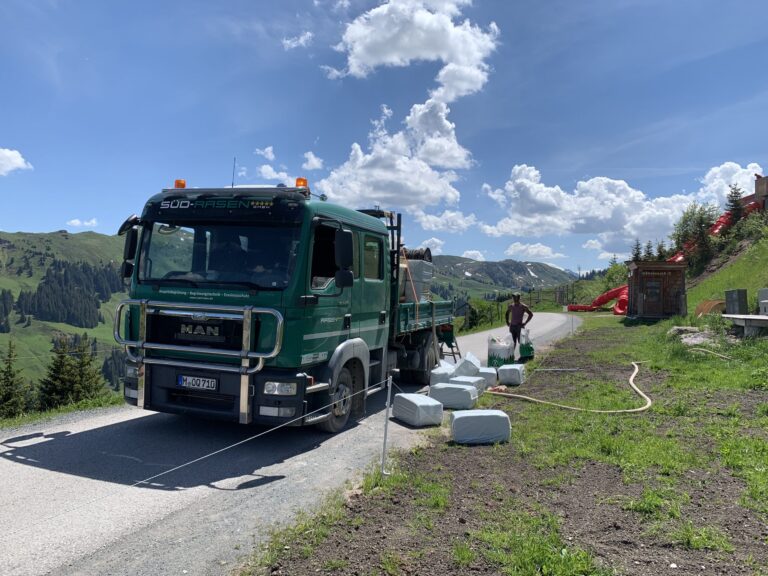
Service vehicle and mulch bales at a high-altitude revegetation site
Alpine slope revegetation under freeze-thaw stress

Dormant-seeding timing and a coating-free fertilizer strategy at 2,200 m.

Case Study
Read more →
Railway track revegetation by hydroseeding
Water retention in hydraulic growth media

How moisture behavior in an applied growth medium influences establishment.

Engineering Insight
Read more →
Any questions?

A project, a partnership or a research collaboration — get in touch by phone or email.