1. What alpine vegetation is — and why it is so hard to restore
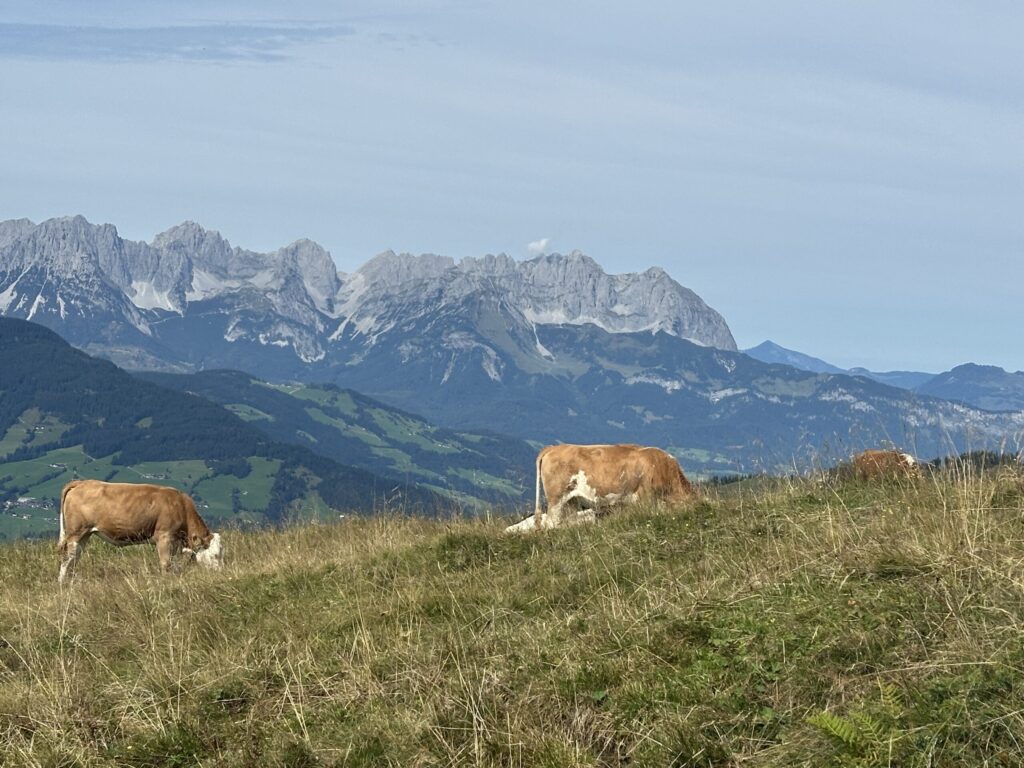
Above the treeline, typically between 1,800 and 2,500 m above sea level in the Central Alps, a few degrees of temperature, the underlying rock, the length of snow cover and the soil water regime determine which plant communities establish. The vegetation period is between 60 and 120 days depending on aspect and altitude. In that time plants have to germinate, grow, reproduce and build enough reserves for the winter. There is no room for a false start.
What those conditions mean for restoring vegetation is frequently underestimated: a seeding trial at altitude that works without difficulty in the lowlands fails here on a single late frost, on snow cover that lasts too long into spring, or on a dry August wind. Standard recipes from civil engineering do not transfer to this context. Species selection, seeding date, substrate condition and application technique all have to be matched to the specific conditions at altitude.
Then there is the question of target vegetation. Alpine swards are not simple grasslands — they are highly differentiated plant communities whose species composition depends on the parent rock, soil reaction, snow cover and the history of use. On siliceous soils, curved sedge swards (Caricetum curvulae) dominate with Carex curvula as the leading species; on calcareous substrates, blue moor grass swards (Seslerion) and naked rush swards (Elynion) occur. These communities cannot be imitated by generic slope mixtures — and every attempt to do so ends in a species-poor agricultural sward that has nothing in common with the ecological starting point.
One central factor, chronically underestimated in planning practice, is snow-lie dynamics. The date of snowmelt — not the mean annual temperature — determines the species composition of alpine vegetation in many locations more strongly than any other single parameter. Hollows and avalanche tracks that clear late carry snowbed vegetation (Salicetum herbaceae) with species such as Salix herbacea, Gnaphalium supinum and Luzula species — communities with an effective vegetation period often under 60 days. Wind-exposed ridges that stay snow-free in winter but face extreme frost desiccation carry wind-edge swards (Elynion myosuroidis) with highly specialized cold tolerance. Between those extremes, late-clearing sites span a broad spectrum of transitional communities. For any restoration at altitude, mapping the snow-lie dynamics of the target site is therefore as fundamental as soil analysis: without knowing the snowmelt class of a site, you will inevitably choose the wrong target vegetation.
2. Farming and the creeping loss of species diversity
Traditional alpine farming shaped the alpine cultural landscape and maintained a high species diversity over centuries. Extensive grazing, late mowing and the absence of mineral fertilizer created the conditions for species-rich mat-grass swards, golden oat meadows and milkwort pastures. With the intensification of agriculture from the second half of the twentieth century, that balance has shifted in many alpine pastures.
2.1 Slurry application: a direct intervention in species composition
Slurry is the most effective and most underestimated driver of species loss in subalpine meadows and pastures. The mechanisms are direct: high nitrogen inputs favour competitive, fast-growing grasses such as Agrostis capillaris and Poa trivialis, which displace light-sensitive herbs and specialists. At the same time slurry raises the phosphate content of the soil beyond the optimum for many site-typical species — for plants of nutrient-poor sites it is not just the excess nitrogen that is damaging but above all the changed competitive conditions.
Species such as Arnica montana, Gentiana acaulis, the associates of Nardus stricta and most members of the mat-grass swards decline within a few growing seasons after slurry is applied. Nardus stricta itself, mat grass, is resistant to trampling and favoured by grazing but does not tolerate intensive fertilization — in the long run it is replaced by fertilized swards. The result is floristically impoverished areas that still look like pasture but have lost the characteristic species of alpine plant communities.
2.2 Grazing intensity and selection pressure
Grazing itself is not the problem — historically it is part of the system. The problem is intensity and uniformity. High stocking densities lead to compaction from trampling, selective grazing and a homogenization of vegetation structure. Small-scale structures are particularly vulnerable: wet spots, cushion plants, pioneer swards at erosion points and the transitions between plant communities. Those structures are refuges for specialized species and are the first to be lost to overgrazing.
Scrub encroachment / succession
Optimum: extensive use
Slurry / excess N → grass sward dominates
Fig. 1: schematic relationship between intensity of use and species diversity in alpine meadows (following the intermediate disturbance hypothesis). Extensive alpine farming corresponds to the diversity optimum; intensification through slurry and high stocking density leads to the decline of site-typical species.
3. Tourism as a land user: specific conflicts and opportunities
Alpine tourism — ski operations and hiking infrastructure in particular — intervenes in the vegetation cover. The damage patterns are well documented: piste grading destroys the topsoil and creates raw substrates that differ little in principle from slope situations in civil engineering. Lift corridors and hiking trails create linear disturbances. Trampling damage on exposed sites can trigger regeneration times of decades for pioneer plants.
3.1 Ski pistes: where safety requirements meet ecology
Ski area operators face a real dilemma: piste surfaces have to have a particular vegetation structure for safety reasons — homogeneous, dense, free of obstacles. At the same time conservation conditions increasingly call for revegetation that is friendlier to species. That conflict is resolvable, but it requires a differentiated approach: for the piste proper (core runs, regularly groomed), dense swards with shear-resistant roots and drought-tolerant species are the right choice. In the margins, on areas between pistes and on slopes that are not groomed regularly, a more species-rich, site-adapted revegetation is possible and ecologically appropriate.
3.2 Bringing slope areas deliberately into alpine vegetation management
Slopes along lift corridors, piste margins, forest road slopes at altitude and cuttings from infrastructure work in alpine terrain are areas that in practice either lie fallow or are seeded with material unsuited to the site. Yet those very areas are an opportunity: they lie outside the intensively used zone, are not subject to safety requirements for the piste surface, and can be used deliberately to restore site-typical vegetation. Bringing those slopes consistently into alpine vegetation management — with locally native seed, adapted substrate preparation and suitable application technique — can considerably improve the overall ecological balance of a ski area or mountain infrastructure without affecting operations.
4. The short vegetation window: technical consequences
The vegetation period in alpine terrain is not only short — it is also unpredictable. Snow cover, late frost and an early onset of winter can reduce the window available for revegetation work to a few weeks between July and September. That constraint has direct technical consequences which planning often fails to take sufficiently into account.
4.1 Seeding date and germination requirements
Alpine species have germination optima fundamentally different from lowland species. Many high-altitude varieties only germinate reliably at soil temperatures between 5 and 12 °C — a range that is available in alpine terrain for only a few weeks, depending on the year. Early seeding (completed before snowmelt) risks frost damage to seedlings; seeding too late leaves too little time to establish before winter sets in. The optimum seeding date is typically right after snowmelt is complete, once soil temperatures are stably above 5 °C — as a rule June to mid-July, depending on location and aspect.
4.2 Straw cover seeding: benefits, limits and the nitrogen conflict
Straw cover seeding — covering freshly seeded areas with straw mulch — is used at altitude to protect seed from drying out, being washed off and temperature extremes. In an alpine context the method has specific advantages and disadvantages that need to be weighed carefully.
The advantages lie mainly in the initial protection: straw buffers temperature swings at the soil surface, reduces drying in the first weeks and lessens the erosive force of heavy rain on freshly seeded areas. At altitude, where weather extremes are more frequent and more intense than in the lowlands, that buffering can be decisive for seedling establishment.
The disadvantages are more serious in an alpine context than elsewhere, because the target vegetation reacts more sensitively to changes in nutrients. The C/N problem — high carbon input from straw leading to microbial nitrogen immobilization in the germination layer — was covered in an earlier article in this series. In alpine terrain another factor comes on top: straw cover seeding at high rates (over 200 g/m²) can mechanically block the seedbed for site-typical low-growing species. Small, slow-germinating species of alpine swards compete worse with a straw layer than the aggressive grasses of commercial slope mixtures. The result is a selective advantage for exactly the species that should not dominate the target vegetation.
5. Revegetation approaches for altitude
The particular conditions of alpine terrain — a short vegetation window, difficult access, sensitive target vegetation — call for specific technical approaches that differ from the methods common in civil engineering.
5.1 Seed: locally native provenance as a basic precondition
For restoring site-typical vegetation, locally native seed is not one option among several but a basic technical precondition. Commercial slope mixtures with lowland ecotypes of Festuca rubra, Poa pratensis or Lolium perenne are problematic on alpine sites in several respects: they are often not frost-hardy enough for the altitude, they are not phenologically adapted to the local climate rhythm, and once established they can displace or genetically influence local ecotypes of the same species. Regional provenance seed does not only reduce the risk of genetic influence — it also addresses local altitude adaptation within the same species. Ecotypes of Festuca rubra from above 1,800 m differ measurably from lowland provenances of the same species in frost tolerance, germination phenology and drought resistance. That difference is decisive for seedling survival in the critical first growing season. In Germany and Austria, locally native seed mixtures are now legally required for restoration work on public land; in alpine terrain that should be a technical standard regardless of the law.
5.2 Hydraulic application at altitude
In hard-to-reach high terrain, ground-based application of hydroseeding mixtures is often impossible or not economically viable. Aerial seeding — hydraulic application of weight-optimized mixtures by helicopter — is the established method of choice here. At the same time ground-based hydroseeding should not be dismissed for accessible high-altitude areas: on calcareous soils in particular, advanced combinations of pasteurized wood fiber or cellulose, rock minerals and ecologically harmless biopolymers provide a technically precise basis for establishing vegetation. The mineral components stabilize the pH buffer, the fiber matrix holds moisture through the short vegetation window, and the biopolymer bonds the layer flush with the surface without any risk of foaming. That combination is particularly effective where conventional mulch formulations fail on the substrate chemistry of a limestone site.
The technical demands on a formulation for aerial application differ substantially from lowland applications: the ratio of solids to water has to be optimized for minimum weight per unit area. Cellulose fiber at high doses is unfavourable by weight; combinations of wood fiber, mineral carriers and high-performance biopolymers achieve better area output per flight hour.
5.3 Targeted mulch application to immobilize nitrogen: displacing non-native species
One approach still little used in high-altitude revegetation, but well founded technically, is the deliberate use of mulch applications to immobilize nitrogen — not as erosion control but as an active tool of vegetation ecology. On areas overprinted by slurry input or intensive grazing with competitive grasses and ruderal plants, a targeted hydraulic mulch application with carbon-rich, nitrogen-poor organic material (C/N > 60) can temporarily raise microbial nitrogen immobilization in the germination layer. The result: nitrogen-hungry ruderal and agricultural species lose their growth advantage, because plant-available nitrogen is tied up for the duration of microbial breakdown. In the following season, as the C/N balance normalizes and the immobilized nitrogen is released step by step, slow-germinating, less competitive species of the site-typical vegetation find better conditions to establish. The approach requires careful dosing — excessive C/N inputs over several seasons would also affect germination of the target species — and it is not a substitute for restoration measures but preparation of the site for them.
Fig. 2: schematic vegetation schedule for altitudes of 1,800–2,400 m. The seeding window overlaps with the grazing season — coordination between revegetation work and moving stock up is essential.
5.3 Coordinating with alpine farming: the overlooked planning problem
The seeding window for high-altitude revegetation falls essentially between July and August. The grazing season on alpine pastures begins in most regions of the Central Alps between mid-June and early July and ends in September. The overlap is complete. Revegetation that is not coordinated with the movement of stock is doomed: seedlings of alpine grasses and herbs need at least two to three growing seasons to root sufficiently and tolerate grazing. In the first year after seeding, complete exclusion of grazing from the seeded areas is essential. That requires agreement with those responsible for the alpine pasture, and it has to happen in the planning phase — not during execution.
6. Conclusion: alpine vegetation management as an integrated task
Restoring site-typical alpine vegetation while farming and tourism continue is possible — but not by transferring lowland revegetation standards to high altitude. It requires a differentiated understanding of the ecological starting point: parent rock and soil reaction determine the species composition; slurry input and grazing intensity determine how much of it is left; the short vegetation window determines what is technically feasible.
Slopes along infrastructure — piste margins, lift corridors, forest road slopes — are an underrated resource in that picture. As technosols in the pedological sense they begin active soil development if treated properly; as landscape elements they can be developed deliberately as multifunctional vegetation spaces. They are generally not under pressure of use, are not subject to safety requirements, and sit structurally between used alpine pasture and undisturbed alpine vegetation — exactly where ecological corridor functions matter. Bringing those areas into a systematic alpine vegetation management delivers measurable ecological value — without affecting operations or use.