Engineering Insight

Nature-Based Binders vs. Synthetic Polymers

How material origin, binding mechanism, environmental behavior and mechanical reinforcement determine the right surface system

The distinction between nature-based binders and synthetic polymers is often presented as a simple environmental choice. In practice, it is an engineering decision involving performance, persistence, toxicity, regulatory status, substrate compatibility and the required service life.

A synthetic polymer is not automatically unsuitable, and a material derived from biomass is not automatically safe, biodegradable or technically effective. Product names and broad material categories reveal little about residual monomers, additives, ecotoxicity, breakdown products or behavior under field conditions.

The relevant question is therefore not simply whether a binder is natural or synthetic. It is whether the complete system provides the required surface function with an acceptable environmental and operational profile.
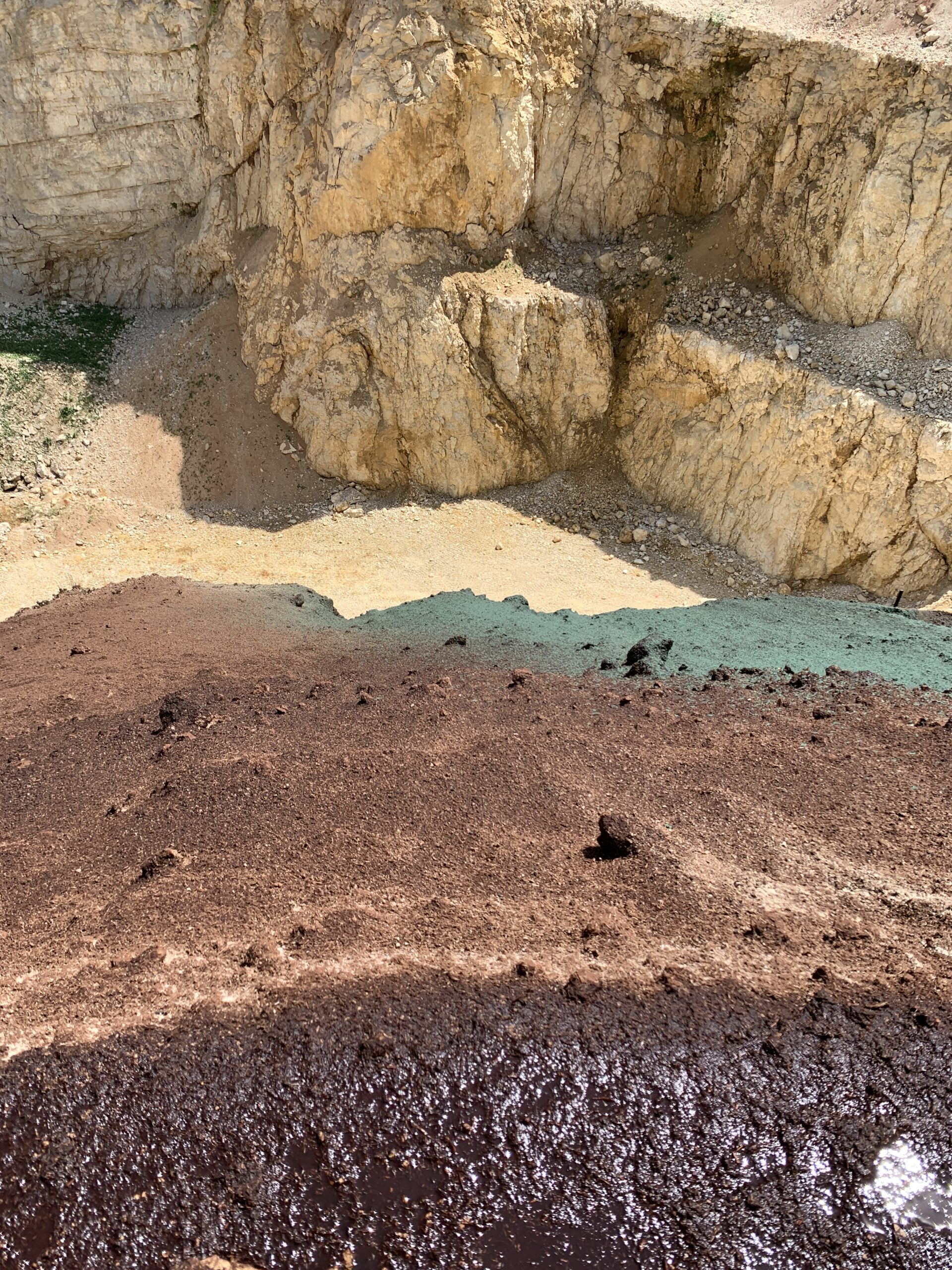
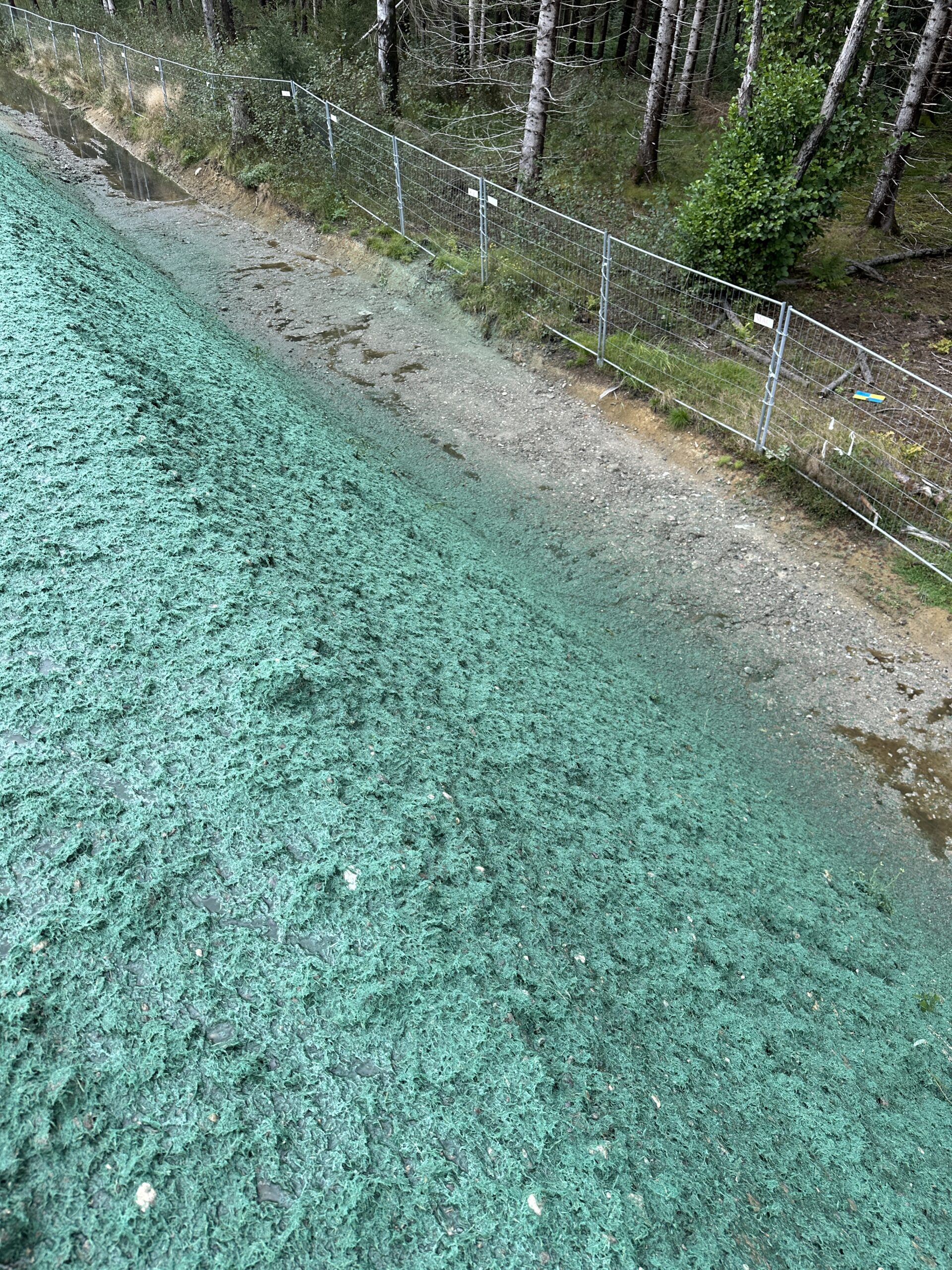
Protective mulch layer for hydraulically applied erosion control

Technical guide

What a surface binder must do

Binders are used to reduce the detachment and movement of soil or mineral particles. Depending on their chemistry, they may:

These mechanisms are not interchangeable. A flocculant designed to clarify sediment-laden water does not necessarily produce a traffic-resistant surface. A strong film-forming binder may control wind erosion but restrict infiltration or complicate later excavation. A biodegradable binder may meet environmental objectives but require a shorter maintenance interval.

Product selection should begin with the required function, not the origin claim on the label.

Tackifier and binder describe functions, not necessarily separate material families

A tackifier is selected primarily to hold freshly applied seed, mulch and fibers together and against the soil during the critical establishment period. A binder is selected primarily to create longer-lasting cohesion within the treated surface. Depending on its formulation, application and performance objective, the same material class may perform either function—or contribute to both.

A tackifier's role is not necessarily short-lived. Depending on the product, it fixes mulch, fibers and seed throughout the critical establishment phase and can remain functionally active for several months. Rainfall does not automatically produce a more durable bond in its place—both functions can be present simultaneously, and the transition between them depends on the specific material and site conditions.

Synthetic polymer binders

Synthetic polymer binders include several chemically distinct material groups. Depending on their formulation, they can form films, connect particles, increase aggregate stability or flocculate suspended fines.

Their principal advantages can include:

Their limitations depend on the specific polymer and formulation. Possible concerns include environmental persistence, aquatic toxicity, residual monomers, surfactants, plasticizers, film failure, ultraviolet degradation and restrictions on later reuse of the treated material.

These questions cannot be answered from the term "synthetic polymer" alone. The polymer identity, charge, physical form, additives, concentration, intended use and environmental exposure must all be assessed.

REACH Entry 78

Within the European Union, REACH Annex XVII Entry 78 addresses synthetic polymer microparticles that meet defined criteria. It is not a blanket prohibition on all synthetic binders or on individual chemical names such as vinyl acetate.

Whether a product falls within the entry depends on its actual formulation, particle characteristics, concentration, solubility, degradability, intended use and any applicable derogation. Some uses may remain permitted but carry information, labeling or reporting obligations.

This regulatory assessment is separate from evaluating the toxicity of a polymer, its residual monomers or its suitability near water.

Anionic polyacrylamide: an established tackifier with product-specific requirements

PAM-based products are among the most widely used synthetic tackifiers in hydraulic seeding and erosion control. Polyacrylamide, commonly abbreviated as PAM, is also used in sediment management, water treatment and soil aggregation.

PAM products can be anionic, cationic or nonionic, and the distinction is environmentally important. For erosion and sediment control, authorities commonly specify water-soluble anionic PAM because cationic formulations can present substantially greater risks to aquatic organisms.

How anionic PAM works

Anionic PAM consists of long polymer chains with negatively charged functional groups. Under suitable water and soil chemistry, the chains connect fine particles and strengthen aggregates. This can:

The effect is strongly soil-specific. Polymer charge density, molecular weight, water chemistry and the mineral composition of the soil influence performance. A product that works on one clay or silt fraction may perform poorly on another. Product-soil testing is therefore essential.

Interpreting the reported performance

Studies have reported sediment reductions of 80–99 percent under particular conditions. This range is real, but it should not be presented as a universal field-performance claim. The highest reported reductions often come from controlled irrigation studies or rainfall-simulation trials using defined soils, application methods and hydraulic conditions.

An 80–99 percent research range demonstrates the potential of correctly selected anionic PAM. It does not guarantee the same result on every construction slope, mine surface or drainage system.

Residual acrylamide is a separate regulatory issue

Polyacrylamide is manufactured from acrylamide monomer. The completed polymer and the unreacted residual monomer do not have the same toxicological profile. Some authorities therefore require erosion-control PAM products to contain no more than a specified concentration of residual acrylamide—frequently below 0.05 percent—along with toxicity information and evidence that the product is suitable for the intended use.

This is distinct from REACH Entry 78:

A PAM product can require assessment under more than one of these frameworks. Passing a residual-monomer limit does not automatically establish compliance with every other chemical, water or environmental requirement.

Uneven approval requirements between jurisdictions

The approval status of anionic PAM varies by country, state, province and water authority. Depending on the jurisdiction and application, requirements may include anionic charge classification, a maximum residual-acrylamide concentration, aquatic-toxicity test data, product prequalification, soil-specific performance testing, maximum application rates, setbacks near surface water and controls on carrier systems. This variability prevents a global statement that anionic PAM is either generally approved or generally prohibited.

A supplier safety data sheet is not sufficient on its own. Project documentation should confirm product composition, charge type, residual monomer, carrier system, toxicity data, intended application and the rules of the relevant authority.

Guar gum: a benchmark plant-based tackifier

Guar gum is an established benchmark among plant-based tackifiers used in hydromulching.

Guar is a plant-derived galactomannan hydrocolloid extracted from the endosperm of the guar plant. It hydrates in the mixing water and forms a viscous, adhesive matrix. This matrix binds fibers together and adheres the mulch layer to the soil surface, primarily protecting against wind displacement, dislodgement and early rainfall impact during the establishment period.

Its practical advantages include plant-based origin, rapid hydration, a long-established application history and good integration into hydraulic fiber mixtures.

Its limitations include generally shorter and more site-dependent persistence than many synthetic systems. Degradation and loss of function depend on moisture, temperature and biological activity. Overdosing can affect slurry viscosity, pumpability, spray pattern and potentially germination.

Lignosulfonates

Lignosulfonates are derived from lignin-containing process streams produced during sulfite pulping. They have a long history as binders, dispersants and dust suppressants.

When applied to a mineral surface, lignosulfonates can coat particles and form adhesive connections as the water evaporates. Naturally occurring sugars and other soluble components may also contribute to moisture retention. Depending on the substrate and application method, the treatment can create a compacted, bound upper layer that resists wind and moderate traffic abrasion.

Advantages

Limitations

Lignosulfonate is not a standardized single molecule. Performance and environmental behavior depend on the wood source, pulping process, counter-ion, solids content and any additional formulation components.

Its industrial origin does not disqualify it as a nature-derived binder, but neither does that origin remove the need for product-specific environmental assessment.

Polysaccharide-based systems

Polysaccharides are polymers built from sugar units. This broad group includes materials based on starches, cellulose derivatives, plant gums (including guar), alginates and microbial polysaccharides. They are increasingly investigated and used as binders, soil conditioners, hydrogels and erosion-control components.

Binding mechanism

Biodegradation and service life

Many polysaccharide-based materials can be degraded by microorganisms, ultraviolet exposure, moisture cycles or other environmental processes. The actual rate depends on molecular structure, chemical modification, temperature, water availability and biological activity.

A biologically derived binder should therefore not be described simply as "rapidly biodegradable." In cold, saline, arid or biologically inactive substrates, decomposition may be much slower than expected. In warm and biologically active conditions, functional service life may be shorter.

Biodegradation is both an environmental characteristic and a design parameter. A material intended to disappear naturally must still remain functional for the required erosion-control period.

"Nature-based" is not a regulatory classification

Terms such as natural, biological, bio-based and biodegradable describe different properties:

A polymer extracted from biomass may be chemically modified. A bio-based binder may contain synthetic additives. A naturally derived material may create high oxygen demand in water. Conversely, a synthetic product may be effective at a low dose and have extensive toxicological documentation.

Credible comparison requires formulation-level evidence rather than category-level assumptions.

Why a binder alone may be incomplete

A binder creates chemical or adhesive connections between particles. These connections may be strong initially but remain vulnerable to cracking, abrasion, shrinkage or localized damage.

Adding a suitable fiber fraction introduces a second mechanism: mechanical reinforcement.

This is the fiber-interlocking principle used in SRBT surface systems. The binder or tackifier provides cohesion while the fibers create a mechanically connected matrix. The approach can benefit synthetic, PAM-based, guar-based, lignosulfonate and other polysaccharide-based systems. It does not depend on one material category.

The substrate still controls fiber performance

Fibers require engagement with the surface. Cohesive and partially cohesive soils containing clay, silt or stable fines generally provide better anchorage than clean sand or coarse gravel.

On loose granular material, fibers may remain above the surface without sufficient mechanical connection. A suitable binder, carrier matrix, improved particle-size distribution or engineered growth layer may then be necessary.

Fiber reinforcement also does not convert a surface treatment into geotechnical stabilization. It can improve resistance to shallow erosion and particle movement but cannot correct inadequate bearing capacity, deep slope instability or structural failure.

Comparing tackifier and binder functions by material class

System comparison

Material classTypical tackifier functionPotential binder functionPrincipal limitations
Anionic PAMRapidly connects mulch, fibers and fine particlesCan support longer-lasting aggregation and soil bindingProduct-specific selection, residual monomer and water-related requirements
Guar gumEstablished plant-based fixation of fresh hydromulchLimited longer-term binding depending on formulation and exposureBiodegradation, moisture sensitivity and shorter persistence
LignosulfonateCan assist initial adhesionMore commonly used for longer-lasting particle binding and dust controlWashout, organic loading and variable composition
Other polysaccharidesInitial adhesion and hydrogel formationPotential particle coating and longer-term cohesionHighly formulation- and climate-dependent
Synthetic film-forming polymerInitial fixation possibleDurable film or particle-to-particle bondingPersistence, cracking, reworking and formulation-specific compliance

A practical selection framework

  1. 1. Define the required function

    Determine whether the task is short-term fixation (tackifier), longer-lasting cohesion (binder), dust suppression, sediment flocculation or support for vegetation establishment—and whether the same material must perform more than one of these roles.

  2. 2. Characterize the substrate

    Assess particle-size distribution, clay and silt content, salinity, pH, organic matter, compaction, infiltration and biological activity.

  3. 3. Identify exposure pathways

    Consider runoff, groundwater, nearby vegetation, surface water, wind transport, traffic and future excavation or reuse.

  4. 4. Establish the required service life

    A biodegradable system may be appropriate for an establishment window but unsuitable where years of traffic resistance are required. A persistent polymer may provide durability but conflict with later material reuse or environmental objectives.

  5. 5. Review the full formulation

    Request documentation for the polymer or binder, residual monomers, carrier system, surfactants, preservatives, toxicity, biodegradability and regulatory status.

  6. 6. Evaluate mechanical reinforcement

    Determine whether a fiber fraction can improve continuity and resistance to localized damage—and whether the substrate provides sufficient anchorage.

  7. 7. Validate under representative conditions

    Laboratory compatibility testing and controlled field trials are more reliable than transferring performance claims from a different soil, climate or application method.

  8. 8. Monitor the installed system

    Inspect binding continuity, runoff, sediment movement, cracking, traffic wear, vegetation development and material breakdown over the required period.

Topsoil and humus layer as the planning basis for soil development

Choosing performance rather than labels

The choice between nature-based binders and synthetic polymers should not be reduced to a claim that one category is universally sustainable and the other universally harmful.

A well-documented synthetic product may be appropriate where high initial performance and defined durability are required. Anionic PAM remains a widely used and effective tackifier when the formulation is matched to the soil and applicable water-quality controls are followed. Guar gum provides a well-established plant-based benchmark for fixing fresh hydromulch. Lignosulfonates offer an established wood-derived binding mechanism but remain vulnerable to washout and product variability. Polysaccharide systems create further options for particle binding, moisture management and controlled biodegradation.

In all categories, combining a compatible tackifier or binder with a suitable fiber fraction can create a more robust surface than relying on chemical bonding alone.

The SRBT approach

SRBT evaluates tackifiers and binders as components of an engineered surface system rather than as stand-alone products.

Selection begins with the substrate, exposure mechanism, environmental receptors and required service life. Chemical fixation or binding, mechanical fiber interlocking, moisture management and hydraulic application are then combined according to the project conditions.

Product documentation and field validation remain necessary even for materials described as natural or biological. Proprietary formulations remain project-specific.

Related application

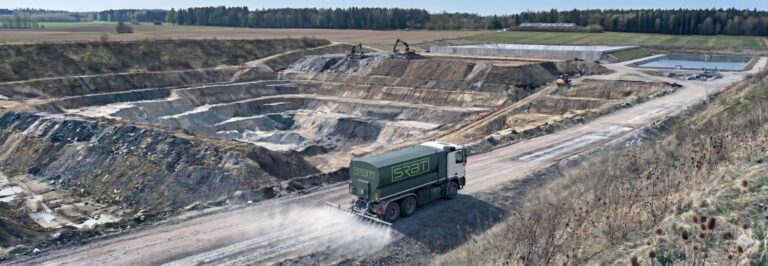
SRBT tanker spraying dust suppressant along a quarry haul road
Dust Control

Application
Read more →
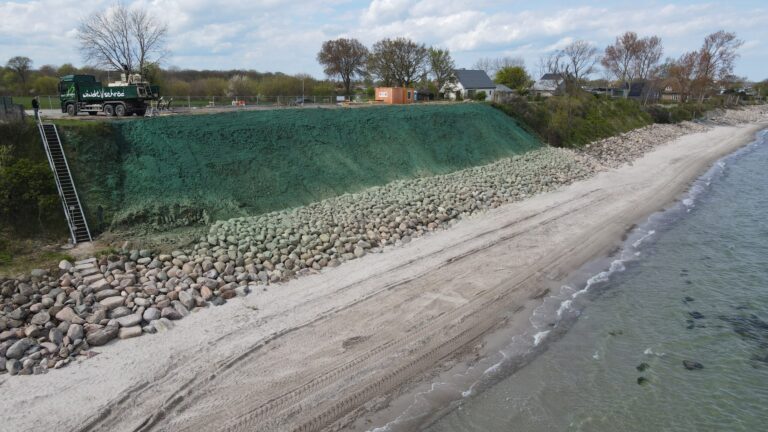
Coastal protection and revegetation of dike systems
Dune Stabilization

Application
Read more →
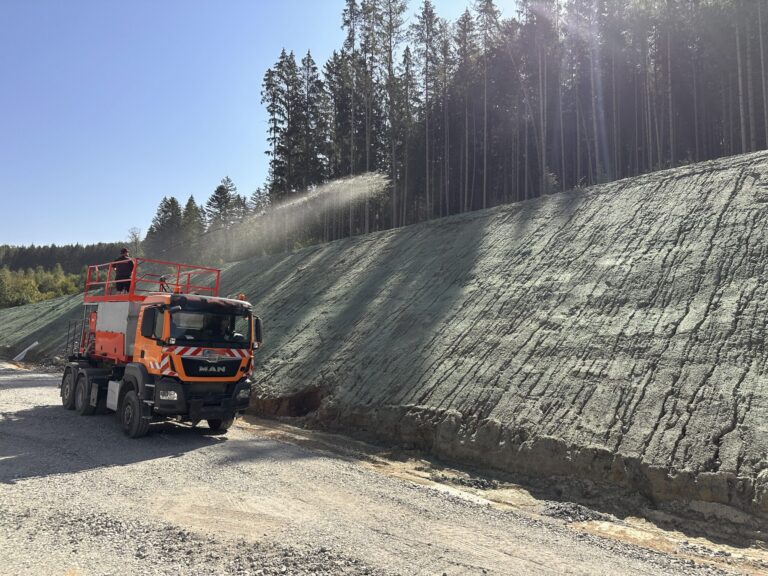
Slope revegetation by hydraulically applied seeding
Temporary Surface Protection

Application
Read more →
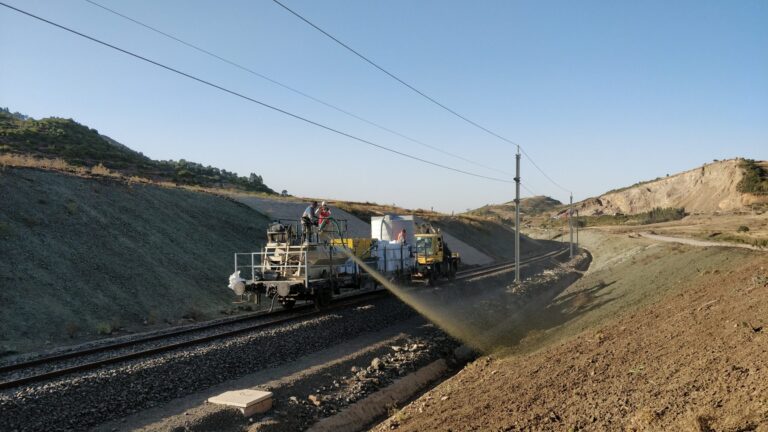
Railway track revegetation by hydroseeding
Difficult Revegetation

Application
Read more →
Coastal protection and revegetation of dike systems
Stabilizing a migrating coastal blowout

Case Study
Read more →
Any questions?

A project, a partnership or a research collaboration — get in touch by phone or email.