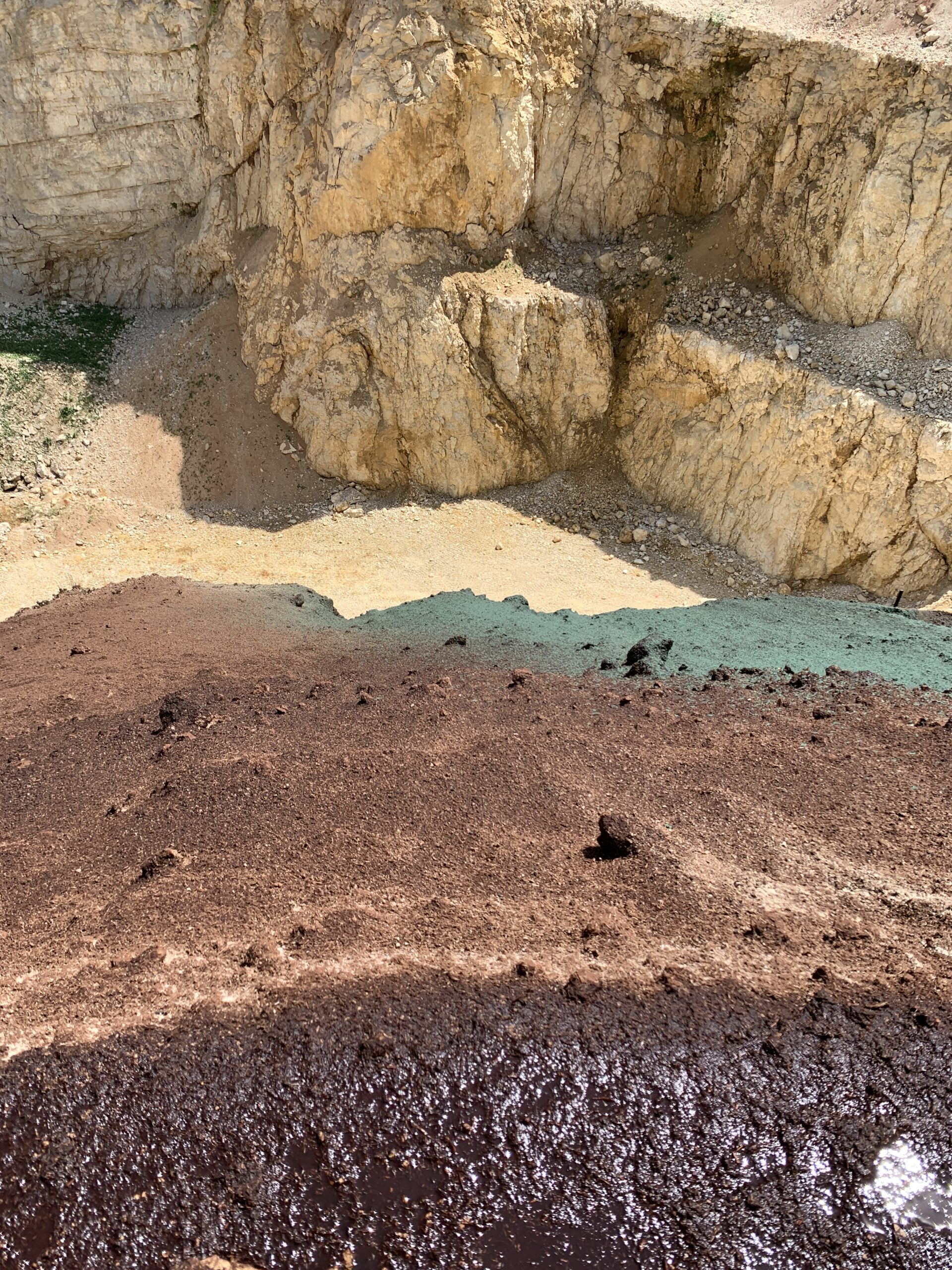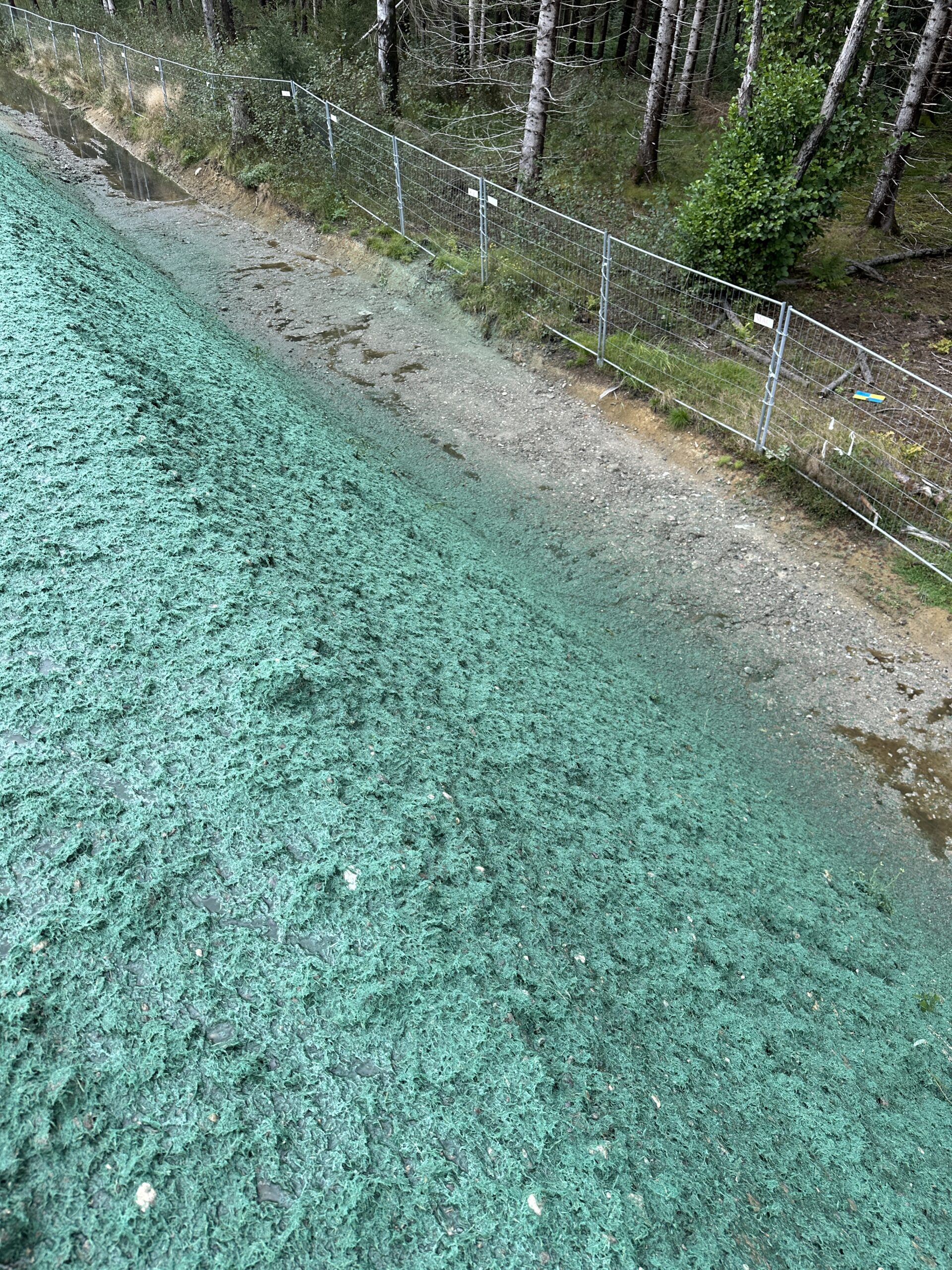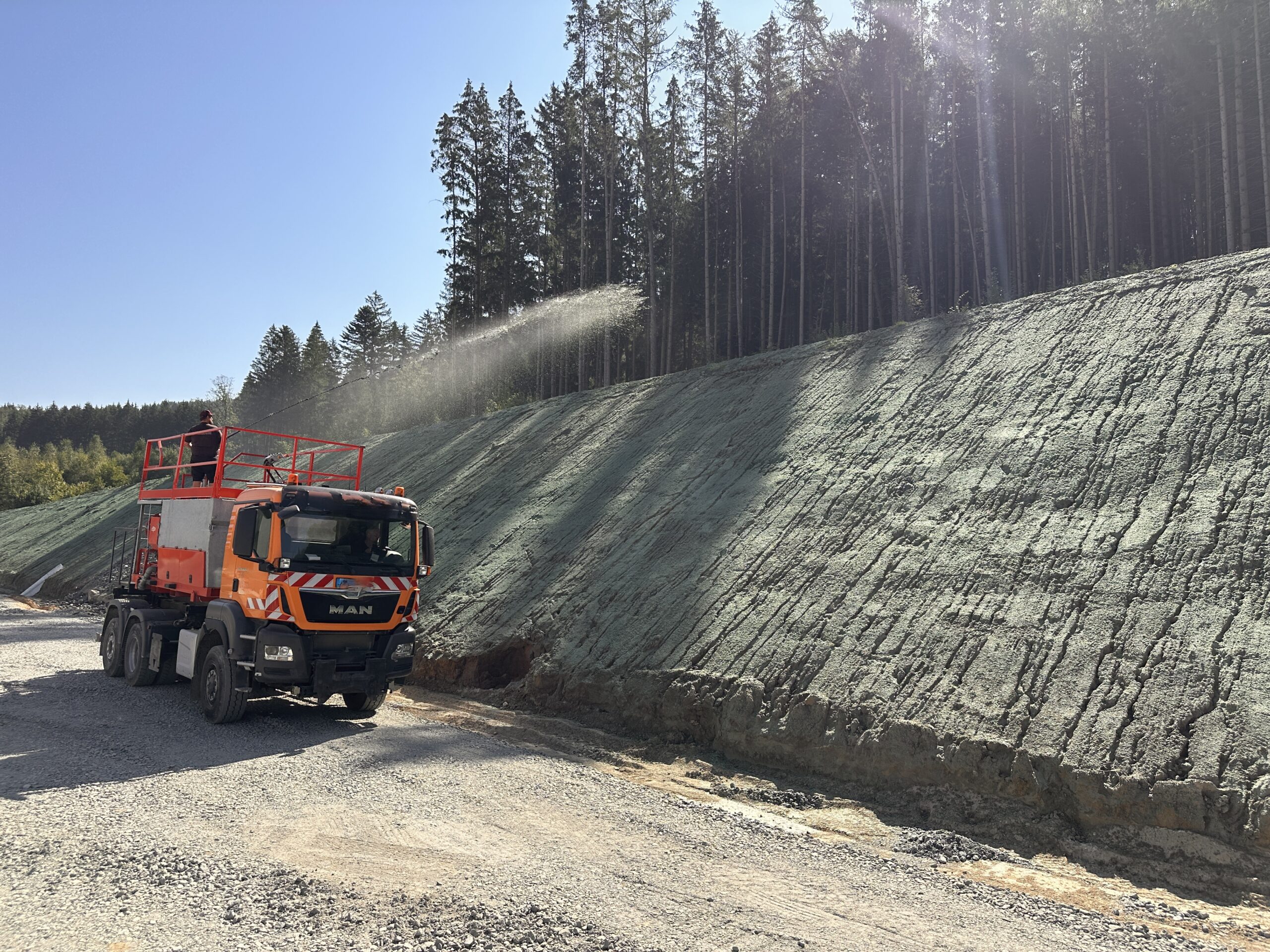
During this interim period, the surface is vulnerable even though its final engineering design may be sound. Rain can erode slopes and transport sediment, while dry conditions allow wind to remove fine particles. Construction traffic can disturb provisional cover and create new runoff paths.
Temporary protection must control these risks without interfering with the next phase of work. It should provide sufficient stability for the defined exposure period while remaining compatible with excavation, regrading, reuse or final treatment.
This is particularly important for stockpiled mineral materials such as sand and gravel. The protection system must minimize the introduction of organic matter or other components that could affect the material's intended reuse or relevant classification.