Engineering Insight

Interim Erosion Control During Construction

How temporary surface protection can limit erosion without compromising the later reuse of excavated mineral material

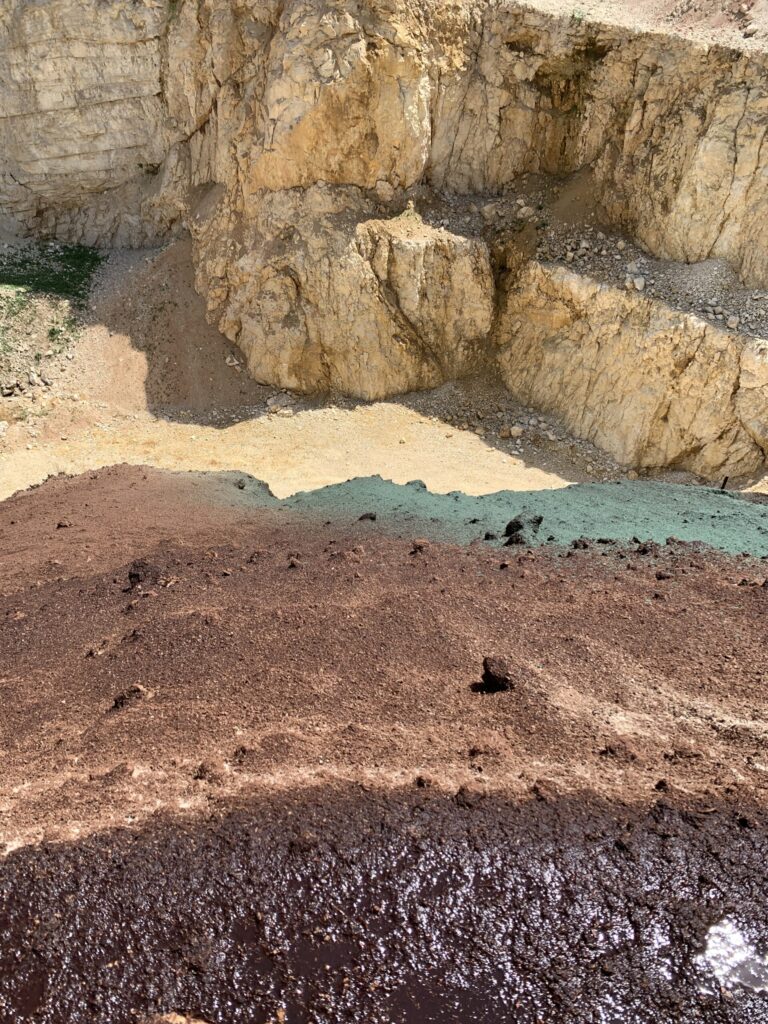
Construction schedules frequently leave soil, graded fills and mineral stockpiles exposed between planned work stages. These surfaces may remain open for weeks or months during winter shutdowns, permitting delays, utility installation or preparation for final grading.

Although the exposure is temporary, the erosion risk is immediate. Rain can remove fines, wind can generate dust, and runoff can carry sediment into drainage systems or neighboring areas. The challenge is to provide sufficient protection for the required period without creating a second removal, disposal or material-classification problem when construction resumes.

Interim erosion control is therefore a separate engineering category. It is neither permanent stabilization nor conventional revegetation. The system must perform for a defined exposure period and remain compatible with the material's intended reuse.
Topsoil and humus layer as the planning basis for soil development

Technical guide

Why temporary exposure becomes a permanent problem

An interim surface may fall between two specified construction measures. The earthworks contractor has completed grading, but the final cover, pavement, structure or vegetation system cannot yet be installed.

Typical triggers include:

During this interval, the surface remains exposed to processes that were not part of its final design. Heavy rain can produce sheet erosion and rills. Wind can remove fine particles. Construction traffic can break provisional covers, while repeated wetting and drying may cause crusting, cracking or surface sealing.

A temporary problem can consequently generate permanent repair costs, sediment-management obligations or restrictions on material reuse.

The limitations of plastic-sheet protection

Plastic sheeting can provide rapid protection and remains appropriate for certain short-duration or highly sensitive applications. However, its practical consequences should be included in the system comparison.

Sheets must be anchored against wind and protected from puncture by equipment, stones and standing vegetation. Water collecting on or beside the cover may become concentrated at edges, seams and anchor points. Regular inspection and repair may be required.

Removal can also become more difficult over time. Sediment accumulating on the sheet increases the weight that must be handled and may turn an initially clean plastic product into mixed construction waste. Adhering soil and damaged fragments can increase transport and disposal effort.

Weathered or mechanically damaged sheeting may fragment during installation, exposure or removal. Small pieces left within soil or mineral material can become a source of secondary microplastics.

This issue is related to the broader regulatory focus on plastic releases, but it must not be confused with REACH Entry 78. Entry 78 concerns synthetic polymer microparticles placed on the market in substances or mixtures. Fragmentation of a plastic sheet is a different release mechanism.

Designing protection around the intended material reuse

For excavated mineral material, the protective system should be designed backward from the intended reuse route.

If sand, gravel or other mineral material is expected to be returned directly to a fill, the introduced organic fraction must remain compatible with the applicable classification and reuse criteria. The objective is to provide temporary surface protection without adding enough foreign or organic material to alter the material category or prevent its intended reuse.

This requires project-specific coordination of:

Where these conditions are satisfied, the protected material may remain eligible for direct reuse or backfilling without removing the applied surface layer. This can avoid the separate removal and disposal operation associated with plastic covers.

It is not a universal guarantee. Soil, waste and secondary-material classifications differ between jurisdictions, and project permits may impose additional conditions. Eligibility must therefore be confirmed against the rules and acceptance criteria applicable to the individual project.

Temporary does not mean ineffective

A temporary system still needs to resist the expected exposure. Selecting a readily degradable material without considering rainfall, wind or shutdown duration can cause protection to fail before construction resumes.

The required service period may range from several weeks to an entire season. System design should consider:

Biodegradable components naturally have a finite functional life. This is part of their environmental advantage, but it also means that their expected service duration must be assessed honestly. A material selected for rapid degradation cannot be assumed to provide the persistence of an inert synthetic cover.

Tackifier and binder perform different functions

Temporary surface protection requires a clear distinction between initial attachment and longer-term cohesion.

A tackifier helps retain freshly applied fibers and other components immediately after application. Its primary role is to prevent wind pickup, wash-off and separation while the applied matrix establishes contact with the surface.

A binder provides cohesion over a longer part of the planned exposure period. It helps the system resist repeated rainfall, drying, wind and limited surface disturbance.

These are functional definitions. A material may contribute to one or both roles depending on its formulation and application. For short shutdowns, a tackifier-dominant system may be sufficient. Longer exposure or more severe weather may require a more persistent binder function.

The required performance must be balanced against the later reuse route. Excessive persistence or organic loading may protect the stockpile effectively but conflict with the intended material classification. Insufficient binding may preserve reuse compatibility but fail during the first significant storm.

Proprietary formulations remain project-specific.

Fiber and mineral-compatible components

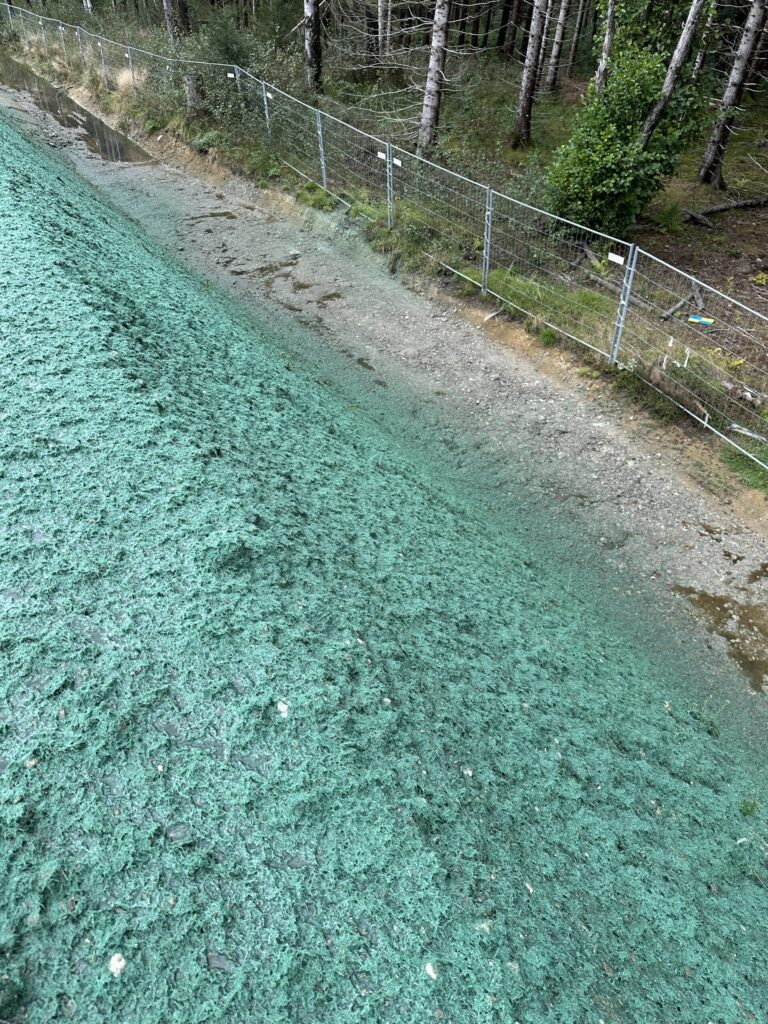
A hydraulically applied system can combine fiber, tackifier, binder and other functional components. Fiber creates a surface framework that absorbs raindrop impact, reduces wind pickup and helps distribute shallow runoff.

For temporary protection of mineral stockpiles, the fiber fraction should be limited to the amount required for the intended function. More material is not automatically better. The correct system is the one that achieves the required protection while remaining compatible with the material's later handling and reuse.

On mineral stockpiles such as sand or gravel, low natural cohesion must also be considered. Fiber alone may not develop sufficient surface attachment. A compatible tackifier or binder function may therefore be necessary, even when the total organic contribution must remain low.

A practical assessment sequence

  1. 1. Define the material

    Identify the stockpiled or exposed material, its current classification and any chemical or physical restrictions.

  2. 2. Confirm the intended reuse

    Establish whether the material will be directly backfilled, processed, transported to another site or subject to further testing.

  3. 3. Determine the exposure period

    Define the expected shutdown duration and allow for possible schedule extensions.

  4. 4. Assess the surface risk

    Evaluate wind, rainfall, slope, runoff pathways, drainage connections, traffic and sensitive receptors.

  5. 5. Set the classification constraint

    Determine the maximum acceptable introduction of organic or foreign components under the applicable rules and acceptance conditions.

  6. 6. Design the temporary system

    Select the fiber structure, tackifier or binder function, application rate and expected degradation period.

  7. 7. Document the application

    Record the treated area, material quantities, installed coverage and relevant quality-control observations.

  8. 8. Inspect during the shutdown

    Check edges, drainage transitions, traffic-damaged areas, cracks, rills and exposed sections after significant weather events.

  9. 9. Confirm reuse eligibility

    Where required, verify that the material continues to meet the applicable reuse or backfilling criteria before reincorporation.

Comparing temporary protection methods

System comparison

MethodPrimary functionRemoval requiredTypical limitations
Plastic sheetingPhysical barrier against rainfallNormally yesWind damage, puncture, runoff concentration, sediment loading, mixed-waste disposal and fragmentation
Loose fiber mulchShort-term surface coverUsually noLimited resistance to wind and runoff without sufficient attachment
Tackified fiber matrixInitial cover and improved attachmentUsually noFunctional life depends on weather, substrate contact and tackifier performance
Fiber-and-binder systemLonger temporary cohesionUsually noMust be matched to the required degradation period and material-classification limits
Temporary vegetationRoot development and longer exposure protectionUsually noEstablishment takes time and may be unsuitable where the material will soon be moved
Structural measuresRunoff interception or sediment storageMay remain or require removalProtect defined flow paths rather than the complete exposed surface

The SRBT approach

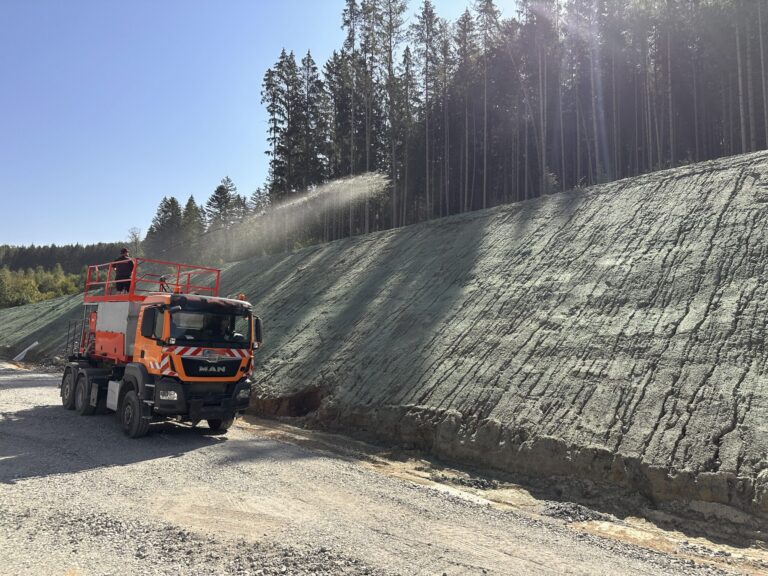
SRBT designs interim erosion-control systems around both the exposure risk and the material's next use.

The assessment considers the mineral material, applicable classification requirements, planned reuse route, permitted organic contribution, shutdown duration, expected weather, application logistics and required service life. Fiber, tackifier and binder functions are then coordinated to provide sufficient temporary protection without unnecessarily restricting later handling or backfilling.

The objective is not simply to cover a stockpile. It is to protect the surface during the construction interval while avoiding an additional removal, disposal or reclassification problem when work resumes.

Protective mulch layer for hydraulically applied erosion control

Related application

Slope revegetation by hydraulically applied seeding
Temporary Surface Protection

Application
Read more →
Topsoil and humus layer as the planning basis for soil development
Protecting graded fills over a winter shutdown

Case Study
Read more →
Protective mulch layer for hydraulically applied erosion control
Nature-based binders vs. synthetic polymers

Engineering Insight
Read more →
Any questions?

A project, a partnership or a research collaboration — get in touch by phone or email.