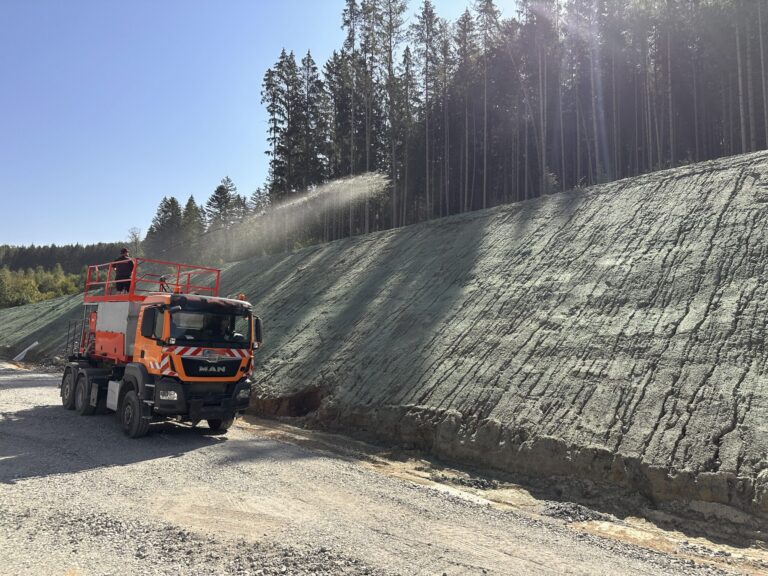
The slope's position beside a water-bearing channel raised the consequence of failure. Any material leaving the slope had a short, direct pathway into moving water, making sediment control—not only slope appearance—the primary design driver.
Because the shutdown was seasonal and no vegetation was planned, the treatment needed to function purely as a mechanical and cohesive surface system through winter conditions: freeze–thaw cycling, snow loading, intermittent thaw runoff and the absence of any root reinforcement to fall back on.
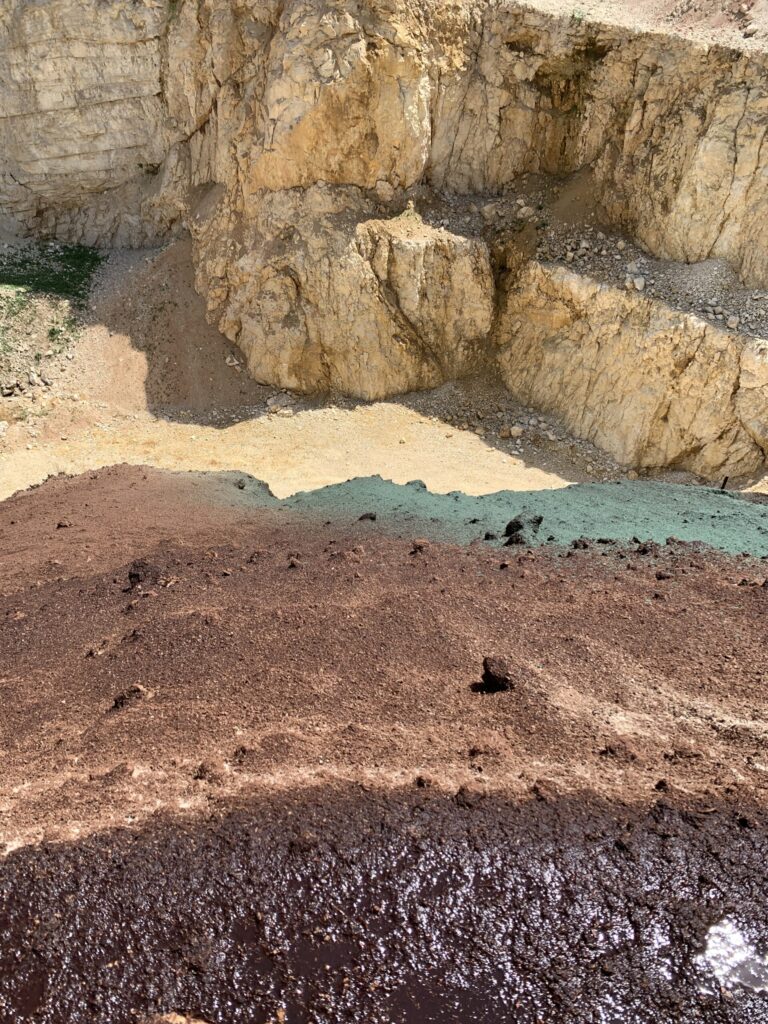
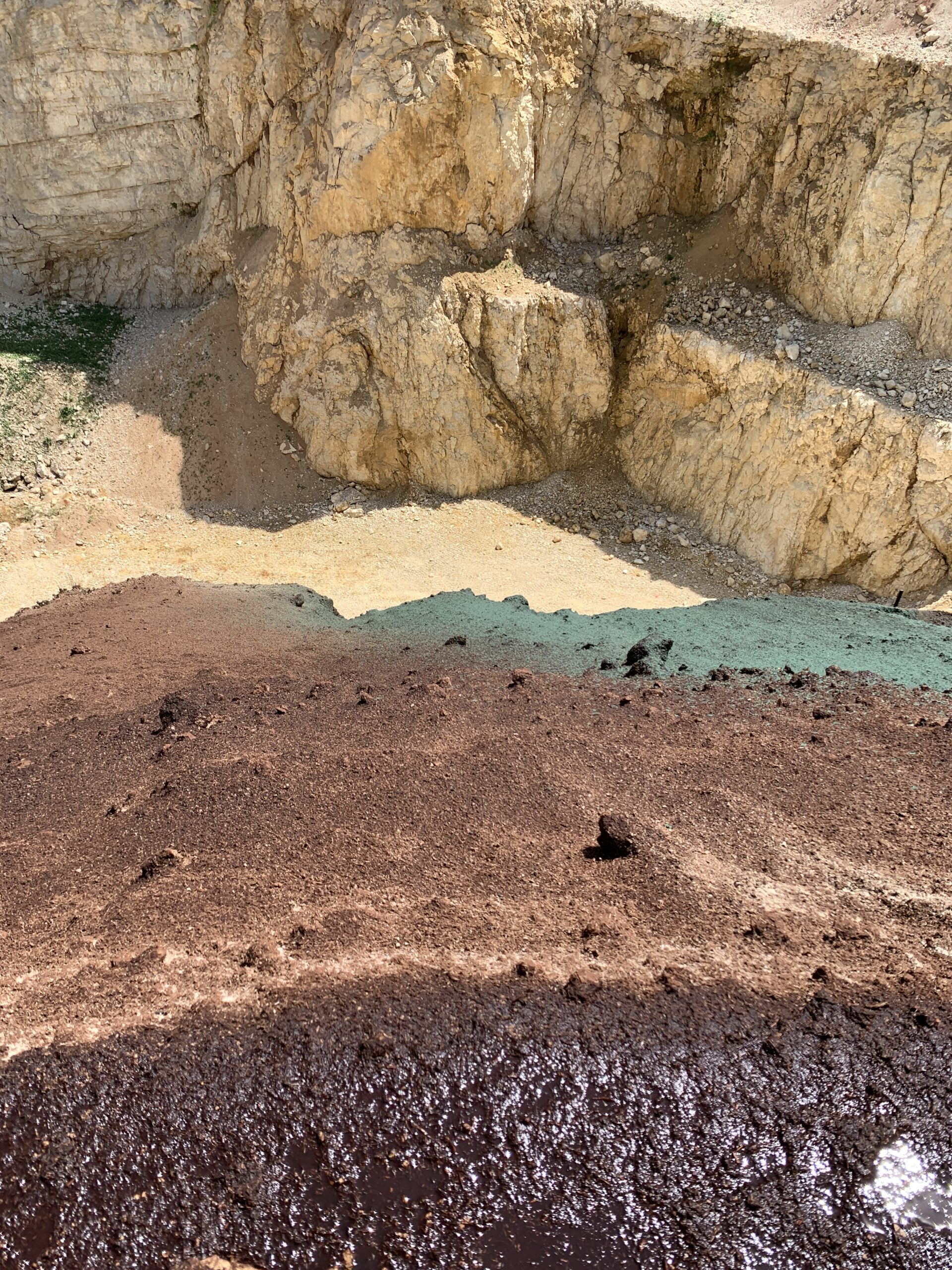
The granular, low-cohesion nature of the substrate ruled out relying on a purely chemical binder as the primary mechanism. On clean, coarse gravel, a binder film has limited material to adhere to; without sufficient fines or cohesive particles, chemical bonding alone often performs poorly.