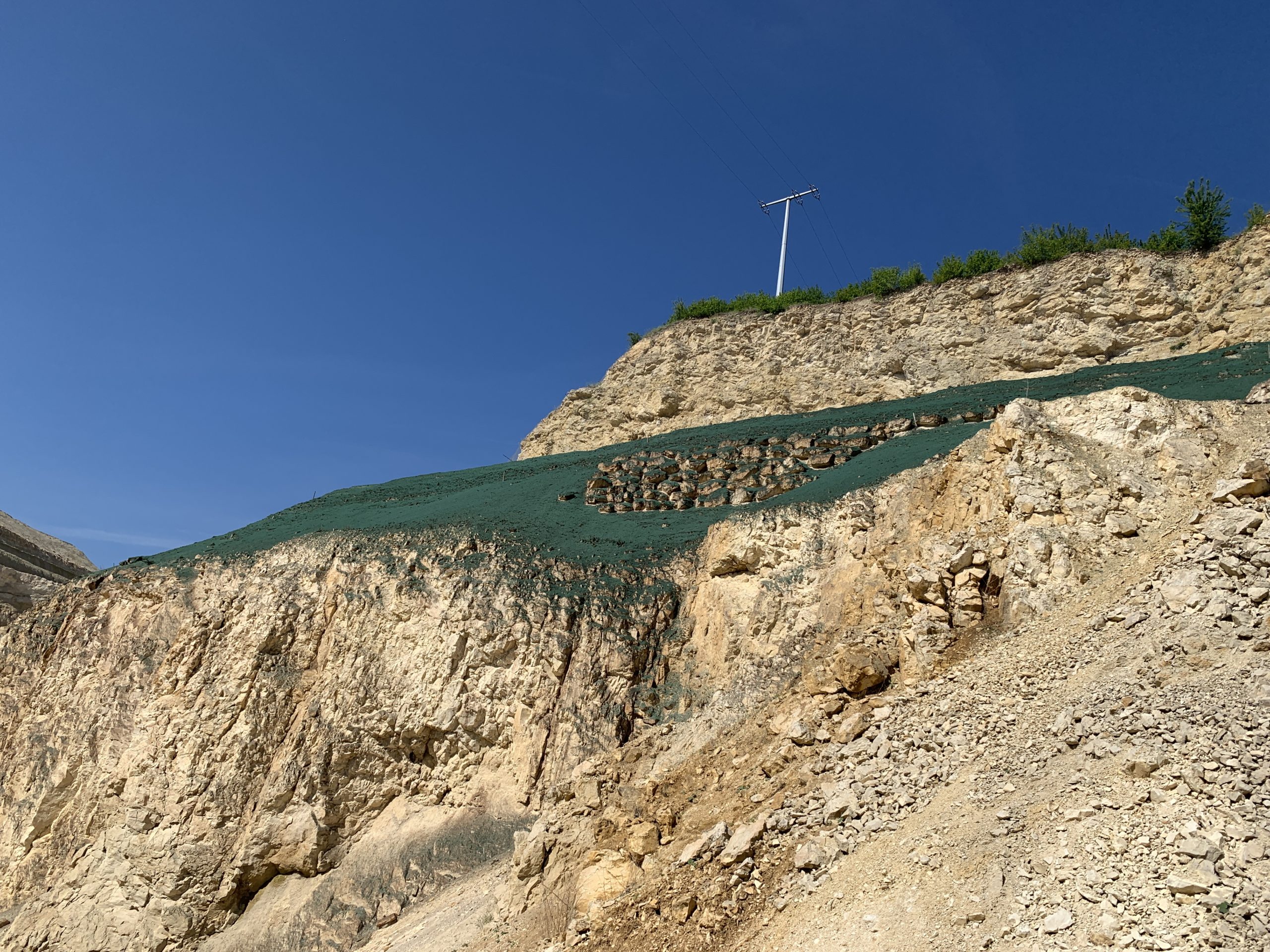
Active reclamation is often necessary where rapid erosion control, dust suppression, visual integration or a defined land use is required. It is not automatically the ecologically preferable option for every part of a former mine.
Some post-mining substrates develop valuable pioneer habitats through spontaneous succession. Nutrient-poor surfaces, small depressions, exposed mineral areas and irregular terrain can support species and habitat structures that would be lost if the entire site were graded, covered with uniform topsoil and seeded with a standard grass mixture.
Natural succession should therefore be considered where:
- The approved closure plan permits it
- The landform is physically stable
- Contamination and exposure risks are controlled
- Erosion remains within acceptable limits
- The developing habitat supports the ecological objective
- Invasive species can be monitored and managed
- The expected establishment period is acceptable
This is not an argument for leaving unsafe or contaminated land untreated. Natural succession is a legitimate rehabilitation pathway only when it is deliberately selected, documented and monitored.
A hybrid approach is often appropriate. High-risk slopes, drainage corridors and exposed surfaces can receive active treatment, while suitable areas are reserved for spontaneous or directed succession. This maintains surface protection where it is needed without unnecessarily eliminating habitat heterogeneity.